
Selecting the Ideal AI Keynote Speaker to Transform Your Next
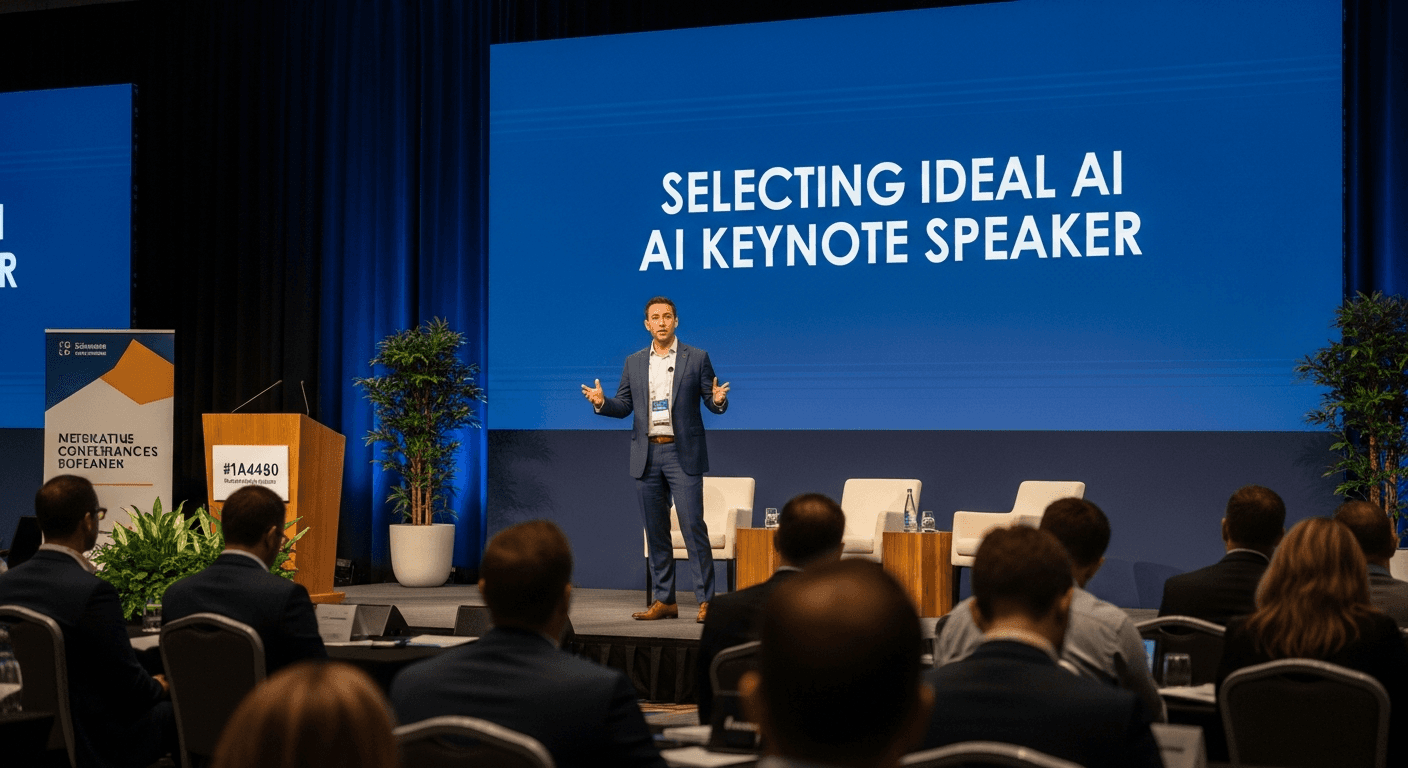
The mandate has likely come down from on high, or perhaps it's a realization bubbling up from your own team: "We need to talk about AI at this event." It's no longer a niche topic for tech conferences; it's a tidal wave of change washing over every industry, and your audience is looking to you for a guide. But here’s the challenge: the difference between an AI keynote that electrifies a room and one that falls flat is a chasm. Get it right, and your event becomes the catalyst for innovation, sparking conversations and strategies that last for months. Get it wrong, and you risk a session filled with dense jargon, recycled platitudes, or fear-mongering that leaves your audience more confused and anxious than when they walked in.
Choosing the right AI keynote speaker isn't just about finding someone who knows the technology. It's about finding a translator, a storyteller, and a strategist who can connect the complex world of algorithms and neural networks to the human reality of your business and your audience.
Beyond the Buzzwords: Why the Right AI Speaker is Mission-Critical
Before we dive into the "how," let's establish the "why." In a landscape saturated with AI "gurus" and "experts," the stakes for your event are higher than ever. A subpar speaker on a traditional topic like leadership or sales might be forgettable. A subpar AI speaker can be actively detrimental.
Audiences today are grappling with fundamental questions: Will AI take my job? How can our company compete in this new era? Are we already behind? They aren't coming for a lecture on transformer models. They are coming for clarity, direction, and a dose of grounded optimism.
The right speaker transforms abstract anxiety into tangible action. They don't just show off flashy AI demos; they provide a framework for thinking, a roadmap for implementation, and the inspiration to embrace change rather than fear it. This is about more than just filling a 60-minute slot on your agenda. It's about setting the tone for your organization's entire relationship with the most transformative technology of our time.
The Four Pillars of an Exceptional AI Speaker
To cut through the noise, you need a framework. When we at Speak About AI vet potential speakers, we evaluate them against four critical pillars. Think of these as your non-negotiable criteria for finding a speaker who will truly deliver.
Pillar 1: Deep, Relevant Expertise
This seems obvious, but "expertise" in AI is a multifaceted concept. It's not enough for someone to have "AI" in their job title. You need to dig deeper and find the specific type of expertise that matches your event's goals.
- The Practitioner: This speaker is in the trenches, building, deploying, or leading AI initiatives within a company. They bring real-world case studies, talk about failures and successes, and can answer practical questions about implementation, team structure, and ROI. Choose them when your audience needs a "how-to" guide and craves credible stories from the front lines.
- The Academic/Researcher: This individual is often at the forefront of AI innovation, coming from a leading university or research lab. They can explain the fundamental principles behind the technology and provide a glimpse into what's coming next, grounded in rigorous research. Choose them when you need to establish foundational knowledge for a technically-savvy audience or want to explore the long-term trajectory of the field.
- The Futurist/Strategist: This speaker excels at connecting the dots between technological advancements and broader business or societal trends. They might not be coding the algorithms, but they are masters at explaining the "so what?"—the impact on your industry, your business model, and the future of work. Choose them when your goal is to inspire a C-suite or leadership team to think bigger and prepare for future disruption.
Actionable Advice: Don't just look at a speaker's bio. Ask: "What is the source of their expertise?" Are they sharing hard-won lessons from a Fortune 500 AI deployment, or are they summarizing articles they read last week? The difference is everything.
Pillar 2: Audience Resonance
An MIT professor with a Nobel Prize in computer science could be the worst possible speaker for your annual sales kickoff. The most brilliant expert is ineffective if they can't connect with the people in the room. True resonance goes beyond just adjusting a few slides; it's about fundamentally understanding the audience's context.
A great AI speaker will ask you questions like:
- What is the AI literacy level of my audience? Are they beginners or advanced?
- What are their primary job functions? (A talk for marketers should focus on generative AI for content and personalization, while a talk for operations leaders should focus on automation and supply chain optimization.)
- What are their biggest fears and hopes regarding AI?
- What is the key message you want them to leave with?
The ultimate test is whether the speaker can make the topic feel personal. They should be able to translate the global phenomenon of AI into the daily reality of your attendees. Instead of saying, "AI will improve efficiency," they should say, "Imagine if your finance team could close the books in three days instead of three weeks. Here's how companies are using AI to do that right now."
Actionable Advice: During your vetting process, present the speaker (or their bureau) with a detailed profile of your audience. Ask them directly, "How would you tailor your message for a room full of regional bank managers versus a room of software engineers?" Their answer will reveal their ability to create resonance, not just recite a canned speech.
Pillar 3: The "So What?" Factor: Actionability
A keynote filled with mind-blowing demos of AI creating art or music is entertaining, but it can also leave an audience feeling like they just watched a magic show—impressed, but with no idea how the trick was done or how they could do it themselves.
The best AI keynotes bridge the gap between "wow" and "how." Every futuristic insight should be paired with a practical takeaway. The speaker's primary job is to answer the silent question in every audience member's mind: "So what does this mean for me on Monday morning?"
This "So What?" factor can take many forms:
- A simple framework for identifying AI opportunities within their own departments.
- A list of "first-step" AI tools they can experiment with for free.
- A set of critical questions to ask vendors when evaluating AI solutions.
- A guide for starting a small-scale pilot project.
Actionable Advice: When watching a speaker's demo reel, listen for the moments after the big reveal. Do they explain the underlying business application? Do they provide a path for the audience to follow? A speaker who focuses only on the "what" without the "so what" and "now what" will inspire awe, but not action.
Pillar 4: Masterful Communication & Storytelling
This final pillar is the one that ties everything together. The subject of AI is inherently complex, and the risk of it being dry, academic, or overly technical is high. A world-class speaker overcomes this with the timeless tools of great communication.
- Analogies and Metaphors: They can explain a large language model by comparing it to an "autocomplete on steroids" or describe machine learning as "teaching a computer like you would teach a small child, but with millions of examples." These tools make the incomprehensible feel intuitive.
- Storytelling: They wrap data and technical concepts in human stories. They don't just present a case study with charts and graphs; they tell the story of the team that was struggling, the insight they had, the AI tool they implemented, and the ultimate transformation it created for their customers and their careers.
- Stage Presence: They command the stage with energy and passion. They can sense the room's energy, make eye contact, and use vocal variety to keep the audience engaged. They know when to pause for effect and when to inject a moment of humor to break the tension.
Actionable Advice: Never book a speaker without watching at least 15-20 minutes of an unedited talk. A sizzle reel can be deceiving. You need to see them in a live setting. Do they connect with the audience? Do they simplify complexity? Are you, as a viewer, leaning in and wanting to hear more? If not, your audience won't either.
Your Vetting Checklist: From Longlist to Podium
Armed with the Four Pillars, here is a practical process for making your selection:
- Define Your Goal First: Before you even search for a name, write down a single sentence that captures your goal. Is it "To demystify AI and empower our sales team to talk about it confidently with clients"? Or is it "To challenge our executive team to rethink our 5-year strategy in the age of AI"? This goal becomes your North Star.
- Watch the Tapes (The Full Ones): As mentioned above, this is non-negotiable. Look for full-length keynotes from recent events. Pay attention not just to the speaker, but to the audience's reactions. Are they engaged, taking notes, laughing?
- Inquire About Customization: When you contact a speaker or their bureau, your first question shouldn't be about fees. It should be about their process for tailoring the keynote. A great partner will want to schedule a discovery call to learn about your business, your event theme, and your audience.
- The Pre-Event Call is Crucial: Once you've shortlisted a speaker, the pre-event briefing call is your final quality check. Do they listen more than they talk? Do they ask insightful questions about your business? Do they suggest new angles or ideas that show they're truly thinking about your specific needs?
- Look Beyond the Hype: Be wary of speakers who seem to have materialized overnight with a "Certified AI Expert" badge. Look for a track record of speaking and writing on technology and business transformation that predates the recent generative AI boom. True expertise is built over years, not months.
Choosing an AI speaker is one of the most leveraged decisions you can make for your next event. It’s an opportunity