
How to Hire Good Keynote Speakers for Your Next Event
A great keynote speaker does more than just get up on stage and talk. They blend deep expertise with a magnetic stage presence, creating an experience that sticks with your audience long after they’ve left the room. For event planners, finding that one person who can turn a standard conference into something truly memorable is what separates a good event from a great one.
At Speak About AI, we specialize in connecting event planners with the world's leading minds in artificial intelligence, ensuring every keynote is impactful, relevant, and unforgettable.
What Defines a Genuinely Good Keynote Speaker

Before you begin your search, it’s crucial to understand what separates average presenters from exceptional ones. A good keynote speaker doesn’t just talk at an audience; they connect with them. They spark curiosity and inspire people to actually do something different when they get back to the office.
Many industry pros can deliver a well-researched talk, but only the best can make complex topics feel relevant and give your attendees actionable advice. The real value of a top-tier speaker is measured in the conversations they start and the new perspectives they open up.
The Power of an Authentic Connection
Honestly, the most memorable keynotes are built on a real, authentic connection. This isn't just about being a polished performer. It's about the speaker’s talent for creating a shared experience, making every single person in the auditorium feel seen and understood.
So, how do they pull this off?
- Empathy: They do their homework. They take the time to really understand your audience—their industry, their day-to-day headaches, and what they hope to achieve.
- Storytelling: They don't just dump data. They weave in personal anecdotes and compelling stories that make abstract ideas feel real and hard numbers unforgettable.
- Vulnerability: By sharing their own struggles and what they’ve learned, they build trust. It makes the whole experience feel more human and engaging.
When a speaker nails this, it completely changes the dynamic. You're no longer just listening; you're part of the experience.
Translating Expertise into Action
Deep subject matter knowledge is table stakes. Any professional speaker worth their fee is an expert. But the best ones know that spewing facts isn't enough. Their true gift is making that expertise accessible and, most importantly, actionable for your audience.
For example, speakers on our roster, like AI expert Nina Schick, don't just explain generative AI; they show sales teams exactly how to use specific tools to close more deals. They provide a clear roadmap from theory to practice. Our roster is filled with experts who are masters at this.
A speaker's job is to eliminate suffering before it begins. By catching a problem or presenting a solution, you change the future for that audience. Visibility isn't vanity; it's survival for the message.
Exceptional Delivery and Stage Presence
Finally, it all comes together with delivery. You can have the best message in the world, but if it's delivered poorly, it won't land. A truly exceptional keynote speaker knows how to command a room with energy, passion, and poise.
Understanding how to enunciate better and speak with clarity is a fundamental part of this. But stage presence is more than just being confident. It’s the way their pacing, tone, and body language all work together to drive the message home.
A speaker with a powerful presence, such as Adam Cheyer, the co-founder of Siri, can grab an audience from their very first word and hold their attention until the final applause. They make complicated ideas feel exciting and urgent, leaving everyone in the room energized and ready to take action.
Where to Find Your Ideal Keynote Speaker
Okay, so you know what makes a good keynote speaker, but where do you actually find them? Instead of getting lost in endless Google searches, you’ll get better results—and faster—by focusing on specific channels.
The best place to start is often a professional speaker bureau. Think of them as a curated marketplace for elite talent. They’ve already done the heavy lifting by vetting speakers for their quality, professionalism, and stage presence. This instantly cuts down on the guesswork and risk on your end.
At Speak About AI, for example, our entire roster is dedicated to the leading minds in artificial intelligence. Every single speaker we represent, from Google executives to pioneering entrepreneurs, has a proven history of delivering powerful talks packed with real-world, actionable insights.
Leverage the Power of a Curated Roster
Going through a bureau offers serious advantages over searching on your own. You get access to speakers who aren't just subject matter experts; they’re seasoned pros who know the ins and outs of corporate and conference settings.
A few key benefits really stand out:
- Vetted Professionals: We’ve already done the homework. Every speaker on our roster has been carefully chosen after we’ve reviewed their speaking clips, checked references, and confirmed their expertise. You can be confident they’ll deliver.
- Serious Time-Saver: A bureau gives you a central hub where you can quickly filter by topic, industry, or budget to build a shortlist of qualified candidates in minutes.
- Industry Specialization: A specialized bureau gets the nuances. We know which AI speakers will resonate with a financial services crowd versus a healthcare conference, and we can give you recommendations tailored to your audience.
This curated approach ensures you’re only considering good keynote speakers who are not just knowledgeable but also know how to truly connect with a professional audience.
Partnering with a bureau transforms the search from a gamble into a strategic decision. You're not just finding a speaker; you're gaining a partner who is invested in your event's success and has the expertise to guide you to the perfect fit.
Expanding Your Search to Industry Networks
While bureaus are a fantastic, streamlined option, there are other great ways to uncover talent. Tapping into your own industry’s ecosystem is a powerful way to find speakers who have direct, relevant experience.
Start with industry associations. These groups frequently host their own events and often keep lists of trusted speakers who are experts in your specific field. Look at the agendas of their past conferences to see who they’ve featured.
LinkedIn can also be a goldmine if you use it right. Run targeted searches for phrases like "keynote speaker" combined with your industry or a specific topic (e.g., "AI in healthcare keynote speaker"). When you find someone promising, dig into their profile.
- Look for speaking clips: Do they have videos that show off their style and energy?
- Check for recommendations: What are past clients and audience members saying about them?
- Review their articles and posts: Does their content show deep expertise and a clear, compelling point of view?
These platforms are perfect for discovering new voices and for double-checking the credentials of speakers you might already be considering. For more on what makes a speaker truly compelling, our guide on leadership keynote speakers offers some great perspectives.
By combining the curated quality of a speaker bureau with smart outreach through professional networks, you build a robust strategy that will lead you to a truly remarkable keynote speaker for your next event.
Vetting Speakers to Ensure a Perfect Fit
You’ve got a promising shortlist. Now the real work begins. Vetting is where you separate the contenders from the pretenders and find a speaker who won't just show up and talk, but will genuinely partner with you to make your event unforgettable. A little structure here goes a long way in identifying the truly good keynote speakers.
The path to finding great talent usually follows one of a few well-trodden routes. Whether you're working with a bureau, tapping into professional networks, or doing your own digging, the goal is always the same: build a solid pool of candidates to evaluate.
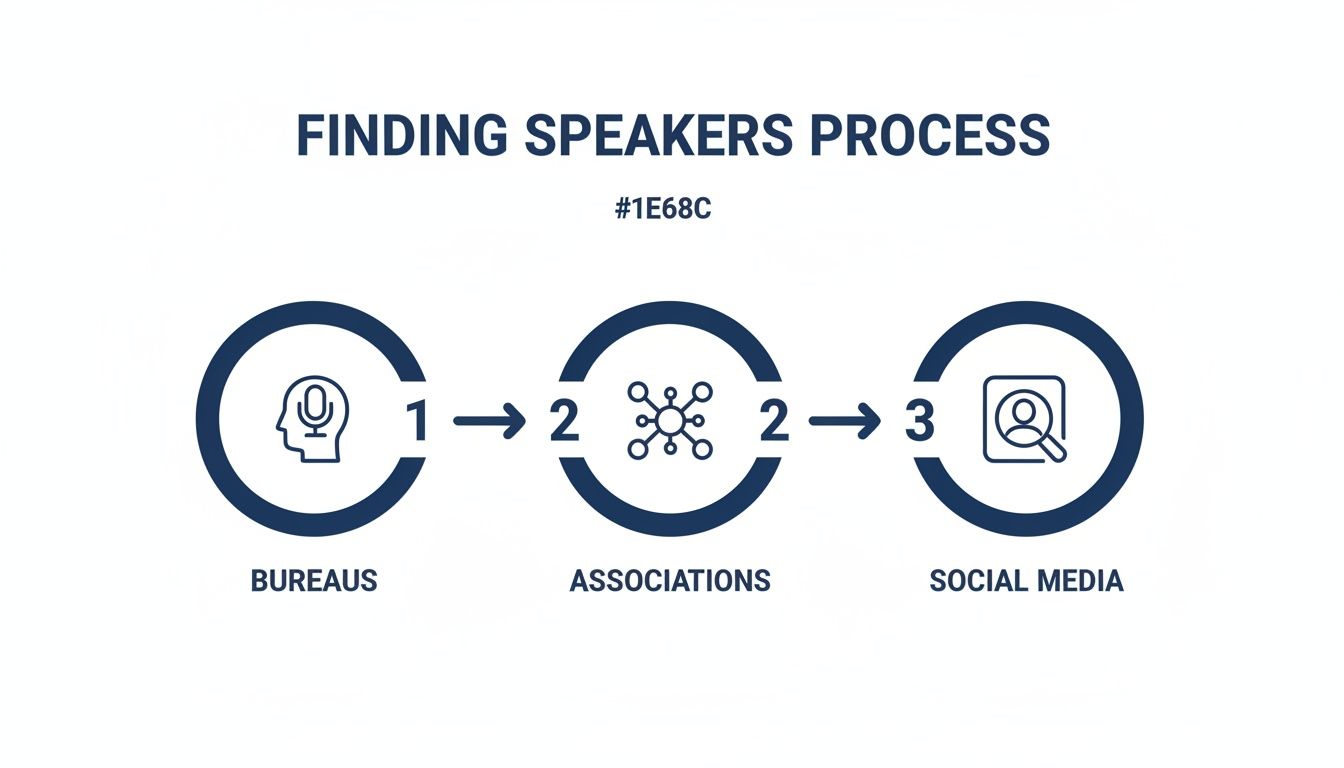
This process isn't complicated. It's about starting broad with trusted sources and then narrowing down to the perfect fit through careful evaluation.
Look Beyond the Highlight Reel
Every speaker has a sizzle reel. It’s their greatest hits album—all the best punchlines and standing ovations rolled into a slick two-minute package. It’s great for getting a feel for their energy, but it’s just the trailer, not the movie.
To really know what you're getting, you have to watch full-length, unedited videos of their past keynotes. This is non-negotiable.
An entire presentation reveals what the highlight reel is designed to hide:
- Pacing and Flow: Can they keep the energy up for a full 60 minutes, or does it sag in the middle? A great talk has an arc, not just a series of high points.
- Audience Connection: Watch the crowd during the quieter moments. Are they still engaged, or are they checking their phones? Holding attention between the applause lines is the mark of a pro.
- Authenticity: Does their personality on stage feel genuine and consistent? Audiences can spot a fake a mile away.
- Handling the Q&A: If you can find a video with a Q&A session, you’ve struck gold. This is where you see how they think on their feet and handle the unexpected.
This is the only way to confirm if their stage presence is as compelling in reality as it is in their marketing.
Conduct Meaningful Reference Checks
Once a speaker’s full-length video impresses you, it's time to talk to people who have been in your shoes. A reference check should be more than just asking, "So, were they good?" You're digging for details about their professionalism, adaptability, and the real-world impact they had.
Get on the phone with a past client and ask specific, open-ended questions.
Key Questions to Ask Past Clients
- Collaboration: "How were they to work with leading up to the event? Were they open to customizing their content for your specific audience?"
- Audience Impact: "What was the buzz from attendees after their session? Did it actually spark conversations or change how people thought?"
- Handling Adversity: "Did anything go wrong—a technical glitch, a tough question from the audience? How did the speaker handle it?"
- Professionalism: "What were they like on-site when they weren't on stage? Were they punctual, low-maintenance, and easy for your team to work with?"
- Overall Value: "Looking back, did they deliver the value you paid for? Would you hire them again in a heartbeat?"
The answers will give you a complete picture and help you sidestep any nasty surprises on event day.
The most insightful feedback often comes from questions about how a speaker managed the unexpected. Their grace under pressure is a strong indicator of their experience and professionalism.
The Decisive Chemistry Call
The final piece of the puzzle is a direct conversation with the speaker. Think of this "chemistry call" as your chance to see if you click. You’re gauging their excitement for your event and their willingness to become a true partner.
This isn’t just an interview; it's the start of your collaboration. A great speaker will ask you as many questions as you ask them. They’ll want to know your goals, your audience’s pain points, and the one thing you want everyone to walk away remembering. That curiosity is a hallmark of the best in the business.
This call is critical. After all, you're hiring an expert communicator. Public speaking is considered a vital skill by 70% of professionals who give presentations. Plus, companies with effective communicators are 3.5 times more likely to outperform their peers. A skilled speaker brings immense strategic value. You can discover more about the impact of public speaking on business success.
During the call, notice if they're really listening. Are they already brainstorming ideas for your audience? Do they sound genuinely excited by the opportunity? This single conversation will tell you everything you need to know about whether you're hiring a speaker or a partner.
Key Speaker Vetting Checklist
To keep everything organized, it helps to use a consistent checklist for every candidate on your shortlist. This ensures you're comparing apples to apples and not letting a great sizzle reel overshadow potential red flags.
| Vetting Criteria | What to Look For | Red Flags |
|---|---|---|
| Stage Presence | Engaging, confident, and authentic delivery in full-length videos. | Low energy, over-rehearsed delivery, relying heavily on slides. |
| Content Relevance | Clear expertise on the topic; ability to connect concepts to your industry. | Generic, one-size-fits-all content that isn't easily customized. |
| Audience Connection | Holds attention throughout, sparks questions, receives positive non-verbal cues. | Audience looks disengaged, distracted, or confused during the talk. |
| Professionalism | Positive references, responsive communication, easy to work with. | Negative or lukewarm references; slow to respond to emails. |
| Collaborative Spirit | Asks insightful questions about your event goals and audience. | Seems uninterested in tailoring their talk; talks more than they listen. |
Using a checklist like this helps you move beyond a gut feeling and make a data-driven decision, ensuring the speaker you choose is the perfect final piece for your event puzzle.
Navigating Speaker Fees and Contracts
You've found the perfect speaker who gets your event's vision. Now comes the part that makes many planners nervous: talking money and signing paperwork.
Let's demystify the process. Approaching fees and contracts with a clear understanding of the landscape gives you the confidence to lock in top talent without any last-minute surprises. This isn't just about haggling; it's about building a professional partnership.
Remember, a speaker's fee isn't just for their hour on stage. It's an investment in their years of expertise, the time they spend tailoring their message specifically for your audience, and the immense value they bring to your event.
Decoding Speaker Fee Structures
Speaker fees can swing wildly based on their demand, unique expertise, and public profile. Most of the time, you'll get a flat rate for a specific talk, like a 60-minute keynote. This fee usually covers the presentation and all the prep work that goes into it.
The big question you need to ask is about expenses. Always clarify if the fee is "all-in" or if travel is billed separately.
- "All-Inclusive" Fee: This model bundles everything—the speaking fee, travel, and hotel—into one number. It makes budgeting a breeze but might come at a slight premium for the convenience.
- "Fee Plus Expenses" Model: This is the industry standard. You pay a set speaking fee, and all travel costs like airfare, hotel, ground transport, and meals are billed on top of that.
As a rule of thumb, plan to budget for business-class flights and a quality hotel. For a deeper dive, our guide on understanding conference speaker fees breaks down typical costs across different speaker tiers.
Building a Realistic Speaker Budget
Keeping the budget in check is always a top priority. Industry trends for 2025 show that budget constraints are a real challenge, with 47% of events allocating under $10,000 per speaker. Even so, planners are laser-focused on finding good keynote speakers who can deliver a high-impact, customized experience.
A speaker’s fee is an investment in your audience's experience. Budgeting properly means accounting for not just the fee, but every associated cost required to deliver that experience flawlessly.
To make sure you don't get hit with unexpected costs, your budget needs to cover a few key areas:
- The Speaking Fee: This is the main line item for securing your talent.
- Travel and Accommodation: Airfare, hotel, and car service if they aren't included in the fee.
- A/V Requirements: Double-check that your venue has the right microphone, projector, and any other tech on the speaker's rider. If not, you'll need to budget for rentals.
- Contingency Fund: Always set aside an extra 10-15% for the unexpected. Think flight changes, last-minute tech needs, or other small emergencies.
Mastering the Speaker Contract
The contract is your safety net. It's where all verbal agreements get put in writing, protecting both you and the speaker. If you’re working with a bureau like Speak About AI, they’ll handle this, but you should still read every line.
Pay close attention to these clauses:
- Payment Schedule: The standard is 50% upfront to lock in the date and the final 50% due on or just before the event day.
- Cancellation Policy: This outlines what happens financially if you or the speaker has to cancel. Look for clear deadlines and refund terms.
- Content and Recording Rights: Who owns the presentation content? The contract should state whether you have permission to record the session and how you can use it afterward.
- Technical Rider: This is the speaker's list of A/V must-haves—a specific microphone, a certain screen setup, or their preferred remote clicker.
Once you’ve vetted and selected your speaker, using direct speaker booking services can help streamline the final steps. A clear, comprehensive contract is the cornerstone of a great partnership, ensuring everyone is on the same page and setting the stage for an unforgettable event.
Briefing Your Speaker for Maximum Impact
You’ve signed the contract and booked one of the best keynote speakers in the business. It’s easy to feel like the hard part is over, but this is actually where the real magic begins. The gap between a good keynote and a truly unforgettable one is closed during one final, crucial step: the briefing call.

This is your chance to turn a standard presentation into a bespoke experience that connects directly with your audience. A detailed briefing gives your speaker the context they need to go deep, ensuring their message hits home and sticks around long after the event wraps up.
The professional speaking market is booming, with a projected growth of USD 608.4 million between 2025 and 2029. This shows a growing demand for communicators who can deliver precision-targeted messages. A solid briefing ensures you get the full value of that investment. You can learn more about the keynote speaking market's impressive growth and what it means for event planners.
Go Deep on Your Audience
The bedrock of any powerful keynote is a real understanding of the people in the room. Your speaker needs to know more than just job titles. You have to paint a vivid picture so they can practically step into your attendees' shoes.
This means getting granular. What does a day in their life really look like? What are the nagging problems that keep them up at night? What are the inside jokes, industry acronyms, and shared experiences that bond them together?
Here’s the kind of intel to share:
- Demographics and Roles: Break down the audience by job titles, seniority, and decision-making power. Is the room full of C-suite execs, mid-level managers, or frontline staff?
- Current Headaches: What are their biggest professional pain points right now? Are they grappling with market disruption, navigating internal changes, or trying to get a handle on new tech?
- Event Expectations: Why did they choose to attend your event? What specific problem are they hoping this keynote will help them solve?
This level of detail is gold. It allows the speaker to weave in stories, examples, and solutions that feel personal and immediately relevant.
A great briefing call is a dialogue, not a monologue. It's an opportunity for you and the speaker to co-create a vision for the keynote, ensuring every story, data point, and call to action is perfectly aligned with your event's purpose.
Nail Down Your Core Message and Goals
Beyond knowing who is in the room, the speaker needs to know why you brought them there. What’s the central theme of your event? What specific shift in thinking or behavior are you trying to spark?
Don't be vague. A goal like "motivate the team" is too broad to be useful. Get specific. Do you need them to feel confident about an upcoming merger? Or maybe you want them to fully commit to a new sales process?
Give the speaker a clear framework to build on:
- The One Big Idea: If the audience only remembers one thing from the keynote a week later, what should it be? Boil it down to a single, powerful message.
- Key Takeaways: List three to five concrete, actionable insights you want people to walk away with. These should be practical tips they can use the very next day.
- The Desired Vibe: How do you want the audience to feel when the session ends? Energized? Inspired? Reassured? Naming this emotional target helps the speaker calibrate their tone perfectly.
Set the Stage for a Flawless Delivery
Finally, the briefing needs to cover all the logistical details that help a speaker feel prepared and confident. A relaxed, well-informed speaker is always a more effective one.
The little things matter. Share the full event agenda so they see where their keynote fits in the day's narrative. Who’s speaking before them, and what’s their topic? This context helps them create a smooth transition and avoid repeating the same points.
Also, clue them in on the room setup, A/V capabilities, and the overall atmosphere. A formal corporate summit demands a different energy than a high-octane marketing conference. These details might seem small, but they all contribute to a speaker's ability to connect and deliver a powerful, memorable performance.
Common Questions About Hiring Keynote Speakers
Even seasoned event planners run into the same handful of questions when booking keynote speakers. Getting these answers sorted out early can be the difference between a smooth, confident hiring process and a last-minute scramble.
Let's clear up some of the most common queries we get from professionals looking for good keynote speakers.
How Far in Advance Should I Book a Speaker?
For the best selection, you really want to start the process six to twelve months ahead of your event date. This is especially true if you’re eyeing a high-demand speaker.
Top-tier professionals, particularly those with a major public profile in fields like artificial intelligence, often have their calendars booked more than a year out. Booking early doesn't just secure your first choice; it also gives you and the speaker plenty of runway to collaborate. This extra time is invaluable for briefing calls and allows them to truly tailor their message to your audience and event goals.
While it's sometimes possible to find a great speaker within three months, your options will be much smaller.
What Is a Speaker's "Rider"?
A speaker's "rider" is simply a document that lists their technical and logistical needs for the event. Don't let the term intimidate you—it’s a completely standard part of the booking process that ensures everything runs smoothly on the day.
You can expect the rider to cover things like:
- Audio and Visual Needs: This gets into the nitty-gritty, like whether they prefer a lavalier mic, need a specific projector hookup, or require a confidence monitor at the front of the stage so they can see their slides.
- Stage Setup: Some speakers have a preferred stage layout, whether it's a simple lectern and a table for water or a completely open stage that allows them to move around.
- Travel and Accommodation: The rider might specify airline and hotel preferences. This isn't about being demanding; it’s about making sure the speaker arrives well-rested and ready to deliver a killer presentation.
Going through the rider carefully is a crucial step. It helps you prep the venue and sidestep any technical glitches that could take the focus off their message.
Are Speaker Fees Negotiable?
Generally, it’s best to assume a speaker's fee is firm. While there might be a little wiggle room in rare cases, their fee is a reflection of decades of experience, deep expertise, and the immense amount of prep work that goes into crafting a keynote that actually lands with an audience.
Instead of trying to negotiate the fee down, a better approach is to ask what other value they can add. Could they stick around for a post-keynote Q&A, host a small breakout session for your VIPs, or do a book signing?
This strategy shows respect for the speaker's value while helping you get more bang for your buck. Remember, when you hire one of the truly good keynote speakers, you aren't just paying for an hour of their time. You're investing in an experience.
Finding the right AI expert to captivate your audience is what we do best. At Speak About AI, we connect you with the brilliant minds behind game-changing tech, from Siri’s co-founders to top executives at Google. Explore our roster and find the perfect speaker to make your next event a landmark success at https://speakabout.ai.