

How to Reduce Employee Turnover

To get a real handle on employee turnover, you have to look past the surface-level costs. It’s not just about paying recruitment fees. The real damage comes from the hidden expenses—lost productivity, sinking team morale, and the massive time investment needed to train someone new.
Once you grasp the full financial and cultural fallout, building a rock-solid business case for investing in retention becomes a no-brainer.
The Real Cost of High Employee Turnover
Before we jump into fixing things, let’s get clear on what a revolving door is actually costing you. High turnover isn't just another HR metric to track; it's a quiet killer of profitability and culture.
When good people walk out, they take critical company knowledge and customer relationships with them. That creates a vacuum that can take months—sometimes years—to properly fill. The ripple effects are huge.
The sticker price for replacing an employee is just the beginning. Sure, you can easily track the cost of job ads and agency fees. But the hidden costs are where the real pain is. Think about the countless hours your managers and team members lose to interviewing candidates instead of doing their actual jobs. Then there’s the onboarding, the training, and the inevitable productivity dip while the new hire figures things out. For a specialized role, that ramp-up can easily stretch to six months or more.
Uncovering the Hidden Financial Drains
Calculating the total cost of turnover gives you the hard data you need to make retention a priority. To paint an accurate picture, you need to factor in everything that hits your bottom line.
- Recruitment and Hiring Costs: This bucket includes everything from advertising fees and recruiter commissions to background checks. Don't forget the cumulative hours your own staff spends sifting through resumes, conducting interviews, and handling negotiations.
- Onboarding and Training Expenses: This is all about time. The time your HR team, managers, and peers spend getting a new person up to speed. It also includes any costs for training materials, new tech, or formal programs.
- Lost Productivity: A new hire isn’t going to be as productive as a seasoned employee on day one. It takes time to learn the ropes, the culture, and the role. In the meantime, that empty seat often means missed deadlines and lost opportunities.
- Team and Morale Impact: When a team is constantly churning, the people who stay behind have to pick up the slack. This leads directly to burnout, disengagement, and a toxic "domino effect" where more of your best people start looking for the exit.
Before you start digging into your own numbers, it helps to see the bigger picture. We’ve summarized the most common reasons people leave and what that really means for the business. This table can help you quickly spot where your own fires might be burning.
Key Drivers of Employee Turnover and Their Business Impact
| Turnover Driver | Common Symptoms | Business Impact |
|---|---|---|
| Poor Management | Micromanagement, lack of feedback, low team morale, high absenteeism. | Decreased productivity, loss of institutional knowledge, toxic work environment. |
| Lack of Growth | Stagnant roles, no clear career path, employees feeling undervalued. | Loss of ambitious talent, skills gaps, difficulty attracting top performers. |
| Inadequate Compensation | Below-market salaries, infrequent raises, perceived pay inequity. | Inability to attract or retain skilled workers, increased salary demands from remaining staff. |
| Poor Work-Life Balance | High levels of burnout, consistent overtime, inflexible work arrangements. | Increased healthcare costs, higher error rates, damage to employer brand. |
| Toxic Culture | Gossip, lack of trust, high conflict, exclusion, inconsistent leadership. | Disengagement, loss of collaboration, potential for legal and reputational damage. |
Looking at this, it's easy to see how a single issue can spiral, creating a cycle of departures that becomes incredibly expensive to manage.
This isn’t just a local problem, either. It’s a global challenge. The average employee turnover rate in the United Kingdom hovers around 16.8%, while in the United States, it’s closer to 13.5%. Some industries feel the burn more than others. Wholesale trade, for instance, is grappling with a turnover rate near 26%, while the energy sector enjoys a much lower rate of about 8%. These numbers prove that while some churn is inevitable, high turnover is a costly signal that something is broken. You can learn more about the latest employee turnover statistics to see how different sectors stack up.
The biggest mistake leaders make is treating retention as a "soft" HR initiative. It’s not. It’s a core business strategy with a direct, measurable impact on your bottom line. When you realize that replacing a single mid-level employee can cost up to 200% of their annual salary, investing in keeping your people suddenly looks like one of the smartest financial decisions you can make.
By framing turnover in cold, hard numbers, you elevate the conversation from a minor headache to a critical business priority. This mindset is the foundation for justifying the investment in the strategies we’ll cover next—helping you build a place where your best people don't just work, they stay and grow.
Using Data to Diagnose Your Turnover Problem
If you want to get serious about reducing employee turnover, you have to stop guessing why people are leaving. It's time to dig into the data and find the real answers. Too often, leaders assume it’s all about compensation or a vague sense of "culture," but those assumptions can be wildly off the mark. Acting on bad guesses leads to wasted time and money on solutions that don't fix the core issues.
A data-driven approach is what separates reactive, firefighting HR from proactive, strategic retention. It’s about getting ahead of the problem.
First things first, you need to know what kind of turnover you’re dealing with. Differentiate between voluntary turnover (when employees choose to leave) and involuntary turnover (terminations or layoffs). While both impact your bottom line, a spike in voluntary turnover—especially among your top performers—is a massive red flag that demands immediate attention. This simple distinction helps you focus your energy where it's needed most.
Gathering Honest Feedback
Your current and former employees are sitting on a goldmine of information. The tricky part is getting them to share it honestly. Traditional exit interviews often fall flat, producing generic, "it's not you, it's me" feedback because no one wants to burn a bridge on their way out.
To get past the canned responses, you need to create a space for real candor. Try these approaches:
- Third-Party Exit Interviews: Handing this process over to an external consultant can be a game-changer. Anonymity provides a sense of safety, encouraging people to open up about the real frustrations with management, team dynamics, or cultural issues.
- Anonymous Engagement Surveys: Don't wait until someone has one foot out the door. Regular, anonymous pulse surveys can detect simmering problems long before they boil over into resignations. Ask pointed questions about career growth, manager effectiveness, and work-life balance.
- Stay Interviews: This is one of the most powerful but underused tools. Sit down with your current high-performers and ask them, "What keeps you here?" and "What might tempt you to look elsewhere?" It shows you value them and gives you real-time data to improve their experience before it's too late.
This flow chart paints a clear picture of the domino effect that turnover has on a business. It's not just about the cost of one replacement; it’s a cascading failure that hits productivity, training budgets, and team morale.
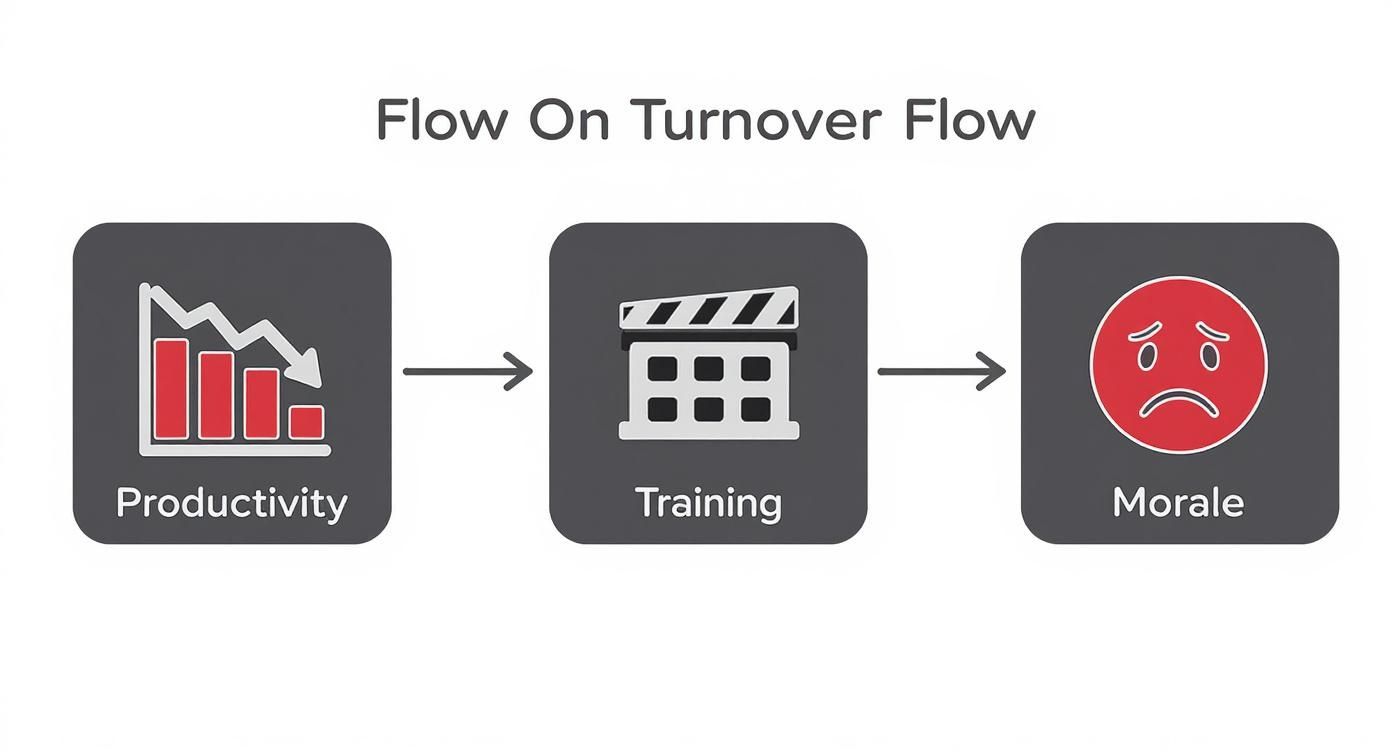
As you can see, these factors create a vicious cycle. The departure of one key person can easily trigger a chain reaction of negative consequences across their entire team.
Analyzing Your HR Data for Hidden Patterns
Beyond surveys and interviews, your own HR information system is packed with clues. By slicing and dicing your turnover data, you can pinpoint specific, solvable issues instead of trying to boil the ocean. This kind of analysis is crucial for improving forecast accuracy and spotting attrition risks before they become resignations.
Start looking at your turnover rates through different lenses:
- By Department: Is the marketing team rock-solid while the engineering department is a revolving door? That points to a localized problem, like a crushing workload or a toxic leadership style.
- By Manager: A high turnover rate concentrated under a single manager is rarely a coincidence. It's a clear signal that leadership training or an intervention is needed. Remember, people don't leave companies; they leave bosses.
- By Tenure: Are new hires bailing within the first 90 days? That’s a huge red flag for your onboarding process or a serious mismatch between the job description and the day-to-day reality of the role.
"Data tells a story. When you see a spike in turnover in a specific team six months after a new manager took over, you're not just looking at numbers anymore. You're seeing the direct impact of leadership on retention. The data gives you the evidence you need to act."
Putting a number on your turnover problem is also a critical first step. The basic formula is straightforward: divide the number of employees who left in a period by the average number of employees during that same period, then multiply by 100. Recent data shows the U.S. voluntary turnover rate averaged 13.0% in early 2025. While that’s a slight decrease, it's still a significant cost for businesses. Calculate your own rate to see how you stack up against industry benchmarks and catch worrying trends early. You can dive deeper into these turnover calculation methods and statistics to see exactly where you stand.
By blending the qualitative feedback from interviews with the quantitative data from your HR systems, you can build a complete, evidence-based picture of why people are leaving. This diagnosis is the foundation for creating retention strategies that will actually work—saving you time, money, and your best talent.
Building a Culture People Don’t Want to Leave
Data is fantastic for spotting problems, but let's be honest: a strong company culture is your best proactive defense against turnover. A great culture isn't about ping-pong tables or free snacks. It's built on a foundation of trust, respect, and psychological safety where people feel genuinely valued and connected to the mission.
When employees feel like they belong and are supported, they simply aren't scrolling through job boards. This is more critical than ever. We're not just fighting resignations anymore; we're fighting widespread disengagement.
In fact, 66% of HR execs now call employee retention their single biggest challenge. This concern is shifting heavily toward engagement, especially since U.S. employee engagement recently hit an 11-year low. A thriving culture is the most direct way to reverse that trend.
Foster Psychological Safety and Transparent Communication
Psychological safety is the absolute bedrock of a culture that keeps people. It's that shared belief that you can take a risk, speak your mind, or even make a mistake without being punished or humiliated. When you get this right, innovation and real collaboration actually happen.
Building it starts at the top. Leaders have to model vulnerability and actively ask for feedback. That means encouraging open dialogue in meetings and creating real channels where employees can raise concerns without fearing it'll come back to bite them.
This goes hand-in-hand with transparent communication.
A culture of transparency means keeping your team in the loop on company performance, challenges, and big-picture strategy. When people understand the "why" behind decisions, they feel like trusted partners, not just cogs in a machine. That’s how you build real ownership and loyalty.
For example, sharing a high-level summary of the last quarter's results—both the wins and the misses—shows you respect your team's role in the business. That kind of openness is a pillar of any strong internal communication strategy.
Champion Growth and Meaningful Recognition
Your best people are ambitious. If they can't see a clear path forward with you, they will absolutely find one somewhere else. Investing in their development is one of the clearest signals you can send that you're committed to them for the long haul.
- Establish Clear Career Paths: Sit down with your people and actually map out what their career could look like at the company. It gives them something tangible to work toward.
- Invest in Learning Opportunities: Offer access to training, workshops, or tuition reimbursement. You're not just upskilling your workforce; you're showing you care about their personal and professional growth.
- Promote from Within: Make this a default practice. Nothing kills morale faster than seeing all the senior roles go to external hires.
Alongside growth, don't underestimate the power of meaningful recognition. This is a low-cost, high-impact retention tool. It's more than an annual bonus; it's about creating a culture of appreciation where a simple, specific "thank you" for a job well done is part of the daily routine. Encourage peer-to-peer shout-outs and make sure your managers know how to give genuine, regular praise.
Embrace Flexibility and Work-Life Respect
The modern workforce—especially younger generations—expects flexibility. Rigid, nine-to-five, in-office mandates are a massive turnover driver. Offering flexible arrangements, whether that's hybrid, remote, or just adaptable hours, shows you trust your team to manage their time and deliver results.
This respect for life outside of work is crucial. It shows you see your employees as whole people, not just output machines. Creating an environment where people can thrive often comes down to implementing effective employee engagement best practices that truly honor this balance.
By focusing on these core elements—safety, growth, recognition, and flexibility—you’re not just plugging holes. You're building a culture that becomes a powerful competitive advantage, one that doesn't just attract great talent but convinces them to stay and build a career.
How Great Managers Drive Employee Retention
While a great culture creates the right environment, an employee's day-to-day reality boils down to one person: their direct manager. The old saying is a cliché for a reason—it’s consistently backed by data. People don't leave companies; they leave managers. A single disengaged or toxic boss can completely demolish all the hard work you’ve put into culture, benefits, and career paths.
This is why investing in your managers is one of the most powerful things you can do to reduce turnover. When you train your managers to be coaches instead of just taskmasters, they become the number one reason your best people decide to stay.
From Taskmaster to Coach
The old-school manager was all about assigning tasks and checking boxes. Today’s best leaders are coaches, deeply invested in their team's professional growth and personal success. Making this shift is absolutely fundamental to building a loyal, high-performing team.
So, how do you turn your managers into effective coaches?
- Make One-on-Ones Sacred: These meetings need to be protected time on the calendar, focused entirely on the employee, not just a list of project updates. This is where you talk about career goals, dig into roadblocks, and check in on their well-being. It’s how trust is built.
- Train for Real Feedback: Too many managers sidestep feedback because they don't know how to give it without being confrontational. You need to train them to deliver feedback that is specific, actionable, and kind—something that helps people grow without making them feel attacked.
- Empower Through Autonomy: Nothing kills morale faster than a micromanager. Great coaches give their teams clear goals and then trust them with the freedom to figure out the "how." It builds a powerful sense of ownership.
Adopting this coaching mindset is a true game-changer. Leadership expert Robyn Benincasa, a world champion adventure racer, often talks about creating "human synergy." She argues that great leaders build environments where people feel safe enough to take risks and rely on each other—a direct result of coaching that fosters psychological safety.
A manager's job isn't just to manage the work; it's to develop the people. When employees feel their manager is genuinely invested in their career, their loyalty skyrockets. That personal connection is something a bigger salary offer from a competitor can rarely overcome.
The Role of Emotional Intelligence
Building a team that people don't want to leave takes more than just project management skills. It requires a high level of emotional intelligence (EQ). This is the ability to understand and manage your own emotions while also recognizing and influencing the emotions of the people around you.
Managers with high EQ are masters of the human side of work. They can sense when a team member is on the verge of burnout, step in to mediate conflicts before they blow up, and celebrate wins in a way that feels personal and genuine. This is the bedrock of trust that retention is built on.
You can actively cultivate this in your leadership. As futurist and business strategist Daniel Burrus points out, in a world filled with more and more technology, the most critical skills are the distinctly human ones. He emphasizes that leaders must sharpen their empathy, communication, and foresight—all hallmarks of high EQ—to guide their teams through constant change.
Pouring resources into "soft skill" training for your frontline leaders is a direct investment in your retention strategy. A manager who can connect with their team on a human level is your single best defense against unwanted turnover. They’re the ones who transform a job into a community, making the decision to leave a much harder one to make.
Strengthening Every Stage of the Employee Journey
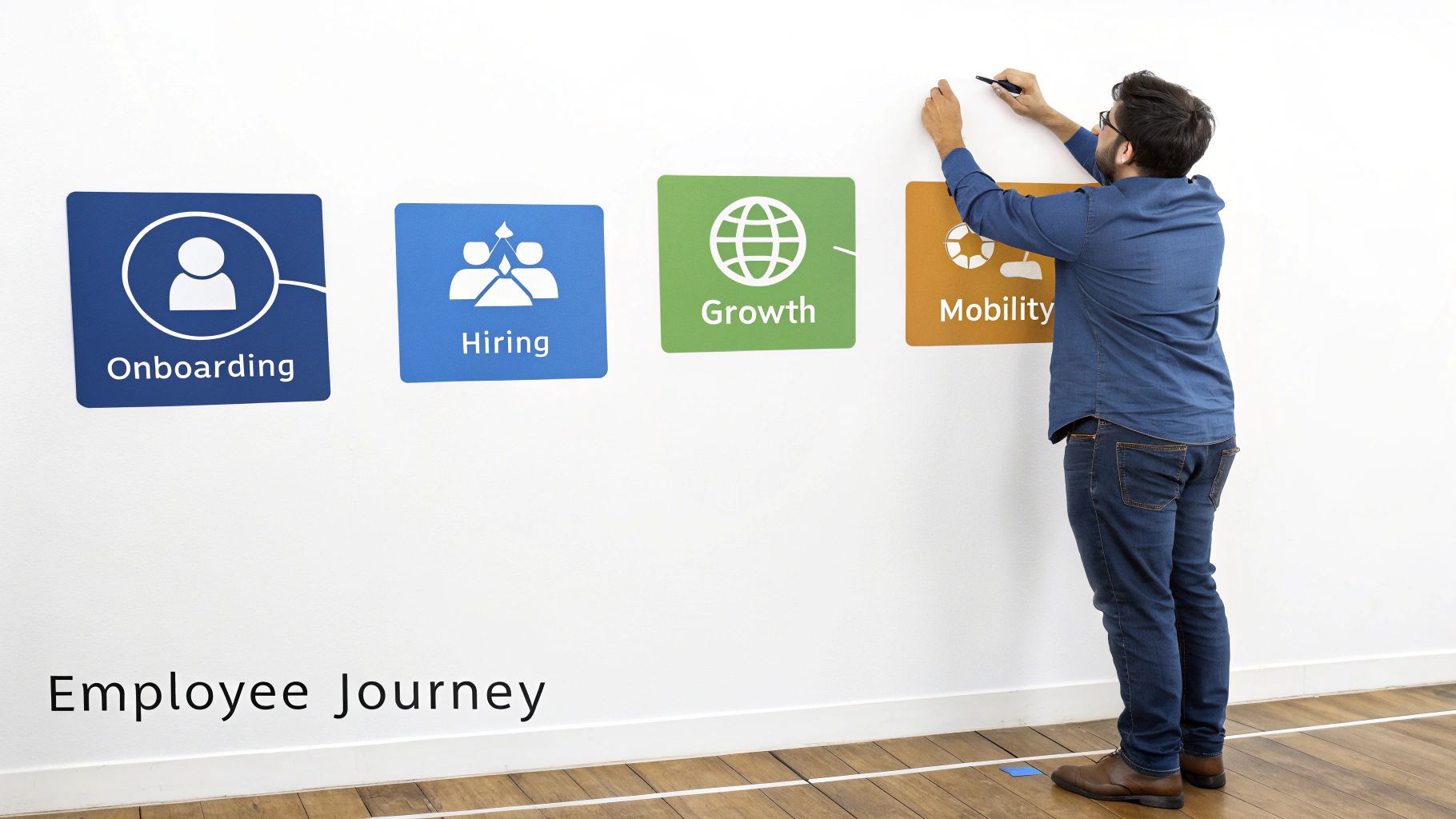
Reducing turnover isn't about a single fix or a last-ditch effort to keep a star employee from walking out the door. Real retention is woven into every single touchpoint someone has with your company—from the very first interview to their long-term career planning.
When you deliberately strengthen each stage of this journey, you create a cohesive, positive experience. It builds loyalty and makes leaving a much harder decision for your best people. Think of it like a chain; a weak link anywhere can undermine the entire effort. A fantastic culture can't make up for a chaotic onboarding that leaves new hires feeling lost. A great manager can only do so much if the compensation is completely out of sync with the market. Every piece matters.
Hire for Alignment, Not Just for Skills
The employee journey starts long before day one. Far too many companies get laser-focused on a candidate's technical skills and past achievements, completely overlooking a critical factor for long-term success: cultural alignment. A brilliant engineer who does their best work in solo, deep-focus sessions will almost certainly flounder in a highly collaborative, fast-paced team—no matter how impressive their resume is.
This kind of mismatch is a primary driver of early turnover. The fix is to build your company values directly into your interview process.
- Ask Behavioral Questions: Go beyond "what would you do." Ask candidates to describe past situations that show you how they actually handle conflict, collaboration, and feedback.
- Bring in the Team: Involve potential peers in the interview loop. They have a gut-level sense of who will genuinely click with the team’s dynamic.
- Be Radically Transparent: Be honest about your culture—the good, the bad, and the demanding parts. It’s far better for someone to opt out during the hiring process than to quit three months in because of a surprise.
Create a World-Class Onboarding Experience
The first 90 days are make-or-break. A structured, welcoming onboarding can be the difference between a new hire who feels confident and connected and one who is already quietly polishing their resume. Great onboarding is so much more than just paperwork and a new laptop.
It should be a comprehensive experience that immerses the new hire in your company's mission, culture, and key relationships. This is your chance to set the tone for their entire career with you.
Onboarding is your first and best opportunity to prove you're invested in an employee's success. A thoughtful process with a dedicated buddy, clear goals for the first month, and regular manager check-ins shows them they’ve joined a team that genuinely cares about their growth.
Design Competitive and Transparent Compensation
Let’s be real: while culture and management are huge, compensation still matters. If your pay and benefits aren't competitive, you're going to lose good people. Period. But "competitive" doesn't just mean being the highest payer. It means being fair, transparent, and comprehensive.
- Run Regular Market Analysis: Keep your salary bands aligned with industry standards for similar roles, experience levels, and locations.
- Communicate Total Rewards: Don't just talk about salary. Clearly spell out the full value of your compensation package, including health benefits, retirement contributions, wellness stipends, and performance bonuses.
- Audit for Pay Equity: Regularly analyze compensation data to identify and eliminate any pay gaps based on gender, race, or other demographics. This is a foundational element of trust.
Build Visible Paths for Internal Mobility and Growth
Top performers are ambitious. If they can’t see a future for themselves at your company, they’ll start looking for one somewhere else. A lack of growth opportunities is consistently one of the top reasons people give for leaving a job.
This is why investing in robust corporate learning and development isn't a perk; it's a core retention strategy. You have to create visible pathways for advancement. This means having clear career ladders, offering mentorship programs, and making a genuine commitment to promoting from within. When employees see their peers moving up, it sends a powerful signal that loyalty and hard work are rewarded. It makes it much easier for them to picture their own long-term future with you.
Employee Lifecycle Retention Strategies
To tie this all together, think about targeted retention tactics for each stage of the employee journey. Each phase presents a unique opportunity to reinforce an employee's decision to stay and grow with your company.
| Lifecycle Stage | Key Objective | Actionable Strategy |
|---|---|---|
| Recruitment | Attract and hire culturally aligned talent. | Use value-based behavioral questions in interviews; be transparent about company culture. |
| Onboarding | Connect new hires to the company's mission and people. | Implement a 90-day structured plan with a buddy system and clear performance goals. |
| Engagement | Foster a sense of belonging and purpose. | Offer meaningful work, recognize contributions, and promote a healthy work-life balance. |
| Development | Show employees a clear path for growth. | Provide access to training, mentorship, and visible internal mobility opportunities. |
| Recognition | Ensure employees feel valued and fairly compensated. | Conduct regular market analysis for pay, communicate total rewards, and celebrate achievements. |
Lifecycle Stage | Key Objective | Actionable Strategy
By strategically focusing on these key moments, you create a reinforcing cycle of engagement and loyalty that significantly reduces the likelihood of voluntary turnover.
Common Questions About Reducing Turnover
As you start digging into your retention strategy, a few key questions always pop up. Getting these right can be the difference between a plan that looks good on paper and one that actually keeps your best people. Let's tackle some of the most common ones we hear from HR leaders and executives.
What Is a Healthy Employee Turnover Rate?
Honestly, there's no magic number. A "healthy" rate is completely dependent on your industry. If you're in retail or hospitality, you might see turnover rates north of 20%, while a government agency could be aiming for something under 10%.
The number you should really be watching isn't the overall rate, but the type of turnover. Are your top performers leaving? That’s a massive red flag, no matter what the total percentage is. The goal is never zero turnover—you need some fresh perspectives coming in. It's about keeping a steady rhythm that doesn't gut your institutional knowledge or tank team morale.
Your overall turnover rate is just noise. The real signal is your regrettable loss rate—the percentage of high-performers and high-potential employees who are walking out the door. That's the number that tells you if your retention efforts are actually working.
How Can Small Businesses Reduce Turnover on a Budget?
You absolutely can. Small businesses can make a huge dent in turnover without a massive budget by focusing on high-impact strategies that don't cost a dime. It all starts with building a culture where people genuinely feel respected and trusted.
Here are a few ideas that work wonders:
- Meaningful Recognition: Forget small cash bonuses. Public praise, a handwritten thank-you note from the CEO, or an extra day off can be far more powerful.
- Real Flexibility: Offering flexible schedules costs nothing. It’s a simple, powerful way to show your team you trust them to manage their work and their life.
- Better Manager Conversations: Invest a little in training your managers to give good feedback and hold meaningful one-on-ones. The ROI on this is enormous.
These kinds of initiatives build a sense of loyalty that you just can't buy with expensive perks. If you're looking for more in-depth strategies, a practical guide on how to reduce employee turnover offers a great deep dive.
How Long Does It Take to See Results from Retention Efforts?
It really depends on what you're changing. If you roll out a new recognition program or improve manager check-ins, you can see a bump in morale and engagement in as little as 3-6 months. These are the quick wins.
But the big, foundational changes? Those take time. If you're overhauling your entire career pathing framework, rebuilding a broken culture, or trying to restore trust, you're playing the long game. For those deep-rooted initiatives, you should expect to see a real, sustainable drop in turnover after about 12-18 months of consistent effort. Keep an eye on leading indicators like pulse survey scores to make sure you're heading in the right direction.
What Role Do Expert Speakers Play in Reducing Turnover?
Bringing in an outside expert can be a powerful jolt of energy and perspective for your retention efforts. A great keynote speaker who specializes in culture, leadership, or employee experience can get your leaders to think completely differently about their role in keeping people.
- For your leadership team: A speaker can introduce new models for building psychological safety, coaching talent, and creating trust.
- For an all-hands event: An expert can energize the entire company, reinforcing your commitment to making the organization a great place to work and grow.
Think of it as an investment in a fresh point of view. For example, a leadership expert like Robyn Benincasa shares incredible stories of resilience that can reframe how your teams see challenges and work together. A futurist like Daniel Burrus can get leaders excited about investing in upskilling by showing them what skills their teams will need tomorrow. This external validation proves you're serious about creating a culture where people want to build a career.
At Speak About AI, we connect organizations with leading experts who can inspire your teams and provide actionable strategies to improve culture and reduce turnover. Explore our roster to find the perfect voice to energize your next event at https://speakabout.ai.