

Hiring Keynote Speakers for Conferences: A Practical Guide
Finding the right keynote speaker is more than a quick search. It demands a strategy that connects your event's purpose with the speaker's core message. A powerful keynote isn't just a presentation—it's the centerpiece of your event, the moment that inspires, educates, and sticks with your audience. Getting this initial planning stage right is the most critical part of the whole process.
Aligning Your Speaker With Your Event Goals
Before building a shortlist of names, you need a crystal-clear vision of what success looks like for your conference. A powerful keynote isn’t about filling a 60-minute slot; it’s about delivering the one big idea you want your audience to remember. This foundational step ensures the speaker amplifies your conference's mission, not just talks at it.
For instance, if your theme is the future of AI in finance, a general technology speaker won't cut it. You need an expert who lives and breathes that sector's specific challenges. Our roster includes leaders like Pascal Bornet, a renowned expert in AI and automation who can break down how these technologies are reshaping financial services with real-world examples.

Defining Your Core Message
Start by asking: What is the single most important message we want our audience to take away? Answering this will guide every decision that follows. Is your goal to spark innovation, teach practical skills, or challenge conventional thinking? Your core message directly points you to the right type of speaker.
- To Inspire Innovation: You'll want a visionary. Think of someone like Adam Cheyer, the co-founder of Siri, whose incredible stories of building groundbreaking tech inspire creative thinking.
- To Provide Practical Skills: Look for an expert like Dr. Ayesha Khanna, a strategic advisor who offers actionable frameworks for putting AI solutions into practice.
- To Challenge Thinking: A speaker focused on AI ethics, such as Soulaima Gourani, can ignite critical conversations and push your audience toward a more thoughtful approach to technology.
Creating a Detailed Speaker Profile
Once you’ve nailed down your core message, translate it into a detailed speaker profile. This document becomes your blueprint, outlining the specific qualities you're looking for. It keeps your search focused and prevents you from getting sidetracked by impressive but irrelevant candidates.
Think of it as a job description for your ideal speaker. A strong profile goes beyond the topic and dives into the delivery and style that will truly connect with your audience.
A great keynote speaker doesn't just deliver a speech; they create an experience. The goal is to find someone whose expertise, energy, and style perfectly match the unique DNA of your event and your audience.
Key Elements of a Speaker Profile
Your speaker profile should be a practical tool. Ensure it covers every important aspect of the keynote experience you want to create.
- Expertise and Niche: Be specific. Instead of "AI speaker," drill down to "an expert in generative AI for healthcare diagnostics" or "a thought leader on the ethical implications of machine learning in marketing."
- Tone and Style: How should the message feel? Are you looking for a high-energy, motivational vibe or a more academic, data-driven presentation? The right tone makes the content stick.
- Audience Engagement: Define the level of interaction you're aiming for. Do you want a speaker who uses live polls and Q&A, or someone who can lead an interactive workshop?
- Customization Level: Be clear about your needs. Is it okay for a speaker to tailor their standard presentation, or do you require a fully custom keynote built from scratch?
This detailed profile becomes your North Star. It provides a clear framework for evaluating potential speakers, ensuring every candidate is measured against the same strategic criteria.
How to Find and Shortlist Your Ideal Speakers
With your goals defined and speaker profile in hand, the search begins. This goes beyond a simple Google search. The most compelling voices are found through specialized channels and trusted professional networks.
The demand for expertise in artificial intelligence, technology, and future trends is immense. Recent analysis confirms that AI, digital transformation, and the future of work are top keynote topics, with over 60% of major events featuring at least one session on AI. Audiences want speakers who are actively shaping these shifts.
Tapping Into Speaker Bureaus
Speaker bureaus are the fastest, most efficient way to find vetted, professional keynote speakers for conferences. At Speak About AI, we specialize in connecting event planners with leading experts in the field. We've done the hard work of finding and qualifying top-tier talent, saving you hours of research.
Working with a bureau offers key advantages:
- Curated Rosters: You get instant access to a pre-vetted list of experts. Our roster includes industry pioneers like Soulaima Gourani, a go-to on ethical tech leadership, and Zack Kass, a futurist who brings incredible insights from his time at OpenAI.
- Deep Industry Knowledge: Bureaus understand the speaking circuit. We know who resonates with technical versus business audiences and who can deliver a powerful talk on a niche topic.
- Logistical Muscle: The entire booking process, from contracts to travel, is managed by experienced professionals, taking a massive administrative load off your plate.
Leveraging Professional Networks and Industry Events
Don't underestimate your own network. A quick post on LinkedIn or a message to a colleague can be a goldmine. A personal recommendation provides priceless insight into a speaker's delivery, professionalism, and audience connection.
Another pro-tip is to scout talent at other industry conferences. Seeing a speaker on stage gives you a feel for their energy that a demo video can't capture. Watch for the speakers who generate a buzz in the hallways after their talk—those are the ones making a real impact.
A speaker's real value isn't just in the applause they get. It's in the conversations they spark long after the event is over. Find the people who are moving the needle in your industry's dialogue.
Identifying Rising Stars and Niche Experts
While a big name is a great draw, don't overlook rising stars. These are often the people actively building the technology, bringing a raw, authentic energy that can make your event feel fresh and forward-thinking.
Here’s where to look for them:
- Academic Institutions: Professors and researchers from top universities are on the forefront of AI and can offer deep, evidence-based insights.
- Industry Publications and Podcasts: Who is being interviewed? Who is writing the articles everyone is sharing? These thought leaders are proven communicators.
- Your Own Backyard: An internal leader who is a fantastic presenter can bring a level of relevance and credibility that's incredibly powerful.
By blending these strategies, you'll build a strong, diverse shortlist. The goal is to have a mix of established thought leaders and dynamic specialists to fit different session goals and budgets.
Vetting Speakers Beyond the Highlight Reel
A slick speaker reel is a great starting point, but the real work of finding the perfect keynote speaker happens behind the scenes. This is where you dig in to ensure the person you hire can deliver an authentic, powerful experience that genuinely connects with your audience, not just recite a script.
Finding a great keynote speaker is a partnership. Your vetting process is how you find the right partner. It means looking at speaking clips with a critical eye, talking to past organizers, and asking sharp questions that go beyond their topic.
This decision tree gives you a quick visual of the main paths to finding a speaker.
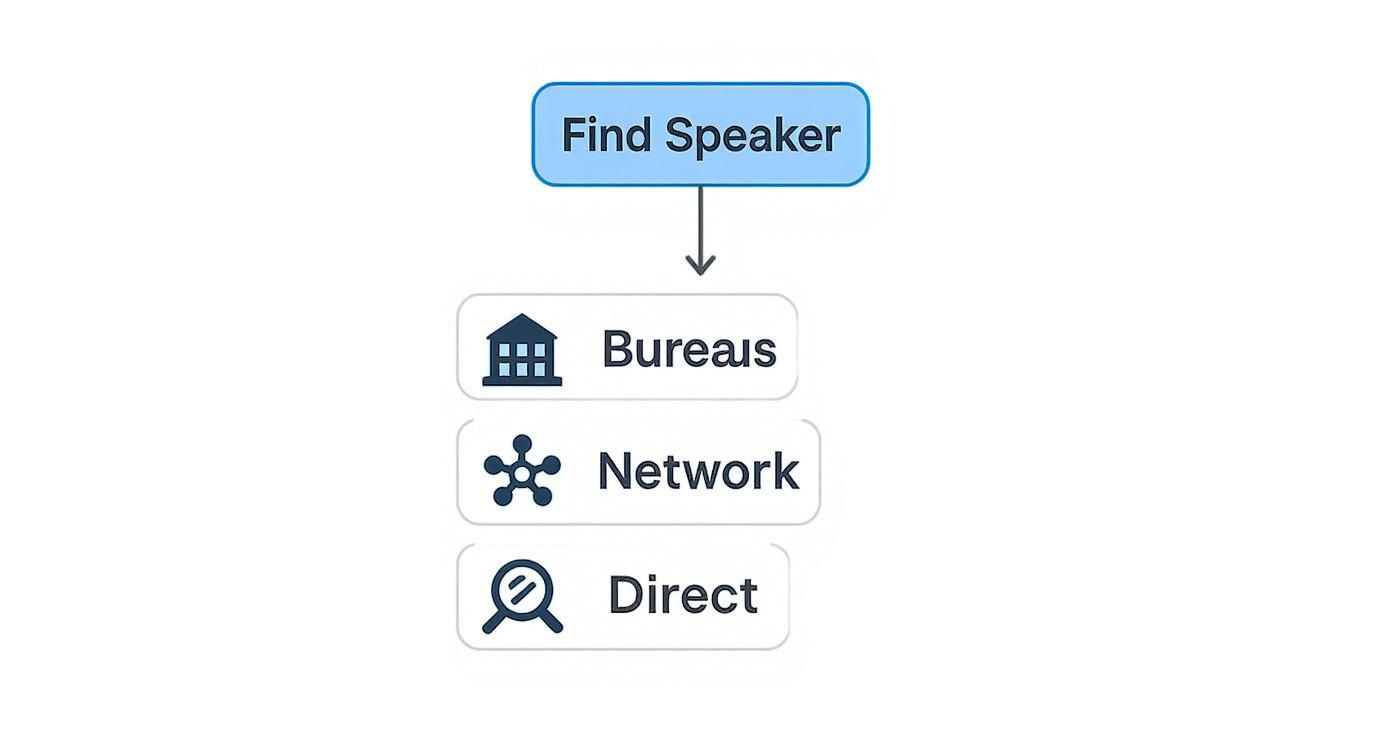
While direct searches and networks are solid options, speaker bureaus offer a more structured path to finding pre-vetted, high-quality talent.
Analyzing Speaking Clips with a Critical Eye
When watching a speaker's demo reel, look past the flashy editing. Your job is to break down their performance and see if their style fits your event.
Here’s what to zero in on:
- Audience Connection: Are they just talking at the audience, or are they owning the stage and making eye contact? Look for unscripted moments of real interaction.
- Message Clarity: After watching a five-minute clip, can you easily sum up their main point? A fantastic speaker simplifies complex ideas into clear takeaways.
- Authentic Stage Presence: Do they look comfortable and natural on stage? Authenticity builds trust. A speaker like Inma Martinez, who advises governments on AI policy, has a natural authority that can't be faked.
The Non-Negotiable Reference Check
This is the single most important step. A highlight reel won't tell you if a speaker was difficult to work with or ignored requests for customization. A quick 15-minute chat with a previous event organizer is invaluable.
Get straight to the point with direct questions:
- How well did the speaker tailor their content for your audience?
- Were they professional and easy to work with?
- How did the audience respond to their session?
- Would you hire them again?
This real-world feedback protects you from a bad match. To stay organized, use a checklist to evaluate each potential speaker consistently.
Speaker Evaluation Criteria Checklist
| Evaluation Area | Key Questions to Ask | Desired Outcome / What to Look For |
|---|---|---|
| Relevance & Expertise | Does their expertise directly align with our event theme? Can they speak to current AI trends with authority? | Deep, demonstrated knowledge of the topic. Evidence of recent, relevant work. |
| Audience Engagement | How do they interact with the audience? Is their style lecture-based or interactive? | Charismatic and dynamic presence. Ability to hold attention and foster interaction. |
| Customization | Did they show a willingness to tailor their content in reference calls? | A clear process for understanding our audience and weaving key messages into their talk. Avoids a "canned" speech. |
| Professionalism & Reliability | What was the feedback from past organizers? Are they responsive? | Positive references, prompt communication, and a well-organized approach. |
| Value & Impact | What is the core takeaway for our audience? Will their message inspire action? | A clear, powerful message that aligns with our event goals and provides tangible value. |
This structured approach removes guesswork and helps you justify your final selection with confidence.
Insightful Interview Questions for Potential Speakers
The final step is a call with your top candidates. This is your chance to see if their personality clicks and confirm they're the right fit.
Your interview with a potential keynote speaker isn't just a Q&A; it's the beginning of a collaboration. Use this time to see if their working style and vision for the talk align with your own.
Here are a few essential questions:
- "How do you plan to customize your message for our specific audience and event theme?" This separates the pros from those who deliver the same talk repeatedly. Look for someone who asks thoughtful follow-up questions.
- "Can you describe your process for engaging with an audience, especially in a hybrid or virtual format?" This is crucial for modern events.
- "What is the core takeaway you want our audience to leave with?" A great speaker will have a crisp, clear answer, ensuring their objective aligns with yours.
The market for top-tier futurist and AI keynote speakers is hot. Data shows leading futurists were booked for 80–120 events per year, often 12–18 months in advance. Fees can range from $20,000 to over $75,000, highlighting why due diligence is so important. You can find out more about the demand for futurist speakers and their booking trends.
By following this vetting framework, you can move past the polished highlight reel and confidently pick one of the best keynote speakers for conferences.
Navigating Speaker Fees, Contracts, and Logistics
Once you've selected your speaker, the process shifts from evaluation to negotiation. This phase requires a sharp eye for financial details and a commitment to creating an ironclad agreement.
A speaker's fee is a complete package, and knowing what's included is critical for keeping your budget on track. Getting this right from the start prevents surprises and sets the stage for a smooth partnership.
Decoding Speaker Fees
The primary fee covers the presentation, expertise, and preparation. This includes discovery calls and time spent tailoring content for your event.
For a comprehensive breakdown, explore our guide on [conference speaker fees](https://speakabout.ai/blog/conference-speaker-fees).
Beyond the base fee, you'll need to account for standard ancillary costs:
- Travel Expenses: This typically means a round-trip, business-class flight.
- Accommodation: Plan on covering their hotel for the night before and the night of their presentation.
- Ground Transportation: This covers rides to and from airports, the hotel, and the venue.
The Contract: Key Clauses to Watch For
The speaker contract is your single source of truth. It protects both parties by outlining every expectation in unambiguous language. To be legally binding, it needs to contain the [essential elements of a contract](https://www.bolosign.com/blog/elements-of-a-contract).
Pay close attention to these clauses:
- Payment Schedule: The standard is a 50% deposit to secure the date, with the final 50% due on or before the presentation day.
- Cancellation Policy: This section must clearly define the financial consequences and timelines if either party cancels.
- Recording and Usage Rights: If you plan to record the session, the contract must specify how you can use the footage. Many speakers charge an additional fee for these rights.
A strong contract isn't about mistrust; it's about clarity. It's a roadmap that outlines every detail of the partnership, ensuring everyone is on the same page.
Creating Extra Value Beyond the Keynote
While a speaker's fee is a major investment, there are smart ways to maximize its return. Think beyond the 60-minute keynote to deepen the speaker's engagement with your audience.
This approach transforms a single presentation into a richer experience. You could bundle the keynote with an intimate breakout session or a private Q&A with your executive team. An expert like Kate Darling from MIT, who speaks on robot ethics, might follow her main-stage talk with a hands-on workshop. This adds immense value and gives attendees direct access to world-class expertise.
The rise of virtual events on platforms like Zoom and Hopin has unlocked new possibilities. It allows speakers to reach global audiences, which can reduce organizer costs by up to 75% compared to an in-person event. This makes top-tier talent more accessible, even on a more modest budget.
Setting Your Speaker Up for Success
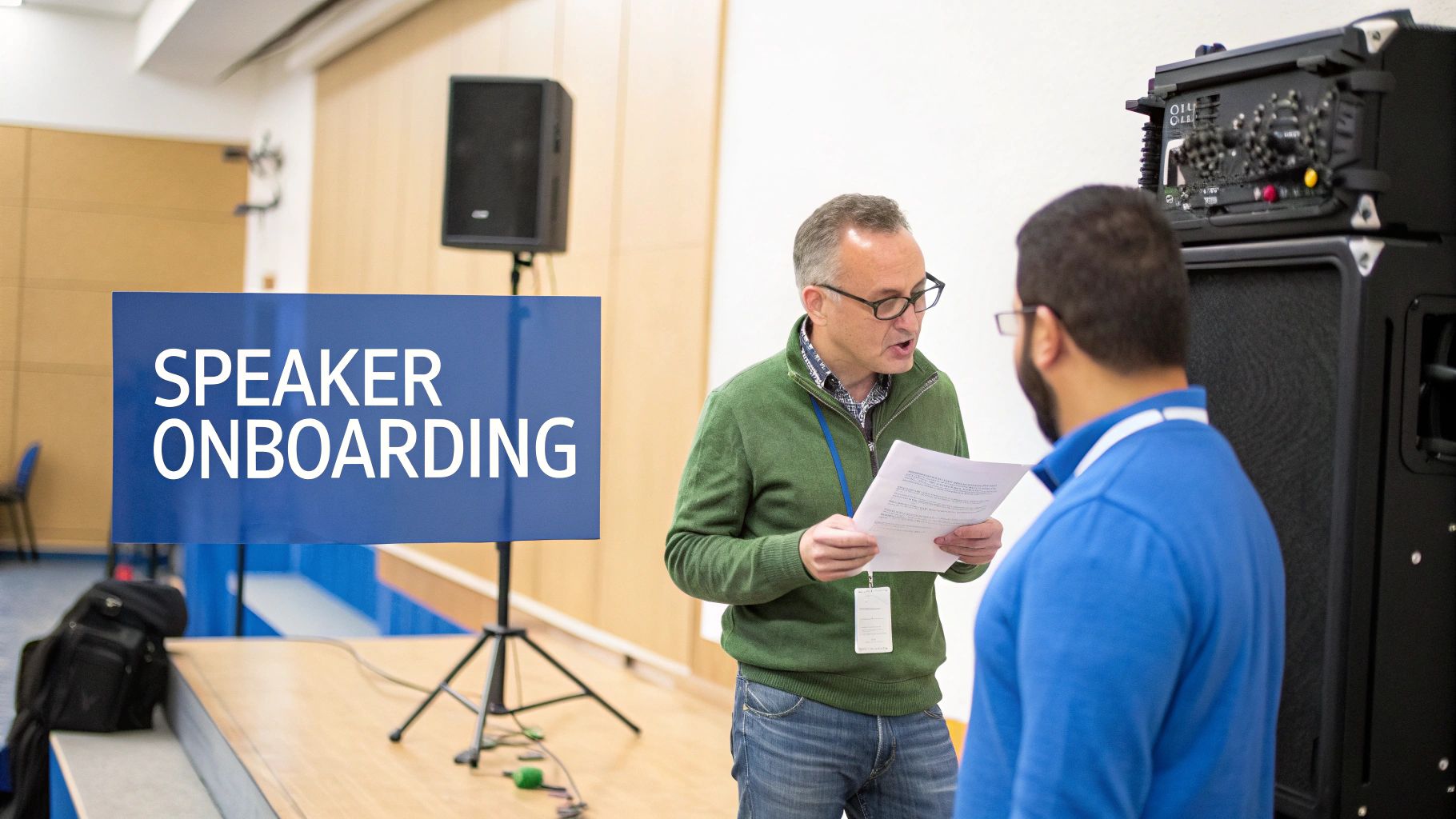
The partnership truly begins after the contract is signed. A well-prepped speaker is an empowered speaker, and it's your job to provide everything they need to excel on stage. A smooth onboarding process can elevate a presentation from good to unforgettable.
This is about building a collaborative relationship. The goal is to arm your speaker with the context and tools to deliver a talk that feels created exclusively for your audience.
Crafting the Essential Briefing Document
Assemble a comprehensive briefing document—your speaker’s single source of truth for the event. It eliminates guesswork and lets them start tailoring their content immediately.
This cheat sheet must include:
- Audience Demographics: Go beyond job titles. What are their biggest challenges? What do they hope to learn? This helps a speaker like Dr. Rana el Kaliouby, an expert in Emotion AI, connect her message directly to the audience’s work.
- Key Event Themes: Reiterate the conference's core message and explain how their keynote fits into the bigger story.
- Logistical Details: Include the exact time and location, AV setup, a stage layout diagram, and the name and cell number of their dedicated on-site contact.
Mastering the Logistics and AV Coordination
Smooth logistics are the invisible foundation of a great keynote. When a speaker can focus 100% on their presentation, not on travel or technical glitches, they perform better. Your job is to make their journey from home to the stage seamless.
Schedule a dedicated AV check well before their session. This gives them a chance to get comfortable with the stage, click through their slides, and ensure the mic and lighting are perfect. High-quality professional stage backdrops can also transform the presentation's look and feel.
The best event planners are masters of detail. They anticipate needs before the speaker even has to ask, creating an environment of calm professionalism that allows top performers to do their best work.
The Crucial Pre-Event Strategy Call
Never skip the pre-event call. This conversation, held a couple of weeks out, is where you and the speaker finalize content and build rapport. It’s the final alignment check to ensure their message will hit the mark.
It's also the perfect time to craft their introduction. Check our article on [speaker introduction samples](https://speakabout.ai/blog/speaker-introductions-sample) for ideas to give them the powerful welcome they deserve.
Key goals for the call:
- Finalize Key Takeaways: Confirm the three to five main points the audience must walk away with.
- Review the Presentation Flow: Briefly run through the talk's narrative arc.
- Discuss Engagement Tactics: Talk about how they plan to interact with the audience, whether through Q&A, polls, or storytelling.
By investing in a thoughtful onboarding process, you’re not just hiring one of the best keynote speakers for conferences; you’re building a true partnership that ensures they can deliver a session that resonates deeply.
Your Top Questions About Hiring a Keynote Speaker, Answered
Hiring a keynote speaker can feel complex, but it doesn't have to be. Let's walk through some of the most common questions event planners ask.
How Far in Advance Should I Book My Keynote Speaker?
For top-tier thought leaders, book 9-12 months in advance. Their calendars fill up at an astonishing rate. If you're aiming for a futurist like Zack Kass, formerly of OpenAI, consider that a standard lead time.
For most other professional speakers, a 6-month window is a safe bet. Booking early provides more options and less stress for planning and logistics.
What Do Keynote Speaker Fees Actually Cover?
Speaker fees vary widely, from around $10,000 for industry experts to upwards of $75,000 for world-renowned names. The fee almost always covers the presentation and pre-event preparation calls.
It doesn't typically include travel-related expenses. Budget separately for:
- Airfare: Usually business-class.
- Hotel: At least the night before their talk.
- Ground Transportation: All rides to and from airports, the hotel, and your venue.
These are typically billed back to you after the event, so confirm this in writing.
What Should a Speaker Contract Cover?
A solid contract is the foundation of a great partnership, protecting both you and the speaker by leaving no room for assumptions.
A detailed contract isn't about anticipating problems; it's about creating clarity. By outlining every detail from payment to performance, you build a framework for a seamless and successful collaboration.
At a minimum, your contract must include:
- Fee and Payment Schedule: Total fee, deposit amount (typically 50%), and final balance due date.
- Event Details: Exact date, time, location, and presentation length.
- Travel and Lodging: A clear statement on who books and pays for arrangements.
- Recording Rights: Whether you can record the session and how the footage can be used.
- Cancellation Clause: Financial implications for both sides if the event or speaker cancels.
Can I Negotiate a Speaker's Fee?
It depends. Elite speakers often have firm, non-negotiable fees. For many other professionals, there's often room for a conversation.
The key is to negotiate by offering value, not just asking for a discount. Instead of haggling, think creatively. Could you offer to buy their book for every attendee? Provide a professionally shot video of their talk for their marketing reel? Another great option is booking them for multiple engagements, like a keynote and a private workshop. This creates a win-win scenario.
At Speak About AI, we handle this entire process for you. Our roster is filled with the world’s leading minds on artificial intelligence, ready to deliver the insights your audience needs. We manage the contracts, logistics, and planning, so you can focus on creating an incredible event.