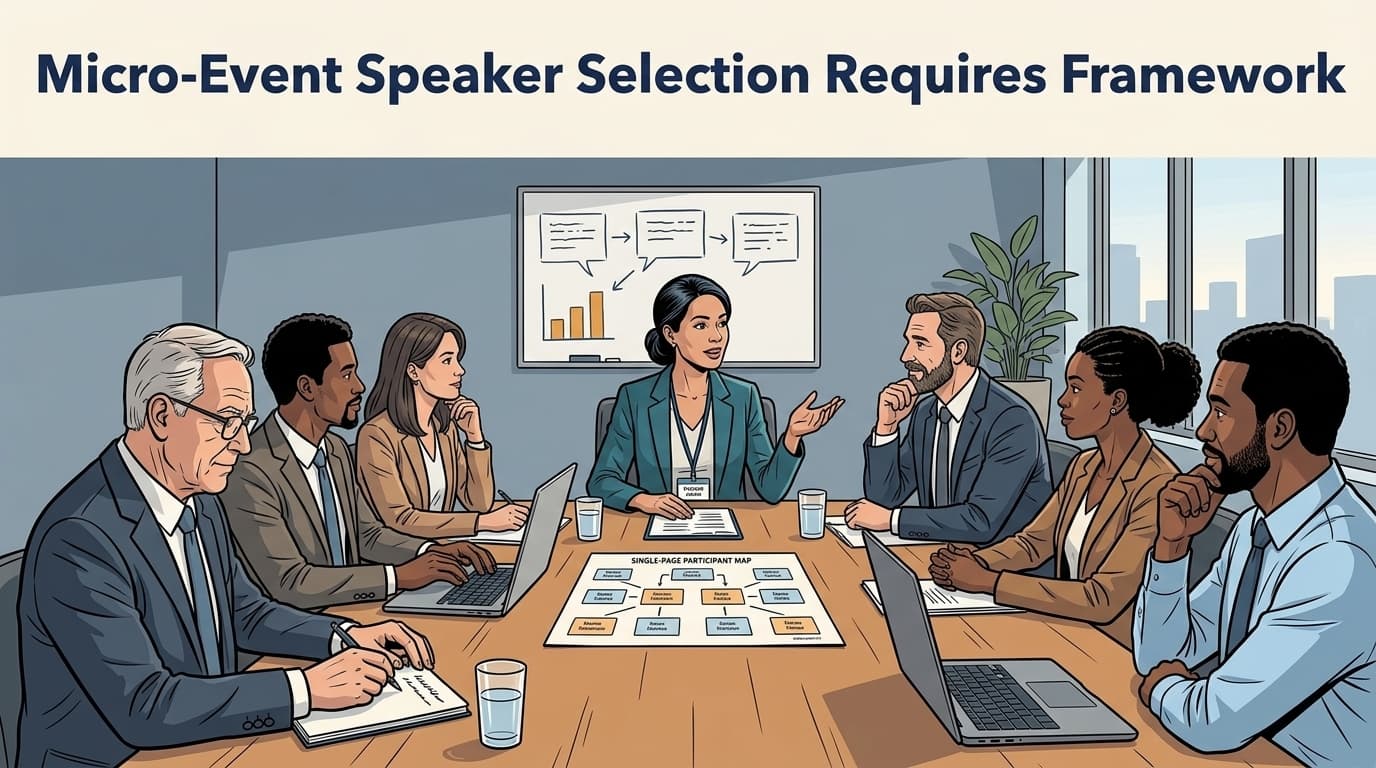
Micro-Event Speaker Selection Requires a Framework Large Conferences Cannot Provide
Micro-event speakers need facilitation skills and intellectual depth, not just polished narratives—and most large-conference speakers lack both.
Discover expert articles, cutting-edge tools, and premium resources for AI-powered events and speaker management
Micro-event speakers need facilitation skills and intellectual depth, not just polished narratives—and most large-conference speakers lack both.
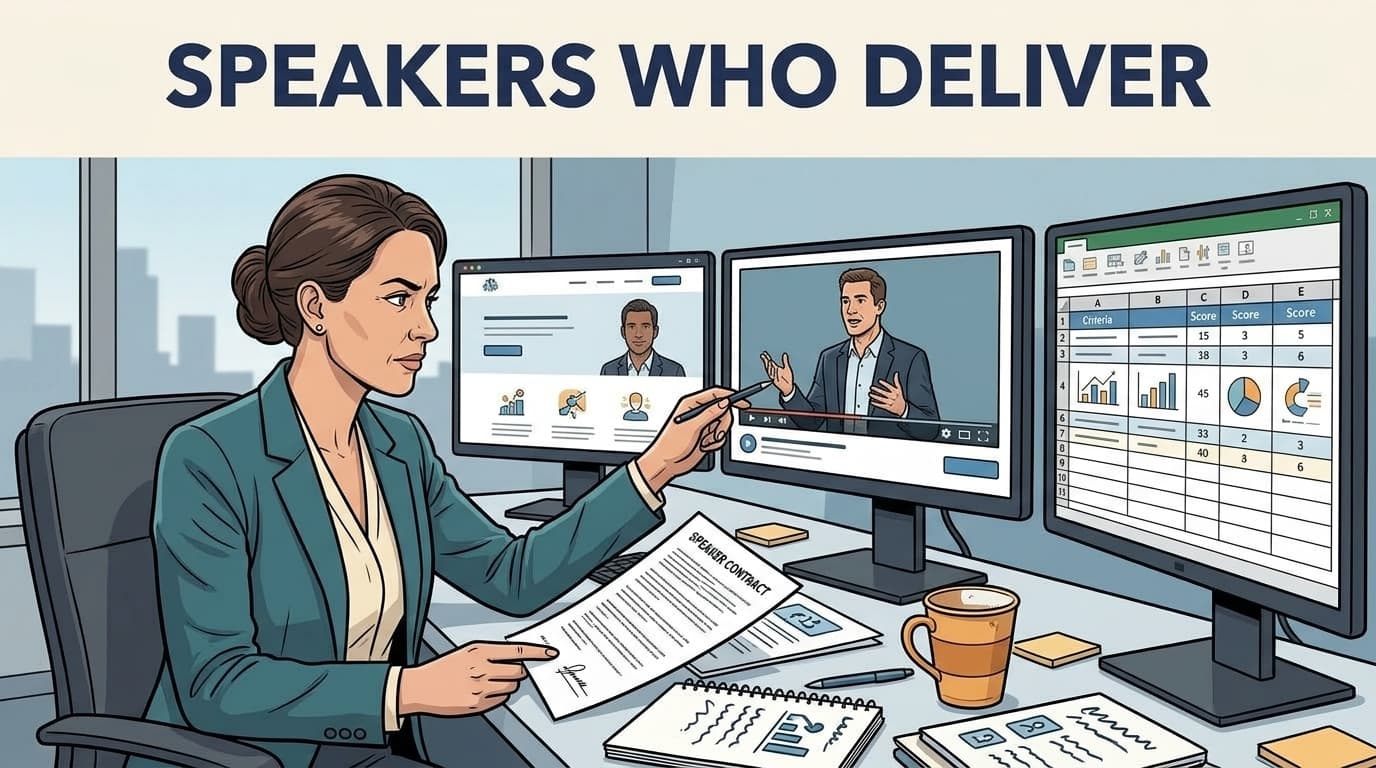
Most polished speaker websites hide mediocre content, so elite planners now demand full-length recordings, live previews, and verifiable references before booking.
Most organizations waste five-figure keynote investments by measuring applause instead of designing for lasting behavioral change and structured 30-to-60-day aftercare.
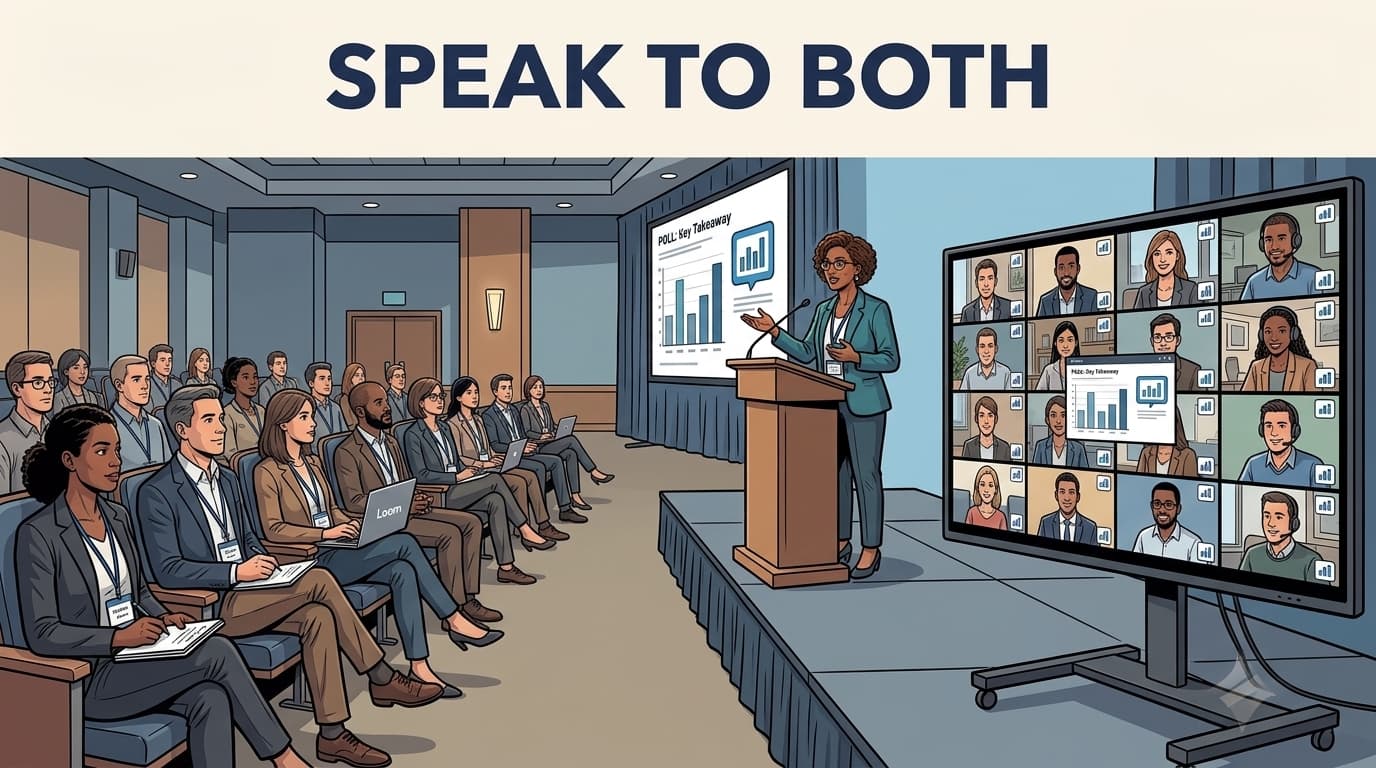
Most hybrid event failures stem from speaker selection, not production quality—remote attendees need content designed for two audiences, not a livestreamed in-person performance.
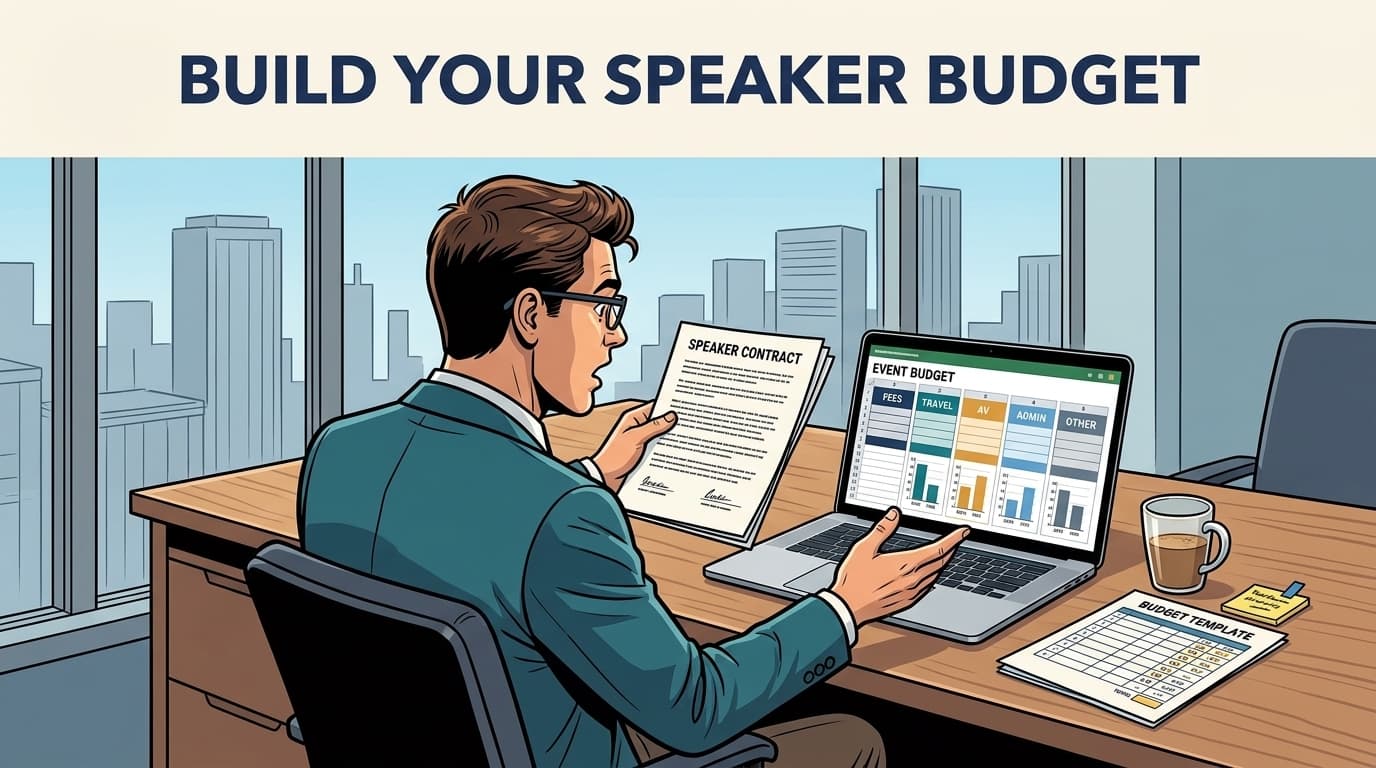
Event planners budgeting $22,449 for keynote speakers discover the real cost runs 25-40 percent higher once travel, customization, and technical requirements are factored in.
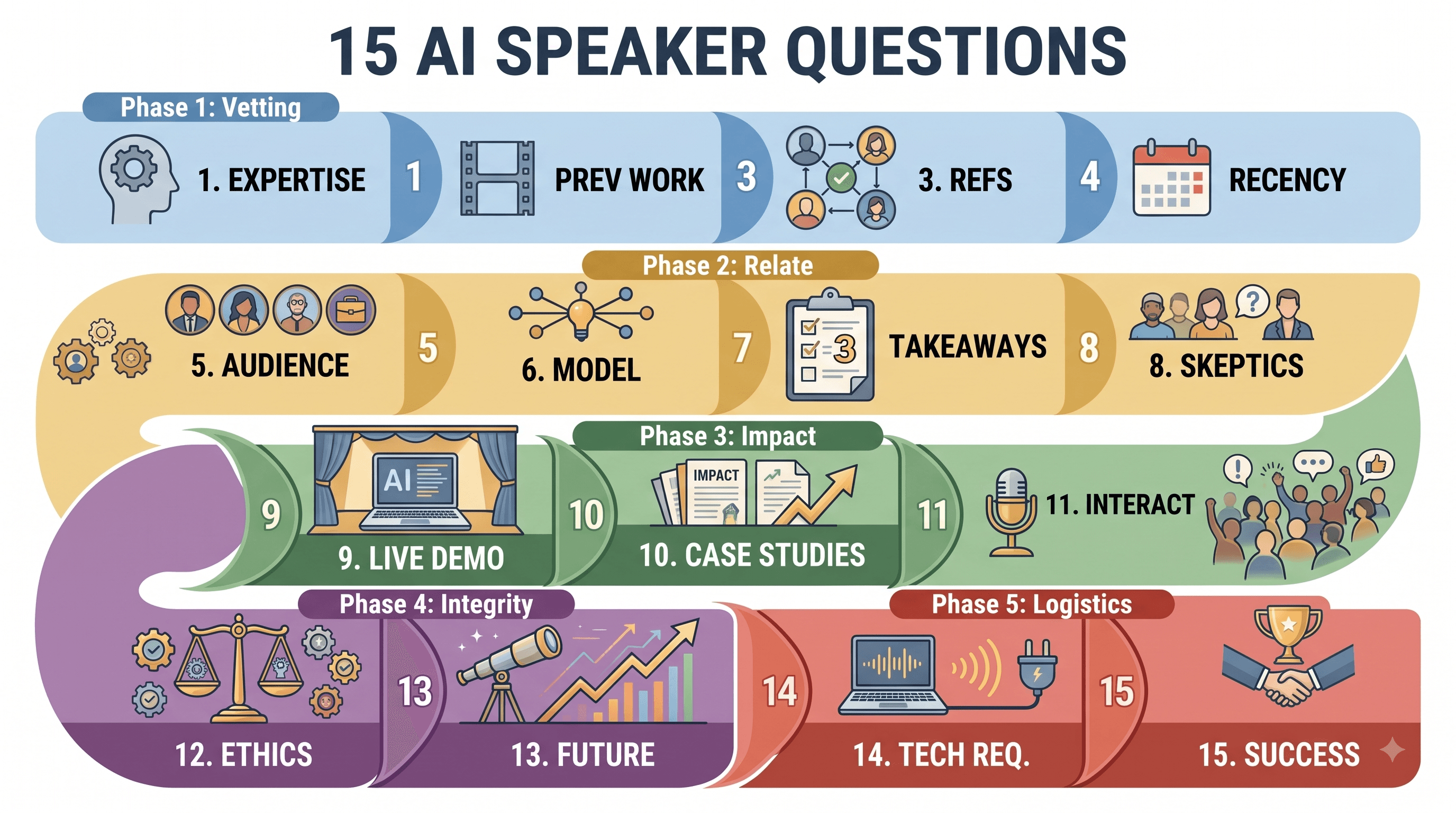
The checklist a speaker bureau runs so you do not have to. Fifteen questions to ask an AI keynote speaker before you book, covering customization, what they actually built, live demo policy, virtual setup, and cancellation terms, plus what a strong answer sounds like.
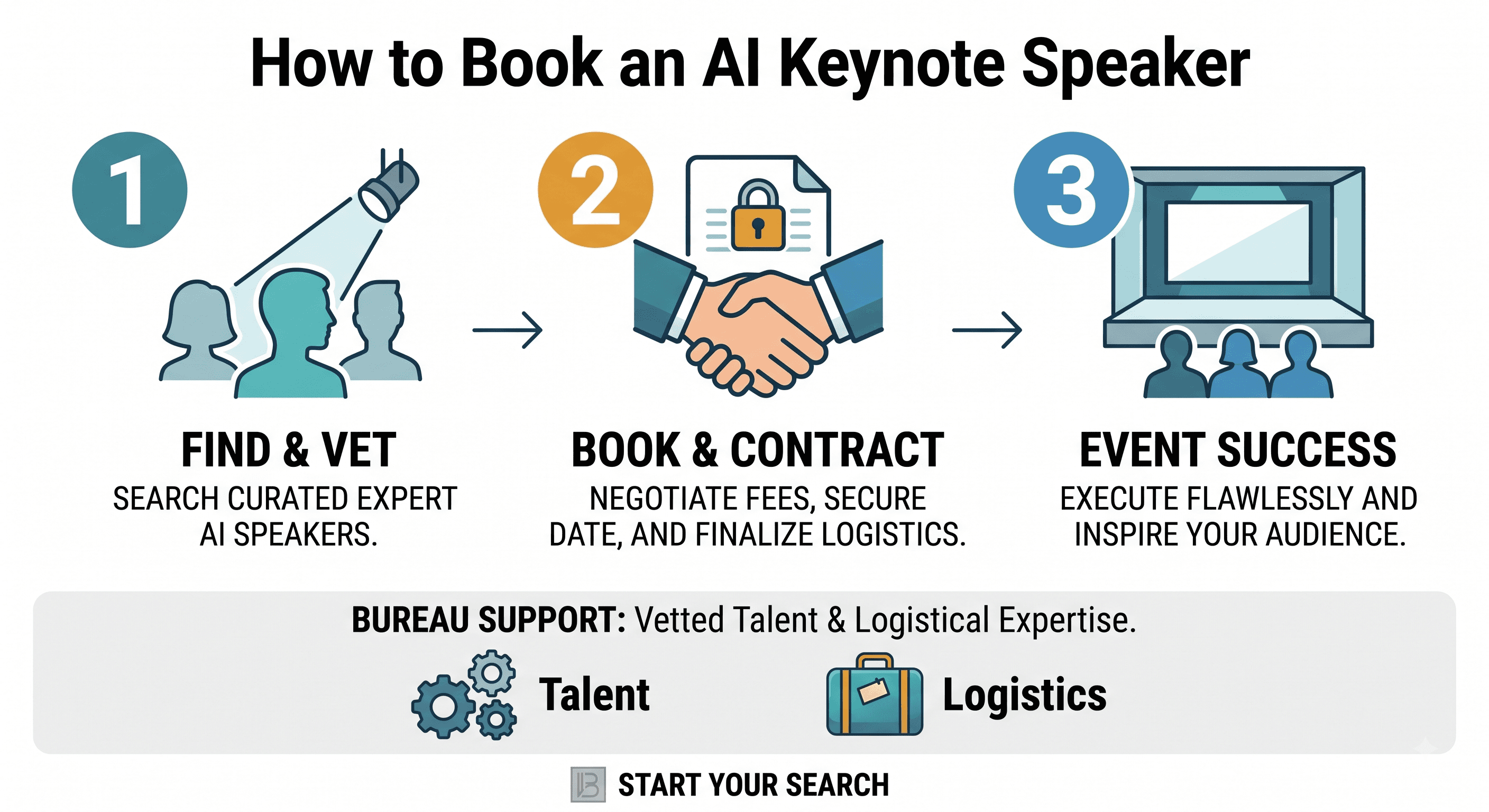
How do you actually book an AI keynote speaker? The real process from a bureau's side—inquiry, availability, quote, contract, prep call, event—with honest timelines: book 3–6 months out, what's still possible in four weeks, and why a bureau costs you nothing extra.
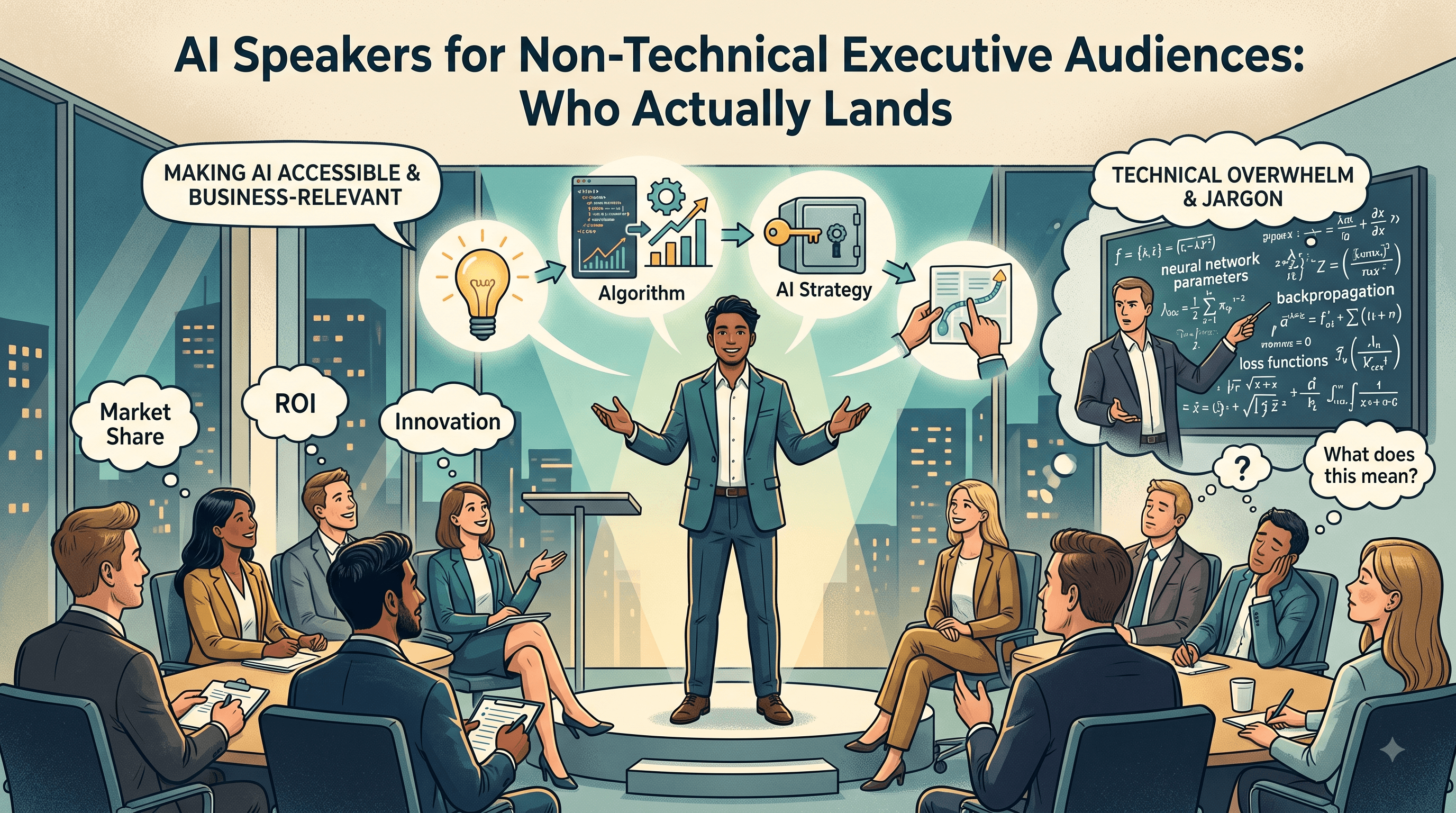
Booking an AI speaker for a non-technical board or leadership meeting? The one who lands is a translator, not a lecturer—analogies, live demos, business framing. Five who do it: Kozyrkov, Miller, Li, McCauley, and Verd.
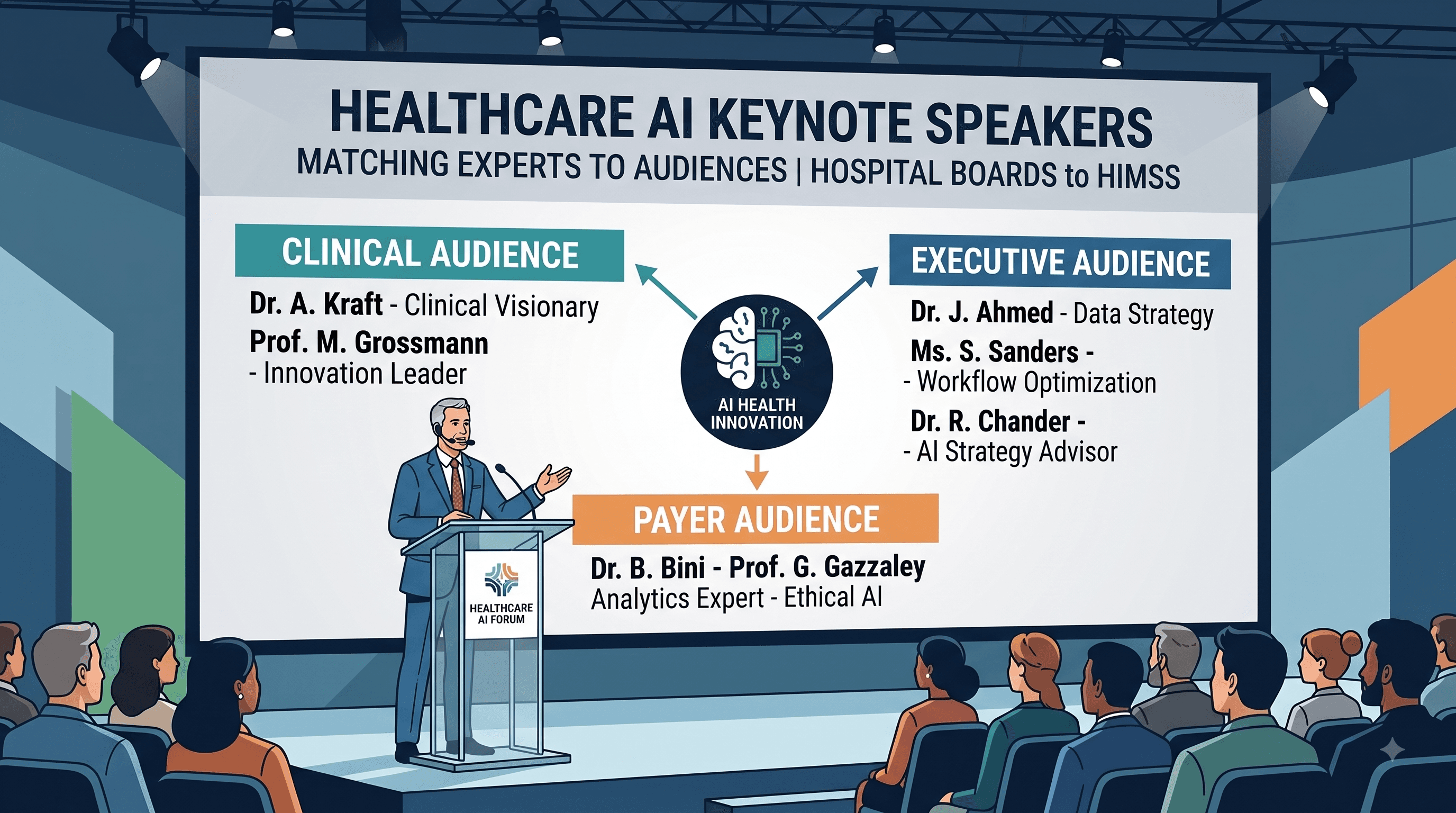
The best AI speakers for healthcare executives, matched to the room. Seven medically credentialed AI experts—Kraft, Grossmann, Ahmed, Sanders, Bini, Gazzaley, and Chander—segmented for clinical, executive, and payer audiences, from hospital boards to HIMSS.