

Booking Speakers for Schools Made Simple

Choosing the right speakers for schools is about more than filling an assembly slot; it’s about creating a lasting impact on your students and staff. The most effective events start with a clear "why"—a goal that connects directly with your community's needs, whether that's tackling mental health, sparking interest in STEM, or teaching digital citizenship.
Setting Goals For Your School Speaker Event
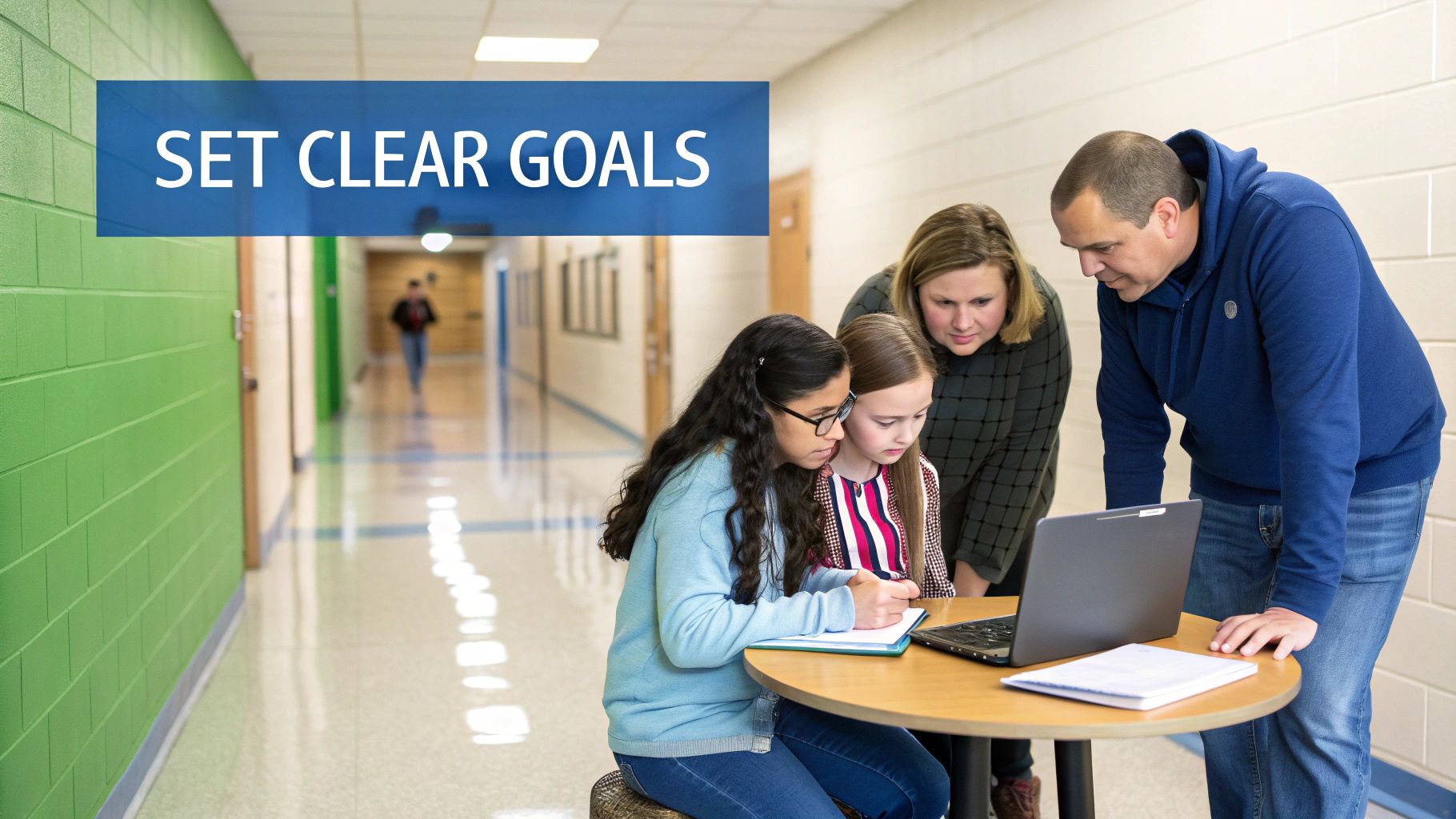
Before searching for a speaker, the most critical step is defining what success looks like. A powerful presentation can be a catalyst for change, but only if it's aimed at the right target. This process should involve teachers, students, and even parents to ensure the chosen topic resonates deeply and turns a simple event into a meaningful community moment.
Defining Your Event's Purpose
Start by identifying your most urgent needs. Is your community struggling with social media complexities? Or is there demand for career readiness that prepares students for the jobs of tomorrow?
Frame your goals around common themes:
- Boosting Mental Health and Well-being: Address topics like resilience, stress management, and anti-bullying.
- Inspiring Academic and Career Pathways: Introduce emerging fields like AI, robotics, or entrepreneurship.
- Promoting Digital Citizenship and Media Literacy: Equip students with critical thinking skills for the online world.
- Fostering Diversity, Equity, and Inclusion: Encourage empathy by exploring different cultures and perspectives.
"The goal is to move beyond temporary buzz. A well-chosen speaker doesn't just deliver a talk; they launch a conversation that continues in classrooms and homes long after they've left the stage."
For instance, if a middle school sees a spike in online conflicts, their goal could be to "reduce incidents of cyberbullying by 25%." This specific objective immediately narrows your search to speakers for schools who are experts in digital safety, making the selection process more effective.
Aligning Speaker Topics with School Goals
| School Goal | Relevant Speaker Topic | Featured Speaker Example | How to Measure Impact |
|---|---|---|---|
| Improve Digital Citizenship | Online Safety & Social Media Responsibility | A cyberbullying expert or tech ethicist. | Pre/post-event surveys; track reported online incidents. |
| Increase STEM Engagement | Careers in Artificial Intelligence or Robotics | Dr. Emily Carter, an AI developer from our roster. | Enrollment numbers in STEM clubs; participation in tech competitions. |
| Enhance Student Well-being | Resilience, Mindfulness & Stress Management | A mental health professional or an athlete who overcame adversity. | Student self-reported stress levels; usage of school counseling services. |
| Promote College & Career Readiness | Entrepreneurship & Financial Literacy | Marcus Thorne, a financial literacy expert from our roster. | Increase in student-led projects; participation in career fairs. |
School Goal | Relevant Speaker Topic | Featured Speaker Example | How to Measure Impact
Improve Digital Citizenship | Online Safety & Social Media Responsibility | A cyberbullying expert or tech ethicist. | Pre/post-event surveys; track reported online incidents.
Increase STEM Engagement | Careers in Artificial Intelligence or Robotics | Dr. Emily Carter, an AI developer from our roster. | Enrollment numbers in STEM clubs; participation in tech competitions.
Enhance Student Well-being | Resilience, Mindfulness & Stress Management | A mental health professional or an athlete who overcame adversity. | Student self-reported stress levels; usage of school counseling services.
Promote College & Career Readiness | Entrepreneurship & Financial Literacy | Marcus Thorne, a financial literacy expert from our roster. | Increase in student-led projects; participation in career fairs.
Seeing it laid out like this makes it clear how a specific goal leads directly to a specific type of speaker and a clear way to measure if it worked.
From Broad Topics to Actionable Goals
Turning a general idea into a measurable goal is what separates a good event from a great one. "To get students interested in science" is weak. A stronger goal is "to increase enrollment in our robotics and coding classes by 15% next semester."
This clarity helps justify the investment. With the global education market projected to hit nearly $10 trillion by 2030, leveraging expert voices is key to navigating shifts in technology and society. You can discover more insights about the role of speakers in education to see how they are shaping the future of learning.
Imagine your high school wants to boost career readiness. You could bring in one of our AI experts to demystify artificial intelligence. The goal wouldn't just be to explain AI; it would be to launch an after-school AI club or inspire a team to enter a tech competition. That’s how a speaker's message becomes tangible action.
Finding and Vetting the Right School Speaker
Once you know why you're bringing in a speaker, it's time to find the right person. Think of this process less like a web search and more like casting a lead role. You need the right talent, message, and delivery to capture your audience.
While a Google search is a start, the best speakers for schools are often found through specialized channels. Speaker bureaus like ours have already curated experts who are brilliant in their fields and masters at connecting with students. This pre-vetted pool saves you time and guesswork. Your own network is also invaluable; a recommendation from a trusted colleague is a powerful endorsement.
Building Your Shortlist
Create a focused shortlist of three to five strong candidates to keep the decision-making process manageable. This is where you match potential speakers directly to the goals you set earlier, looking for perfect alignment between their expertise and your event's purpose.
For example, if you want to pull back the curtain on artificial intelligence for your high schoolers, you need specialists who make complex tech exciting.
- From Our Roster: Dr. Emily Carter is fantastic at this. She turns dense topics like machine learning into interactive, eye-opening sessions, showing students how AI is already part of their world, from social media feeds to future jobs.
If your aim is to equip students with practical life skills, you'll want a different kind of expert.
- From Our Roster: Look for a speaker like Marcus Thorne. He cuts through the noise to teach teens real-world money skills—budgeting, saving, and avoiding debt—in a way that sticks.
These examples from our roster show the diverse talent available to meet any goal.
The Vetting Process: Looking Beyond the Bio
With a shortlist, the real detective work begins. Your best friend in this phase is the speaker's reel or clips from past school events. Look for the energy in the room. Are students engaged—leaning forward, asking questions? The audience's reaction reveals a speaker's ability to connect.
Beyond video, a proper vetting process requires a few more crucial steps.
A great speaker does more than just present information; they create an experience. Your vetting process should focus on finding someone who can deliver that experience safely and effectively for your specific student body.
Here’s a simple framework to guide you:
- Analyze Their Content: Does the message align with your school's values? Ask for a detailed outline to confirm it's age-appropriate and hits your key themes.
- Check Their References: Ask for contact information from two or three schools they've recently presented at. Make the calls. Ask about their professionalism, adaptability, and the students' response.
- Review Their Digital Footprint: Look at their professional website, blog, or LinkedIn to get a richer picture of their expertise and communication style.
- Confirm Safeguarding Protocols: This is non-negotiable. Verify that the speaker and their agency have clear safeguarding policies and can provide a current background check. Student safety is always the top priority.
Following these steps transforms the search from a booking exercise into a strategic decision, ensuring you choose a partner who will make a real, positive impact.
Navigating Budgets and Speaker Contracts
Let’s talk money. Building a clear budget is the first step to a successful event. Think beyond the speaker's fee to include travel, accommodation, meals, and any specific tech they might need. A simple spreadsheet keeps things organized and prevents surprises.
Building Your Budget and Finding Funding
Once you have a ballpark figure, it's time to find the funds. Don't assume it all has to come from the school's general budget. Creative community efforts often fund the most memorable events.
Look into these sources:
- PTA or PTO Support: Parent-teacher organizations are often eager to fund initiatives that directly benefit students.
- Grants and Foundations: Search for educational grants focused on student enrichment, mental health, or STEM.
- Local Business Sponsorships: Community businesses often support local schools in exchange for a thank-you or social media shout-out.
- School District Funds: Check with your district office for dedicated funds for professional development or special student programs.
Having a transparent conversation about fees is essential. At our agency, we believe in clarity from the beginning. We work with schools to find incredible speakers that align with their budget, including cost-effective virtual options that eliminate travel expenses entirely.
Understanding Speaker Fees and Contracts
Speaker fees vary widely based on demand and format. For a closer look at what goes into these numbers, check out our guide on understanding https://speakabout.ai/blog/conference-speaker-fees.
Once terms are agreed upon, the contract is your most important document. Our agents walk clients through every clause, but you should always pay close attention to key areas.
A solid contract should clearly outline:
- Payment Schedule: Usually a deposit to hold the date and a final payment around the event.
- Cancellation Policies: What happens if either party has to cancel or reschedule.
- Included Services: Exactly what the fee covers—presentation length, Q&A, prep calls, etc.
- Technical and Travel Riders: The speaker’s specific needs, from microphone preferences to logistics.
If you’re planning a virtual or hybrid event, consider building a budget-friendly lecture capture system to record the session, extending its value long after the event.
It's also worth noting that with about 1.52 billion English speakers worldwide, a speaker presenting in English can engage with nearly 25% of the global population, helping to share ideas and foster cross-cultural connections.
4. Nailing Down the Logistics and Tech
You’ve picked your speaker and signed the contract. Now it's time for execution. A memorable event is the result of meticulous behind-the-scenes work that makes everything feel effortless. Getting these details right ensures your speaker can focus entirely on delivering a great presentation.
Clear communication is key. Assign a single staff member as the speaker's dedicated point of contact. This person becomes their go-to for everything, cutting out confusion and making them feel welcome.
Coordinating Travel and On-Site Needs
For out-of-town speakers, confirm all travel details—flights, car service, hotel—long before the event. Send a clean itinerary to the speaker and their team.
On event day, the little things count. Have a quiet, private space ready for them to prep with water, snacks, and a copy of the day's schedule. To make their arrival smoother, consider using modern visitor management systems for a professional and secure check-in.
A well-managed arrival and a comfortable prep space set a positive tone for the entire event. When speakers feel cared for, they are better equipped to deliver a powerful and engaging message to your students.
Mastering the Tech Rehearsal
A technical glitch can kill a room's energy. A thorough tech check is essential. Schedule it for at least an hour before students arrive.
During this run-through, test everything:
- Microphone: Check audio levels in the actual room to ensure it's crisp and clear.
- Projector and Screen: Have the speaker plug in their laptop and run through slides. Is the connection stable? Are visuals bright?
- Internet Connection: If they plan to show a video or do a live demo, test the Wi-Fi.
This rehearsal gives everyone peace of mind. The speaker gets a feel for the stage, and your tech team can fix any bugs without an audience watching.
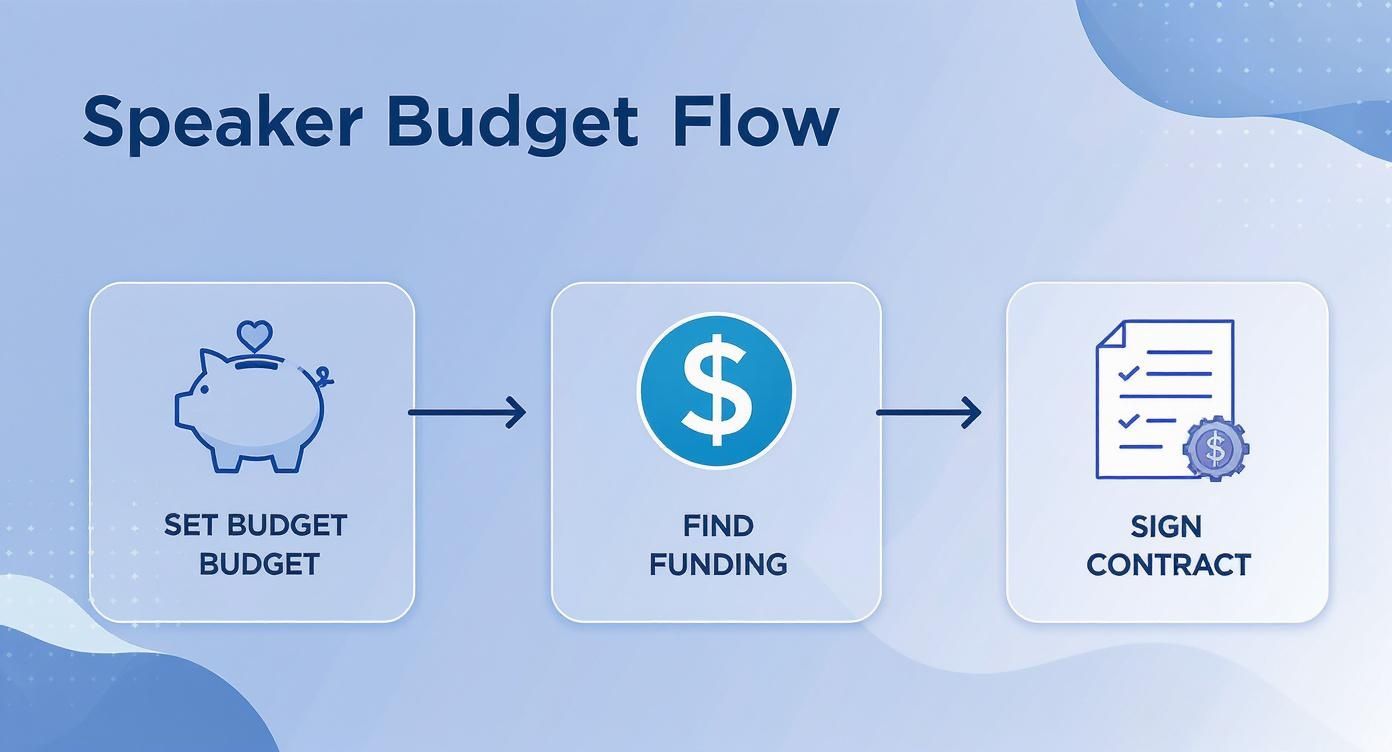
As this flowchart shows, sorting out your budget is the critical first step. Once that's locked in, you can move forward with confidence into event-day logistics.
Building a Reliable Event Day Timeline
A detailed timeline is your roadmap, keeping your team and the speaker in sync. When one of our AI experts spoke at a high school, the event lead sent a timeline a week in advance covering everything from airport pickup to the Q&A. This simple document eliminated guesswork and let our speaker focus on connecting with students.
If you need a starting point, check out our event planning timeline template to build your own schedule.
Event Day Logistics Checklist
Use this table to assign roles and track progress on the big day, ensuring no detail falls through the cracks.
| Timeline | Task | Assigned To | Status |
|---|---|---|---|
| 2 hours prior | Tech team confirms all A/V equipment is set | Mr. Davis | Completed |
| 1.5 hours prior | Designated contact greets speaker upon arrival | Ms. Chen | Completed |
| 1 hour prior | Conduct full tech rehearsal with speaker | Mr. Davis | In Progress |
| 30 mins prior | Final check of stage, water, and notes | Ms. Chen | Pending |
| 15 mins prior | Staff begins guiding students into the venue | Mr. Smith | Pending |
| Event Start | Introduction of the speaker | Principal | Pending |
| Post-Event | Guide speaker for Q&A or departure | Ms. Chen | Pending |
Timeline | Task | Assigned To | Status
A clear, shared checklist is key to a smooth, professional, and stress-free event for everyone involved.
Preparing Students and Staff for the Visit
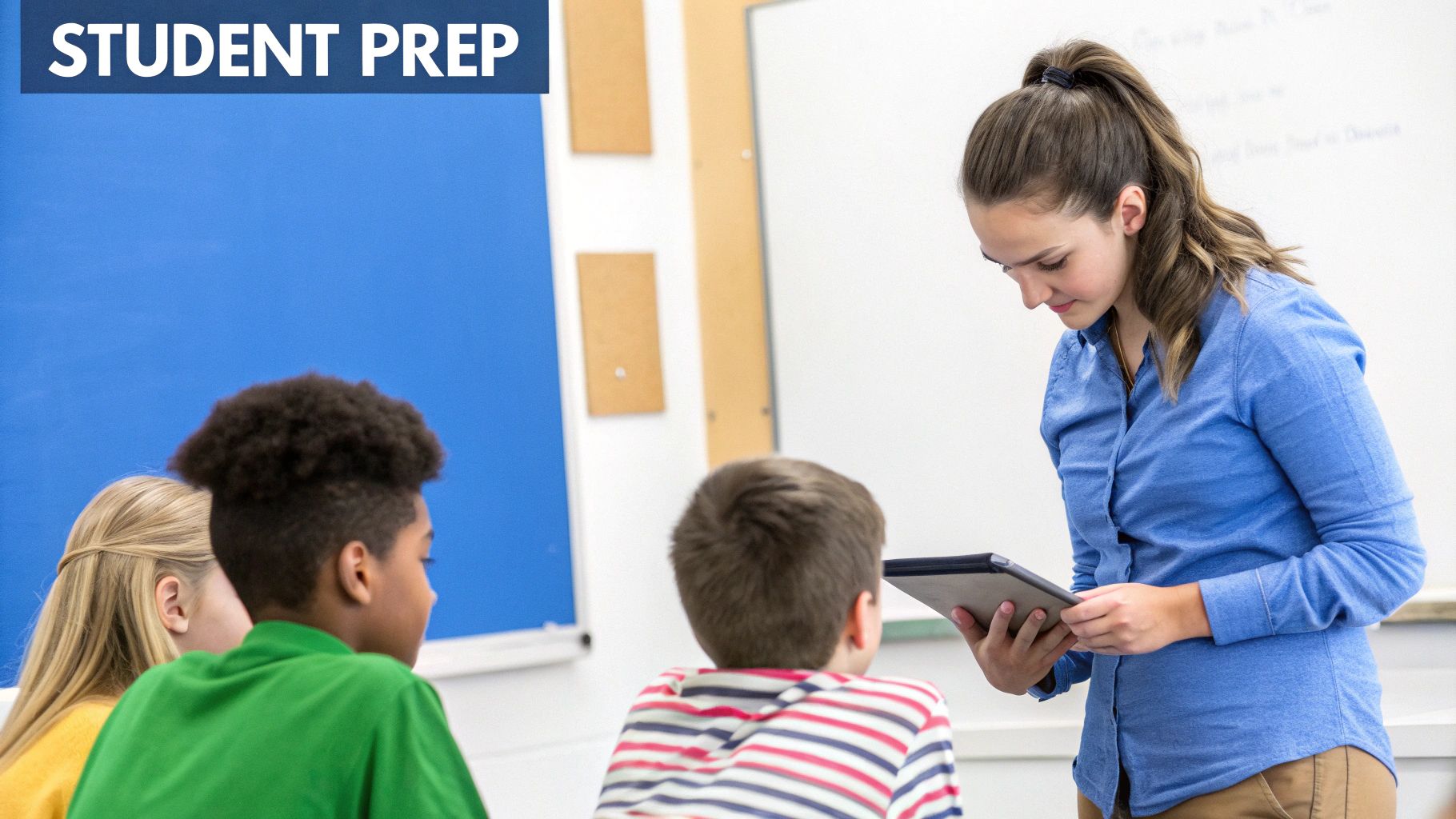
A great speaker event starts long before your guest arrives. The real magic happens when you transform a passive listening session into an active experience. This means building excitement and giving students and staff the context they need in the weeks leading up to the visit. When students walk in already knowing a little about the topic and the speaker, they are ready to learn.
Building Anticipation and Context
Start creating a buzz about two to three weeks out with simple, consistent communication.
Introduce the speaker and their topic through:
- Morning Announcements: Share a quick fact from the speaker’s bio or a "question of the day" related to their topic.
- School Newsletters: Include a short feature about the visit and a link to one of the speaker's articles or videos.
- Hallway Displays: Well-placed flyers with the speaker's photo and a compelling headline can build familiarity.
This simple introduction turns a stranger into an awaited guest and sets the stage for a much more impactful session.
A well-prepared audience is an engaged audience. Providing context beforehand helps students connect the dots between the speaker's message and their own lives, making the entire experience more personal and memorable.
Connecting the Message to the Curriculum
Deepen the impact by weaving the speaker's themes into classroom learning. We can provide ready-to-use materials from our speakers to help teachers integrate the topic.
For example, if one of our AI experts is coming to speak, a science teacher might lead a discussion on algorithms, while an English class could debate the ethics of AI. These cross-curricular connections reinforce the learning and show the real-world application of their school subjects. For more tips, check out our sample speaker introductions that are guaranteed to captivate an audience.
Equipping Staff for a Successful Event
Finally, get your staff fully prepped. Give them a simple one-page briefing that covers:
- Speaker's Bio: A summary of their background.
- Key Talking Points: The main ideas the speaker will cover.
- Connection to School Goals: How the visit supports your school’s objectives.
- Suggested Follow-Up Questions: Prompts teachers can use in class after the event.
When teachers are in the loop and enthusiastic, that energy is contagious. This unified front ensures that the visit by one of our speakers for schools becomes a shared community experience that sparks lasting curiosity.
Measuring Impact and Continuing the Conversation
The event is over, but the real work is just beginning. The true value of a speaker is the lasting change they inspire. Measuring that impact and keeping the momentum going is what turns a single assembly into a catalyst for growth.
Simple Ways to Gather Feedback
Gather honest feedback to capture immediate reactions and long-term shifts in thinking. Quick, simple methods get the highest response rates.
Use short, anonymous surveys with tools like Google Forms. Ask direct questions to get right to the point.
- For Students: What was your single biggest takeaway? On a scale of 1-5, how much did this make you think differently?
- For Staff: How will this presentation influence your classroom discussions? What resources would help you continue this conversation?
These data points provide an instant snapshot of the event's success and give you invaluable intel for planning future events.
Extending the Conversation Beyond the Assembly
The best speaker visits spark a conversation. Encourage teachers to set aside time the next day for a guided discussion. This bridges the gap between a one-off event and your curriculum, helping students process what they heard on a deeper level.
Launch a creative follow-up project. If one of our speakers talked about the future of AI, you could kick off a student-led project exploring AI ethics. Or host a virtual Q&A with the speaker a month later. Activities like these reinforce the core message and empower students to take ownership of their learning.
The goal is to move from a one-time presentation to a sustained conversation. When a speaker's message is woven into the fabric of school life through follow-up activities, its impact grows exponentially, proving the long-term ROI.
This data-driven approach is central to education globally. Forums like the United Nations' World Statistics Day highlight how experts use data to drive education reform. You can discover more about how global statistics shape education to see this mindset in action. By gathering and acting on feedback, you ensure every speaker visit contributes meaningfully to your school’s mission.
Common Questions We Hear About Booking School Speakers
Here are the answers to the questions we get asked most often by educators and event planners, based on our years of experience connecting schools with incredible voices.
How Far in Advance Should We Book?
For the best selection and less stress, aim to book 6 to 12 months ahead of your event, especially for in-demand speakers. Booking early with us locks in your top-choice speaker for your preferred date, helping you avoid a last-minute scramble.
What Is the Average Cost for a School Speaker?
Fees can range from a few hundred dollars for a local expert to several thousand for a nationally recognized name. Have a clear budget in mind before you start your search.
We pride ourselves on finding exceptional speakers for every budget. This includes powerful virtual presentations from top-tier talent, which can be a more affordable option by eliminating travel and accommodation costs.
We work with a diverse roster of speakers and know how to find a perfect fit without compromising on quality or impact.
Can We Record the Speaker's Presentation?
This depends entirely on the speaker. Many protect their content as intellectual property and may not permit recording, or they may require an additional fee. It’s crucial to bring this up with us at the start so any permissions can be spelled out clearly in the contract.
What If Our School Has a Limited Budget?
Don't let a tight budget stop you. There are always creative ways to find funding:
- Grant Applications: Look into educational grants for enrichment programs.
- Partnerships: Team up with other schools in your district to split the costs.
- Sponsorships: Reach out to local businesses for community sponsorship.
Virtual presentations are another fantastic, budget-friendly way to bring our world-class speakers for schools directly to your students. You get all the value without the travel costs.
Ready to find the perfect speaker to inspire your students? Speak About AI simplifies the entire booking process, connecting you with leading experts in AI and beyond. Explore our roster of speakers and let us help you create an unforgettable event. Find your next speaker at https://speakabout.ai.