
Virtual Conference Best Practices: Top Tactics for 2025
The landscape of virtual events has evolved far beyond simple webinars into sophisticated, multi-faceted digital experiences. As audience expectations have grown, event planners face the challenge of not just capturing attention, but holding it, fostering genuine connection, and delivering tangible, measurable value. Moving past basic advice, this guide offers a detailed roundup of 10 essential virtual conference best practices designed for today's discerning attendees and the complex demands they bring.
This is a modern playbook for transforming screen fatigue into standing ovations. We will explore strategic frameworks that ensure technical readiness, elevate speaker excellence, and create sustained, meaningful engagement. You will find actionable insights specifically tailored for corporate, education, healthcare, finance, and association event planners. This comprehensive listicle provides a blueprint for architecting memorable virtual experiences that resonate long after the final session concludes.
Here, you will discover how to:
- Implement a robust technical testing and infrastructure plan to ensure a flawless attendee experience.
- Develop a strategic speaker preparation program, featuring insights from top-tier presenters on our roster who excel in virtual formats.
- Design and execute an interactive engagement strategy using gamification and dedicated networking features.
- Master data analytics and attendee tracking to measure ROI and inform future event design.
This guide is structured to be your go-to resource, providing specific, practical steps for each best practice. It is not just about avoiding technical glitches; it's about building a comprehensive strategy that drives results, from pre-event community building to post-event lead nurturing and content repurposing.
1. Comprehensive Pre-Event Technical Testing and Infrastructure Planning
The foundation of a successful virtual conference is built long before the opening keynote. One of the most critical virtual conference best practices is implementing a rigorous, proactive technical testing and infrastructure plan. This goes far beyond a simple platform demo; it involves a systematic evaluation of your entire tech stack to ensure it can withstand the pressure of a live event, delivering a seamless experience for every attendee.
This process begins months in advance, treating your event’s digital infrastructure with the same seriousness as a physical venue's construction. It requires forecasting server capacity, calculating bandwidth needs for high-definition video streams, and establishing redundant systems to prevent a single point of failure from derailing the entire conference.
From Theory to Practice: Stress-Testing for Success
Leading events demonstrate the power of this foresight. For its global gatherings, Microsoft Ignite simulates extreme user loads to identify and resolve potential bottlenecks, while Dreamforce architects its platform to handle over 500,000 simultaneous users. This level of preparation prevents crashes, lag, and audio-visual glitches that erode attendee trust and engagement. A solid plan also accounts for the stability of individual connections; for those experiencing issues, it's helpful to know how to troubleshoot wireless network disconnections to ensure they can rejoin sessions quickly.
Actionable Steps for Flawless Execution
To implement this practice, integrate a dedicated technical testing phase into your planning timeline. A detailed event planning timeline template can help you schedule these crucial steps effectively.
- Stress-Test to 150% Capacity: Don't just test for your expected peak attendance. Simulate a load of 150% of your registration goal to build a significant buffer and ensure stability under unexpected traffic surges.
- Conduct Geo-Specific Testing: Run tests with participants from diverse geographical locations and during time zones that mirror your event's live schedule. This helps identify regional latency or connectivity issues.
- Develop Incident Response Playbooks: Document the results of every test. Based on potential failure points, create clear, step-by-step incident response guides and escalation procedures with your platform provider and internal IT team.
2. Strategic Speaker and Presenter Preparation Program
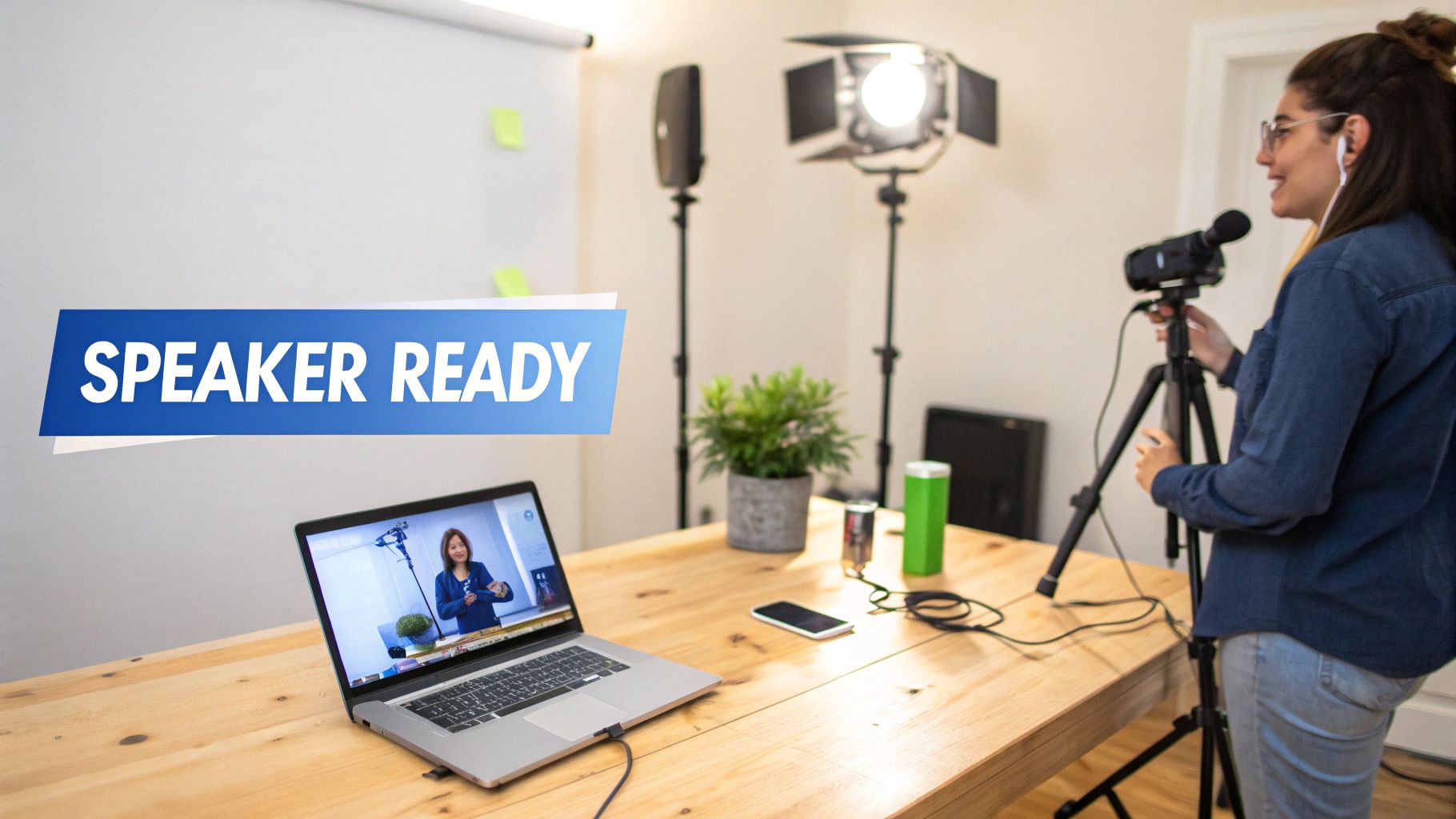
The quality of your content is delivered through your speakers, and in a virtual setting, their ability to connect through a screen is paramount. A key virtual conference best practice is to move beyond simple technical checks and implement a structured speaker preparation program. This comprehensive onboarding process equips presenters with the technical training, content guidelines, and virtual stage presence skills needed to captivate a digital audience.
This program treats speakers as partners in the event's success, providing them with the tools and coaching necessary to translate their expertise into an engaging online format. It covers everything from camera presence and pacing for a remote audience to mastering interactive platform features like live polls and Q&A sessions, ensuring they deliver a polished and impactful presentation.
From Theory to Practice: Cultivating Confident Presenters
World-class events are defined by their polished speaker performances.AI and technology speakers like Adam Cheyer and Allie Miller are renowned for their ability to deliver compelling virtual keynotes, a skill honed through rigorous preparation. This level of support prevents common virtual event pitfalls like poor audio, distracting backgrounds, and disengaged delivery, ensuring every session meets high standards for insight and engagement.
Actionable Steps for Flawless Execution
To implement this practice, build a formal speaker onboarding and rehearsal schedule into your event timeline. This structured support system empowers speakers to perform at their best. To understand what makes a presenter truly exceptional, it is vital to explore the key elements for a successful online event with a virtual keynote speaker.
- Mandatory Technical Rehearsals: Require all speakers to complete a full technical dry run on the event platform at least 48 hours in advance. This is non-negotiable for troubleshooting and ensuring familiarity.
- Provide a Speaker "Go-Kit": Send speakers a digital or physical kit with clear recommendations for lighting, microphones, and camera setup. Include a branded virtual background and a one-page tech troubleshooting guide.
- Assign Dedicated Session Support: Assign a dedicated technical support moderator to each speaker or session. This individual serves as their direct point of contact for any issues before and during their live presentation.
3. Interactive Engagement Strategy with Gamification and Networking Features
A passive audience is an disengaged audience, and in a virtual setting, the battle for attention is constant. One of the most effective virtual conference best practices is to develop a comprehensive engagement strategy that actively involves attendees through gamification and structured networking. This approach transforms the viewing experience from a one-way broadcast into a two-way, participatory event, keeping attendees invested from the opening remarks to the final session.
This strategy is built on integrating interactive elements directly into the conference platform. It uses gamification mechanics like points, badges, and leaderboards to incentivize desired behaviors, such as visiting sponsor booths, asking questions in sessions, or connecting with peers in virtual networking lounges.
From Theory to Practice: Driving Participation with Purpose
Leading platforms demonstrate how gamification can be woven into the event fabric to boost engagement. Hopin and Airmeet utilize badge and achievement systems to reward attendees for completing specific actions, while Informa Tech has successfully run engagement competitions that drive traffic to key areas of their virtual events. This strategy moves beyond simple entertainment; it is a powerful tool for guiding attendee behavior and reinforcing key conference objectives, ensuring participants get the most out of the experience.
Actionable Steps for Flawless Execution
To implement this practice, build your engagement strategy around clear goals and simple mechanics that enhance, rather than distract from, the core content. This requires thoughtful planning to ensure the activities feel integral to the event experience.
- Align Gamification with Learning Goals: Design challenges and award points for actions that directly relate to your conference objectives, such as completing a quiz after a session or submitting a thoughtful question during a Q&A.
- Offer Meaningful Incentives: While digital badges are motivating, supplement them with tangible prizes. Offer rewards like a one-on-one session with a keynote speaker, a free ticket to next year’s event, or premium sponsored gifts to drive competition.
- Create Structured Networking Opportunities: Use your platform’s features to facilitate meaningful connections. Implement interest-based breakout rooms, AI-powered matchmaking, and dedicated "speed networking" sessions that make it easy for attendees to find and connect with relevant peers.
4. Multi-Format Content Delivery with Hybrid and On-Demand Options
Gone are the days when a virtual conference was simply a linear stream of live webinars. A leading virtual conference best practice is to embrace a flexible, multi-format content strategy that caters to diverse learning styles, time zones, and schedules. This approach transforms your event from a fleeting moment into a lasting educational resource by offering content both synchronously and asynchronously.
This model involves diversifying your session types to include live keynotes, interactive workshops, pre-recorded deep dives, and informal "office hours" with speakers. Crucially, it also means building an on-demand library where attendees can access this content long after the live event concludes. This strategy acknowledges that attendees have competing professional and personal commitments, empowering them to engage with your content on their own terms and maximizing its long-term impact.
From Theory to Practice: Building a Lasting Content Hub
Major tech conferences have perfected this model. Events like AWS re:Invent and Salesforce Dreamforce provide extensive post-event libraries, allowing attendees to revisit complex technical sessions or catch presentations they missed. Similarly, KubeCon masterfully blends live, interactive sessions with a robust on-demand catalog, ensuring their global community can access valuable information regardless of location. This creates an evergreen content hub that continues to deliver value and drive engagement for months.
Actionable Steps for Flawless Execution
To implement this content strategy, think of your event as a content engine, not just a live broadcast. This requires planning for both the live experience and the post-event digital archive from the very beginning.
- Record Everything: Make it standard practice to record every session. This not only populates your on-demand library but also serves as a critical backup in case of live technical failures.
- Offer Extended On-Demand Access: Don't limit access to just a few weeks. Provide a minimum of 90-180 days for on-demand viewing to give attendees ample time to explore the content and to use it as a lead-generation tool.
- Segment and Repurpose Content: After the event, create "greatest hits" highlight reels, short clips for social media, and themed content playlists. Segment recordings by duration to appeal to different viewing contexts, from a quick five-minute overview to a one-hour deep dive.
- Prioritize Accessibility and Speaker Comfort: Ensure all on-demand videos include accurate captions and provide transcripts. Allow speakers the opportunity to review their session recordings before they are published to the public library.
5. Proactive Community Building and Peer Engagement Channels
A truly impactful virtual conference transcends a one-time broadcast, evolving into a thriving, interconnected ecosystem. One of the most forward-thinking virtual conference best practices is to intentionally design and nurture a community that exists before, during, and long after the event concludes. This strategy transforms passive attendees into active participants and brand advocates by providing dedicated spaces for continuous peer-to-peer connection and knowledge sharing.
This approach moves beyond simple event chat windows to establish persistent communication hubs. It requires a dedicated effort to facilitate conversations, introduce like-minded peers, and create a sense of shared identity around the conference's core themes. By fostering this environment, you create a powerful network effect that adds immense value for every member, making the event an integral part of their professional lives.
From Theory to Practice: Building a Year-Round Hub
Leading community-driven events exemplify this model. MongoDB World successfully integrates its event with the ongoing MongoDB Community Slack, while DevOps Days fosters engagement through volunteer-led local communities that operate year-round. These initiatives prove that when an event serves as a catalyst for a larger community, its influence and attendee loyalty grow exponentially. A strong community can also be a powerful tool for breaking down organizational silos by connecting professionals across different roles and departments who share common interests.
Actionable Steps for Flawless Execution
To implement this practice, treat community management as a core function of your event strategy, not an afterthought. This requires dedicated resources and a clear plan for engagement that extends well beyond the event dates.
- Launch Community Channels Early: Open your dedicated Slack, Discord, or forum channels at least 4-6 weeks before the event. Use this time to seed discussions, introduce speakers, and allow attendees to start networking.
- Establish Clear Moderation and Roles: Assign dedicated community managers to facilitate conversations, enforce a code of conduct, and ensure a welcoming environment. Encourage speakers and subject matter experts to actively participate.
- Segment for Deeper Connections: Create specific sub-channels or forums based on job roles, industry verticals, or session topics. This allows for more focused and relevant discussions, helping attendees find their niche.
- Sustain Post-Event Momentum: Keep the community active for at least six months post-event. Continue sharing relevant content, host smaller follow-up discussions or AMAs (Ask Me Anything sessions), and actively recognize top contributors.
6. Comprehensive Data Analytics and Attendee Tracking System
Moving beyond simple attendance numbers, a truly effective virtual event leverages a sophisticated analytics infrastructure to understand and react to attendee behavior. One of the most impactful virtual conference best practices is implementing an integrated system that captures detailed behavioral data across the entire event lifecycle, transforming raw numbers into actionable intelligence.
This approach treats your virtual conference not as a single broadcast but as a dynamic digital environment rich with data points. It involves tracking every interaction, from initial registration and session check-ins to dwell time, Q&A participation, poll responses, and even networking connections. This comprehensive data capture provides a holistic view of the attendee journey, enabling you to measure engagement, prove ROI, and make informed decisions for future events.
From Theory to Practice: Data-Driven Event Optimization
Leading platforms showcase the power of this granular tracking. On24's engagement intelligence platform provides a "digital body language" score for each attendee, while Eventbrite's dashboards offer deep insights into registration trends and ticket sales. These tools allow organizers to see which content resonates most, identify highly engaged leads for sales follow-up, and pinpoint sessions that may require real-time promotion to boost attendance. By analyzing these patterns, planners can optimize the event experience on the fly.
Actionable Steps for Flawless Execution
To implement this data-centric practice, you must integrate analytics from the very beginning of your planning process. This ensures your chosen platform and marketing tools can communicate effectively to create a unified data set.
- Track the Full Attendee Journey: Configure your systems to capture data from every touchpoint, including pre-event marketing emails, registration, session attendance, resource downloads, and post-event survey responses.
- Create Stakeholder-Specific Dashboards: Build customized dashboards for different teams. Your marketing team needs to see lead generation and content engagement, while leadership may focus on overall ROI and attendee satisfaction scores.
- Use Data for Real-Time Adjustments: Monitor session attendance and engagement metrics live. If a particular track is underperforming, use push notifications or announcements to redirect attendees and highlight its value.
- Ensure Data Privacy and Compliance: Be transparent about the data you collect and how it will be used. Ensure all tracking and data storage practices are fully compliant with regulations like GDPR and CCPA to maintain attendee trust.
7. Strategic Sponsorship Integration and Value Delivery Program
Moving beyond simple logo placements and banner ads is a hallmark of forward-thinking virtual events. One of the most impactful virtual conference best practices is designing a strategic sponsorship program that delivers tangible ROI for partners while genuinely enhancing the attendee experience. This approach treats sponsors not as advertisers, but as integrated content partners whose presence adds value.
This model requires a shift from passive brand visibility to active, meaningful engagement. It involves curating opportunities for sponsors to interact with attendees through branded sessions, interactive demos, and sponsored networking lounges. The goal is to create authentic connections that benefit everyone involved, turning a transactional relationship into a symbiotic partnership.
From Theory to Practice: Creating High-Value Sponsor Activations
Leading enterprise conferences excel at this integrated approach. AWS re:Invent, for instance, creates a dynamic virtual expo hall with live sponsor demonstrations and Q&A sessions, while Salesforce Dreamforce's virtual "Campground" offers immersive sponsor activations that feel like a core part of the event. These examples show that when sponsors are given a platform to share expertise rather than just a logo space, they become a valuable resource for attendees seeking solutions. A well-designed sponsor program generates qualified leads and boosts brand sentiment, proving its immense value.
Actionable Steps for Flawless Execution
To implement a value-driven sponsorship program, build integration opportunities directly into your event's architecture from the earliest planning stages.
- Involve Sponsors in Content Planning: Invite top-tier sponsors to co-create relevant content sessions or workshops. This positions them as thought leaders and provides attendees with valuable, expert-led programming.
- Offer Tiered, Value-Based Packages: Create sponsorship tiers that offer clear, distinct benefits beyond brand visibility, such as lead capture from specific sessions, dedicated networking events, or post-event analytics reports.
- Provide Robust Analytics and Lead Capture: Equip sponsors with tools for live lead scanning and provide a real-time dashboard showing engagement metrics for their sessions and virtual booths. This data is critical for proving ROI.
- Deliver on Promised Metrics: Set clear expectations with sponsors regarding the data and leads they will receive. After the event, provide a comprehensive report that details their engagement, reach, and lead generation results, solidifying the value of their investment.
8. Accessibility and Inclusive Design Implementation
True innovation in event planning means designing for everyone. A crucial virtual conference best practice is committing to comprehensive accessibility and inclusive design, ensuring that every attendee, regardless of ability, can fully participate. This extends beyond a basic ethical responsibility; it's a strategic decision that expands your audience, enriches the event experience, and reflects a modern, forward-thinking brand.
This commitment involves integrating accessibility into the event's DNA from the very beginning, not treating it as an afterthought. It means selecting platforms that comply with Web Content Accessibility Guidelines (WCAG), providing multiple ways to consume content, and creating an environment where all attendees feel seen and supported. This proactive approach prevents barriers before they can form, delivering a truly universal experience.

From Theory to Practice: Designing Universal Access
Leading organizations demonstrate that accessibility is a hallmark of excellence. Microsoft Ignite, for example, offers robust multi-language support and live captioning, while many major tech conferences now provide full American Sign Language (ASL) interpretation for keynotes and popular sessions. Following the standards set by organizations like the Web Accessibility Initiative (WAI) and platforms like Accessibility.com provides a clear roadmap for creating digital spaces that welcome everyone, preventing the exclusion that can alienate valuable attendees.
Actionable Steps for Flawless Execution
To implement this practice, weave accessibility checks into every stage of your planning process. This ensures that inclusivity is a core component, not a last-minute addition.
- Audit Your Platform: Before signing a contract, conduct a thorough audit of your event platform against WCAG 2.1 AA standards. Ensure it supports keyboard-only navigation, screen readers, and high-contrast color schemes.
- Provide Diverse Content Formats: Offer live closed captioning, ASL interpretation, and post-event transcripts for all sessions. Require speakers to provide presentation materials in advance so they can be shared in accessible formats.
- Incorporate Attendee Needs into Registration: Add an optional field in your registration form asking attendees if they require any specific accommodations. This allows you to plan and provision support proactively.
- Train All Staff: Ensure your speakers, moderators, and technical support staff are trained on the platform's accessibility features and are prepared to assist attendees with diverse needs efficiently and respectfully.
9. Structured Post-Event Content Repurposing and Lead Nurturing Strategy
The value of your virtual conference should extend far beyond the final closing session. A crucial virtual conference best practice is to implement a structured post-event content and lead nurturing strategy, transforming your event from a one-time occurrence into a long-term asset. This approach systematically captures and leverages every recorded session, panel discussion, and keynote to fuel marketing, sales, and community engagement for months.
This process involves more than just uploading session replays. It requires a pre-planned framework for deconstructing your event content into various formats, each tailored to different channels and audience segments. This strategic repurposing maximizes the return on your initial investment in content and speakers, ensuring the insights shared continue to attract, educate, and convert your target audience.
From Theory to Practice: Maximizing Content Longevity
Leading organizations demonstrate the power of treating event content as an evergreen resource. AWS re:Invent makes its vast library of technical sessions available year-round, while Adobe Summit curates a comprehensive content hub with hundreds of resources post-event. This approach not only serves attendees who missed sessions but also creates a powerful lead-generation engine that works continuously. After the event, you can maximize the longevity and reach of your sessions by exploring effective content repurposing strategies to expand your reach and maximize ROI.
Actionable Steps for Flawless Execution
To implement this, integrate a content repurposing plan into your pre-event strategy, assigning team members to capture key moments live.
- Segment and Nurture: Create distinct email nurture sequences for different attendee personas (e.g., registered no-shows, specific track attendees, booth visitors). Tailor the content you send to their demonstrated interests.
- Deconstruct Sessions into Micro-Content: Extract key quotes, statistics, and short video clips from sessions to create social media posts, audiograms, and infographics. This makes your content more shareable and digestible.
- Develop High-Value Assets: Combine related session content into more substantial pieces like downloadable guides, e-books, or whitepapers. You can also develop in-depth case studies featuring your most impactful speakers, like Dr. Ayesha Khanna, highlighting their expertise and success stories.
- Launch a Follow-Up Webinar Series: Identify the most popular topics or sessions from your conference and host follow-up deep-dive webinars or "office hours" with the speakers in the weeks following the event to maintain momentum.
10. Attendee Feedback Loop and Continuous Improvement Framework
A virtual event doesn't conclude when the final session ends; its lifecycle extends into a crucial phase of evaluation and evolution. One of the most impactful virtual conference best practices is establishing a robust attendee feedback loop and a framework for continuous improvement. This is a deliberate, systematic process of collecting, analyzing, and acting upon participant insights to ensure each subsequent event is more engaging, effective, and valuable than the last.
This approach transforms feedback from a post-event afterthought into a central component of your event strategy. It involves strategically gathering data at multiple touchpoints, from registration and mid-event polls to post-conference surveys. The goal is to create a data-driven culture where attendee sentiment directly informs future decisions regarding platform choice, content programming, and networking formats.
From Theory to Practice: Data-Driven Event Evolution
Leading conferences exemplify this commitment to attendee-centric refinement. PyCon is renowned for its extensive post-event surveys and its transparency in publishing the results and outlining actions taken. Similarly, many major tech conferences now utilize public-facing dashboards to track feedback, creating accountability. This iterative process, popularized by survey platforms like SurveyMonkey and Typeform, ensures the event experience is constantly optimized based on real user data rather than assumptions.
Actionable Steps for Flawless Execution
To build your own continuous improvement framework, integrate feedback collection directly into your event's operational plan.
- Implement Multi-Touchpoint Surveys: Don't wait until the end. Use short, targeted surveys at registration (to gauge expectations), mid-event (to assess session quality and tech performance), and post-event (for overall satisfaction). Keep surveys concise, ideally 5-10 questions, to maximize completion rates.
- Ask Specific, Actionable Questions: Move beyond generic "Did you enjoy the event?" queries. Ask pointed questions about the virtual platform's usability, the quality of specific content tracks, and the effectiveness of networking opportunities. Include open-ended questions to capture valuable qualitative insights.
- Track Key Metrics and Close the Loop: Monitor metrics like Net Promoter Score (NPS) and sentiment trends year-over-year. Most importantly, share a summary of the feedback with your attendees and transparently communicate the specific improvements you will implement for the next event based on their input.
10-Point Virtual Conference Best Practices Comparison
| Item | Implementation Complexity | Resource Requirements | Expected Outcomes | Ideal Use Cases | Key Advantages |
|---|---|---|---|---|---|
| Comprehensive Pre-Event Technical Testing and Infrastructure Planning | High — months of coordinated technical work | Significant engineering, testing tools, CDN/hosting costs, specialized expertise | Reliable platform performance; fewer day-of failures; reduced support load | Large-scale, high-concurrency or multi-region events | Increased reliability, performance optimization, attendee confidence |
| Strategic Speaker and Presenter Preparation Program | Moderate — scheduling rehearsals and coaching | Staff time, speaker coaches, rehearsal slots, simple equipment kits | Higher presentation quality; fewer technical mishaps; better engagement | Keynotes, panels, speakers new to virtual formats | Consistent delivery, improved engagement, speaker confidence |
| Interactive Engagement Strategy with Gamification and Networking Features | High — design and tune engagement mechanics | Platform features/dev, moderation, incentives, analytics | Increased retention and participation; richer engagement data | Community-driven conferences, sponsor-focused events, networking-centric formats | Boosts activity, improves networking outcomes, sponsor visibility |
| Multi-Format Content Delivery with Hybrid and On-Demand Options | High — complex production and rights management | Production/editing teams, storage/CDN, captioning, licensing workflows | Extended reach and ROI; accommodates time zones; accessibility gains | Global audiences, training/education events, long-tail content strategies | Flexibility for attendees, longer content lifespan, broader accessibility |
| Proactive Community Building and Peer Engagement Channels | Moderate — ongoing coordination and moderation | Community managers, platform subscriptions (Slack/Discord), content programs | Long-term engagement, organic promotion, increased loyalty | Niche communities, recurring events, peer-led ecosystems | Sustained relationships, peer-to-peer learning, improved retention |
| Comprehensive Data Analytics and Attendee Tracking System | High — integrations, dashboards, compliance | Analytics platforms, engineers, data scientists, privacy/legal resources | Real-time optimization, clear ROI, personalized follow-up | Sponsorship-heavy events, enterprise conferences, ROI-focused organizers | Actionable insights, justifies sponsorships, informs programming |
| Strategic Sponsorship Integration and Value Delivery Program | Moderate — package creation and coordination | Sales team, sponsor ops, lead-capture tech, reporting tools | Increased sponsorship revenue; measurable sponsor ROI; sponsor retention | Trade shows, monetized conferences, B2B industry events | Revenue generation, deeper sponsor engagement, clear metrics |
| Accessibility and Inclusive Design Implementation | High — compliance and cross-vendor coordination | Accessibility vendors, captioning/ASL services, dev resources, testing | Expanded audience, legal risk reduction, improved UX for all | Public/global events, organizations prioritizing inclusion | Inclusivity, brand differentiation, broader market reach |
| Structured Post-Event Content Repurposing and Lead Nurturing Strategy | Moderate — planning and sustained execution | Content team, editors, marketing automation, distribution channels | Extended ROI, ongoing lead generation, continued attendee engagement | Marketing-driven events, lead-nurture programs, content-centric conferences | Long-term value, SEO uplift, sustained lead flow |
| Attendee Feedback Loop and Continuous Improvement Framework | Low–Moderate — setup and analysis workflows | Survey tools, analysts, staff to implement changes | Clear improvement areas, increased attendee satisfaction, data-driven decisions | Recurring events, improvement-focused organizers, community-run conferences | Identifies actionable improvements, builds attendee trust, reduces repeated mistakes |
| Comprehensive Pre-Event Technical Testing and Infrastructure Planning | High — months of coordinated technical work | Significant engineering, testing tools, CDN/hosting costs, specialized expertise | Reliable platform performance; fewer day-of failures; reduced support load | Large-scale, high-concurrency or multi-region events | Increased reliability, performance optimization, attendee confidence |
|---|---|---|---|---|---|
| Strategic Speaker and Presenter Preparation Program | Moderate — scheduling rehearsals and coaching | Staff time, speaker coaches, rehearsal slots, simple equipment kits | Higher presentation quality; fewer technical mishaps; better engagement | Keynotes, panels, speakers new to virtual formats | Consistent delivery, improved engagement, speaker confidence |
| Interactive Engagement Strategy with Gamification and Networking Features | High — design and tune engagement mechanics | Platform features/dev, moderation, incentives, analytics | Increased retention and participation; richer engagement data | Community-driven conferences, sponsor-focused events, networking-centric formats | Boosts activity, improves networking outcomes, sponsor visibility |
| Multi-Format Content Delivery with Hybrid and On-Demand Options | High — complex production and rights management | Production/editing teams, storage/CDN, captioning, licensing workflows | Extended reach and ROI; accommodates time zones; accessibility gains | Global audiences, training/education events, long-tail content strategies | Flexibility for attendees, longer content lifespan, broader accessibility |
| Proactive Community Building and Peer Engagement Channels | Moderate — ongoing coordination and moderation | Community managers, platform subscriptions (Slack/Discord), content programs | Long-term engagement, organic promotion, increased loyalty | Niche communities, recurring events, peer-led ecosystems | Sustained relationships, peer-to-peer learning, improved retention |
| Comprehensive Data Analytics and Attendee Tracking System | High — integrations, dashboards, compliance | Analytics platforms, engineers, data scientists, privacy/legal resources | Real-time optimization, clear ROI, personalized follow-up | Sponsorship-heavy events, enterprise conferences, ROI-focused organizers | Actionable insights, justifies sponsorships, informs programming |
| Strategic Sponsorship Integration and Value Delivery Program | Moderate — package creation and coordination | Sales team, sponsor ops, lead-capture tech, reporting tools | Increased sponsorship revenue; measurable sponsor ROI; sponsor retention | Trade shows, monetized conferences, B2B industry events | Revenue generation, deeper sponsor engagement, clear metrics |
| Accessibility and Inclusive Design Implementation | High — compliance and cross-vendor coordination | Accessibility vendors, captioning/ASL services, dev resources, testing | Expanded audience, legal risk reduction, improved UX for all | Public/global events, organizations prioritizing inclusion | Inclusivity, brand differentiation, broader market reach |
| Structured Post-Event Content Repurposing and Lead Nurturing Strategy | Moderate — planning and sustained execution | Content team, editors, marketing automation, distribution channels | Extended ROI, ongoing lead generation, continued attendee engagement | Marketing-driven events, lead-nurture programs, content-centric conferences | Long-term value, SEO uplift, sustained lead flow |
| Attendee Feedback Loop and Continuous Improvement Framework | Low–Moderate — setup and analysis workflows | Survey tools, analysts, staff to implement changes | Clear improvement areas, increased attendee satisfaction, data-driven decisions | Recurring events, improvement-focused organizers, community-run conferences | Identifies actionable improvements, builds attendee trust, reduces repeated mistakes |
Elevating Your Next Event with Expert Voices and Flawless Execution
The landscape of virtual events has permanently shifted. Moving beyond simple video streams, today's most successful virtual conferences are meticulously crafted experiences, built on a foundation of strategic planning, technological fluency, and a deep understanding of audience engagement. As we've explored, achieving this level of excellence requires a holistic approach that connects every stage of the event lifecycle, from the initial infrastructure tests to the final post-event analysis.
Implementing these virtual conference best practices is not about checking boxes; it is about building a durable framework for creating memorable, high-impact digital gatherings. By mastering these ten core pillars, you are not just hosting an online meeting. You are engineering a dynamic environment for learning, networking, and community building that delivers tangible value to every stakeholder involved.
From Blueprint to Standing Ovation: Key Takeaways
The journey from a promising concept to a flawlessly executed virtual conference hinges on the integration of several critical components. Let's distill the most vital takeaways from our deep dive into a powerful, actionable summary:
- Technology as an Enabler, Not a Barrier: Your virtual platform is the venue. Rigorous pre-event technical testing, comprehensive infrastructure planning, and a deep understanding of your chosen tools are non-negotiable. This proactive approach prevents day-of disasters and ensures a seamless experience for speakers and attendees alike.
- Engagement is an Intentional Act: Passive viewership is the enemy of a successful virtual event. You must actively design opportunities for interaction. This means implementing a multi-faceted strategy that could include gamification, structured networking lounges, interactive Q&A sessions, and dynamic polling to keep your audience leaned in and participating.
- Content is Still King, and Speakers Wear the Crown: The ultimate value of your conference is delivered through its content. This extends beyond the live event with strategic on-demand options and a thoughtful content repurposing plan. However, the most critical element is the caliber of your speakers. A compelling presenter like Allie Miller can transform a good session into an unforgettable one, driving conversations long after the event concludes.
- Data-Driven Iteration is the Path to Mastery: Your event doesn't end when the last session closes. The real work of improvement begins with analyzing attendee data, collecting structured feedback, and using those insights to refine your next event. This continuous improvement loop is what separates good event planners from great ones.
The Decisive Factor: Securing World-Class Expertise
While a solid strategic framework is essential, the true differentiator for any conference, virtual or otherwise, is the quality of its speakers. This is especially true for complex and rapidly evolving topics like artificial intelligence, where audiences demand not just information, but credible, forward-thinking insights from genuine experts. Finding, vetting, and preparing these thought leaders can be a significant challenge for any planning committee.
An exceptional speaker does more than just present; they synthesize complex ideas, ignite curiosity, and provide actionable takeaways that resonate deeply with the audience. This is where partnering with a specialized speaker bureau becomes a strategic advantage. For conferences centered on AI, machine learning, or digital transformation, leveraging a resource like Speak About AI ensures you are connecting your audience with the industry's most sought-after voices. These are the speakers who not only understand the technology but can articulate its impact on your specific industry, whether it's healthcare, finance, or education. By integrating premier talent into your well-executed event structure, you elevate your conference from a simple broadcast to a must-attend industry event. This fusion of flawless execution and expert insight is the definitive formula for virtual conference success.
Ready to secure the world-class AI expertise that will make your next virtual conference unforgettable? Speak About AI connects you with the world's leading AI speakers, futurists, and innovators, ensuring your content is as powerful as your platform. Explore our roster of vetted experts and find the perfect voice to captivate your audience at Speak About AI.