
15 Questions to Ask an AI Keynote Speaker Before You Book
According to the Freeman Trends Report from December 2025, 64% of event attendees identify keynote sessions as the most influential element of a conference. That is a lot of weight resting on a single booking, which means the worst time to discover a speaker is wrong for your event is on stage. The best time is before you sign, when a handful of direct questions can tell you almost everything you need to know.
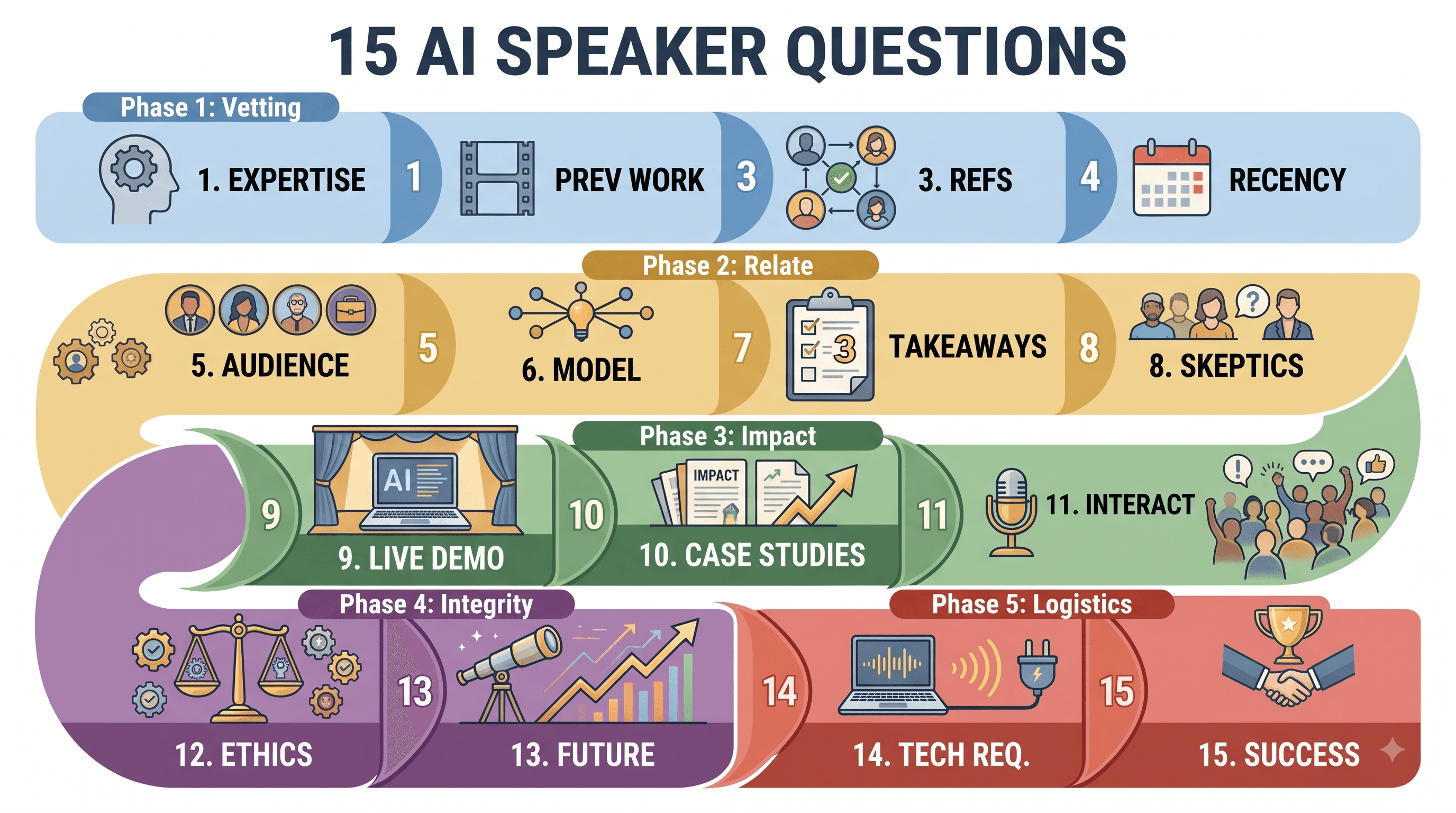
Good speakers welcome these questions. A vague or defensive answer is itself an answer. Here are the fifteen we would ask on your behalf, grouped by what they protect you from, along with what a strong response actually sounds like. Think of it as the checklist a bureau runs so you do not have to learn these lessons the expensive way.
Customization and Audience Fit
A great talk for one audience can fall flat with another. These questions confirm the speaker will build for your room rather than recycle a stock keynote.
1. How will you tailor this talk to our audience and industry? You are listening for specifics. A strong speaker asks about your audience's roles, their level of AI familiarity, and the outcome you want, then describes how the content shifts to match. If the answer is a version of "my talk works for everyone," treat that as a warning.
2. What do you need from us to prepare, and will we have a prep call? The best speakers ask for a briefing and expect a call two to four weeks out. If a speaker does not want your context, they are planning to give you the generic version.
3. Can you give an example of how you changed a talk for a specific client? A real customizer can tell you a concrete story: this audience, this adjustment, this result. Specifics here predict specifics on your stage.
Credentials and Real Expertise
AI has more people claiming expertise than almost any field right now. These questions separate the ones who have done the work from the ones who have only read about it.
4. What have you actually built or deployed, not just advised on? This is the single most revealing question you can ask an AI speaker. You want to hear about real systems, real research, or real deployments they were hands on with. Someone who only narrates headlines will get vague here, and your more technical attendees will notice the same gap on stage.
5. How do you keep your material current in a field that changes this fast? AI from eighteen months ago is close to ancient history. A credible speaker can tell you what they changed in their talk recently and why. A stale deck is a real risk in this category, more than in almost any other.
6. Can we speak with two recent clients whose audiences looked like ours? References for similar audiences are worth more than a highlight reel. A confident speaker offers them without hesitation.
Content, Demos, and Delivery
How a speaker handles live technology and hard questions tells you whether the substance is real.
7. Do you do live demos, and what is your plan if the demo fails? Live demos are powerful, but they break. You want a speaker who does them and has a calm backup, whether that is a recorded version or the ability to keep going without missing a beat. "It never fails" is not a plan.
8. Are your examples real and current, or canned screenshots? Ask whether they will show the tools working live or lean on old screenshots. Real, current examples signal a speaker who actually uses what they talk about.
9. How do you handle a skeptical or highly technical audience? Every AI audience now includes people who build this technology. A strong speaker welcomes the hard questions and holds up under a real Q&A. If that prospect makes them nervous, the expertise may be thinner than the bio suggests. Our guide on vetting real expertise versus stage presence goes deeper on how to test this.
Virtual and Hybrid Setup
Most events now include a remote audience, and virtual delivery is a different skill from working a live room.
10. What is your virtual setup, and how does the fee compare to in person? You want to hear about a real setup, meaning a good camera, proper lighting, clean sound, and a professional environment. On price, a virtual keynote usually runs well below the in person rate, so this is also a budget lever worth knowing.
11. How do you keep a remote audience engaged? Reading slides to a webcam is not enough. Look for specific tactics: interaction, live demos, polls, and pacing built for screens rather than a room.
12. What is your backup plan if your connection drops mid session? Things go wrong. A prepared speaker has a hotspot, a second device, and a clear plan so a dropped signal does not derail your program.
Logistics, Contract, and Cancellation
The last questions protect your budget and your timeline. They are the least exciting and the most likely to save you money and stress.
13. What exactly is included in the fee, and what costs sit on top? Get travel, lodging, AV needs, and any recording charges in writing. A clear speaker breaks this out without being pushed. The surprises here are almost always the avoidable kind.
14. What are your cancellation, postponement, and force majeure terms? Ask what happens if either side needs to move or cancel the date, and what your deposit protects. You want these terms clear before you sign, not during a crisis.
15. Do we get recording rights, and how far ahead do you need to book? Confirm whether you can record the session for internal reuse, which stretches the value of the booking, and note any premium for it. Then ask about lead time. Strong speakers in the $15,000 to $50,000 range are often booked three to six months out, and marquee names far earlier, so timing is part of the deal. Our deep dive on booking timelines covers this in full.
Let Someone Else Run the Checklist
Here is the quiet truth behind this list. Running it well takes time, and knowing what a good answer actually sounds like takes experience. That is exactly what a specialized bureau does for you. When you work with Speak About AI, we have already asked these questions, verified the credentials, checked the references, and confirmed the virtual setups, because we book these speakers every week and we represent your interest, not any single speaker's calendar.
Event planners who want the vetting handled for them can connect with the Speak About AI curation team at [speakabout.ai](https://speakabout.ai/contact). Tell us your audience, your objective, and your date, and we will bring you speakers who have already cleared this checklist. You can also browse the full AI speakers roster to see who fits before you reach out.
The right questions are how you turn a leap of faith into an informed decision. Ask them yourself, or let a bureau that asks them for a living do it on your behalf. Either way the goal is the same: a speaker who is the right fit for your room, confirmed before you ever sign.
Frequently Asked Questions
What should I ask an AI keynote speaker before hiring them?
Cover five areas: customization (how will they tailor the talk to your audience), real credentials (what they have actually built or deployed), content and delivery (live demo policy and how they handle skeptical technical questions), virtual setup and backup plans, and contract terms including cancellation and recording rights.
What is the single most revealing question to ask an AI speaker?
"What have you actually built or deployed, not just advised on?" A credible AI speaker can point to real systems, research, or deployments they were hands-on with. Someone who only narrates headlines will get vague, and technical attendees will notice the same gap on stage.
What contract terms should I confirm before booking a keynote speaker?
Get in writing exactly what the fee includes (travel, lodging, AV, recording charges), the cancellation, postponement, and force majeure terms, what your deposit protects, and whether you get recording rights for internal reuse and at what premium.