
AI Use Cases by Industry: AI Transformations Across Sectors

Artificial intelligence is no longer a futuristic concept; it's the engine of modern innovation, reshaping industries from the ground up. The question has shifted from if AI will impact your business to how it's already creating unprecedented value and competitive advantages. This article moves beyond surface-level discussion to provide a detailed breakdown of the most impactful AI use cases by industry, showing how leading organizations are deploying this technology today.
As a speaker bureau connecting organizations with top AI innovators and thought leaders, we have a unique vantage point on the practical application of these technologies. We see firsthand how expert speakers are guiding companies to implement AI for tangible results. In this guide, we will dissect 12 specific examples, from predictive maintenance in manufacturing to fraud detection in finance and personalized learning in education.
This is not a theoretical overview. For each use case, we provide a strategic analysis, identifying the core business problem, the AI-driven solution, and the measurable outcomes. You will find actionable takeaways and replicable strategies you can adapt to your own operational context. Our goal is to equip you with a clear understanding of what’s possible, what's working, and how you can begin leveraging AI to solve your most pressing challenges. This exploration of AI use cases by industry is designed to be your playbook for turning intelligent technology into a powerful business asset.
1. Predictive Maintenance in Manufacturing
Predictive maintenance represents a paradigm shift from reactive ("fix it when it breaks") or preventive ("fix it on a schedule") maintenance strategies. This AI use case employs machine learning algorithms to analyze real-time data from machinery sensors, detecting subtle anomalies in temperature, vibration, and performance that precede equipment failure. By identifying these patterns, AI systems can accurately forecast when a component is likely to fail, allowing maintenance to be scheduled proactively.
This approach significantly reduces costly unplanned downtime and extends the operational lifespan of high-value assets. It transforms maintenance from a necessary cost center into a strategic, data-driven operation that boosts overall equipment effectiveness (OEE).
Strategic Breakdown
- GE Aviation exemplifies this strategy by embedding thousands of sensors in its jet engines. AI models process flight data to predict part failures with remarkable accuracy, ensuring aircraft safety and minimizing time on the ground.
- Siemens offers its MindSphere platform, which connects industrial assets to the cloud. It uses AI to monitor equipment health globally, providing prescriptive insights that guide maintenance teams on not just when to act, but how.
Strategic Insight: The core value isn't just predicting failure; it's optimizing the entire maintenance supply chain. AI-driven predictions trigger automated work orders, parts procurement, and technician scheduling for maximum efficiency.
Actionable Takeaways
- Start with Critical Assets: Focus initial efforts on machinery where downtime is most expensive or disruptive.
- Ensure Data Quality: Implement robust data collection protocols. The accuracy of AI models depends entirely on clean, consistent sensor data.
- Monitor and Retrain: Continuously monitor model performance against real-world outcomes and retrain algorithms as operational conditions change.
For organizations looking to implement such transformative systems, hearing from experts who have led these projects is invaluable. You can learn more about predictive maintenance and AI in manufacturing from top industry speakers.
2. Clinical Diagnosis and Medical Imaging Analysis
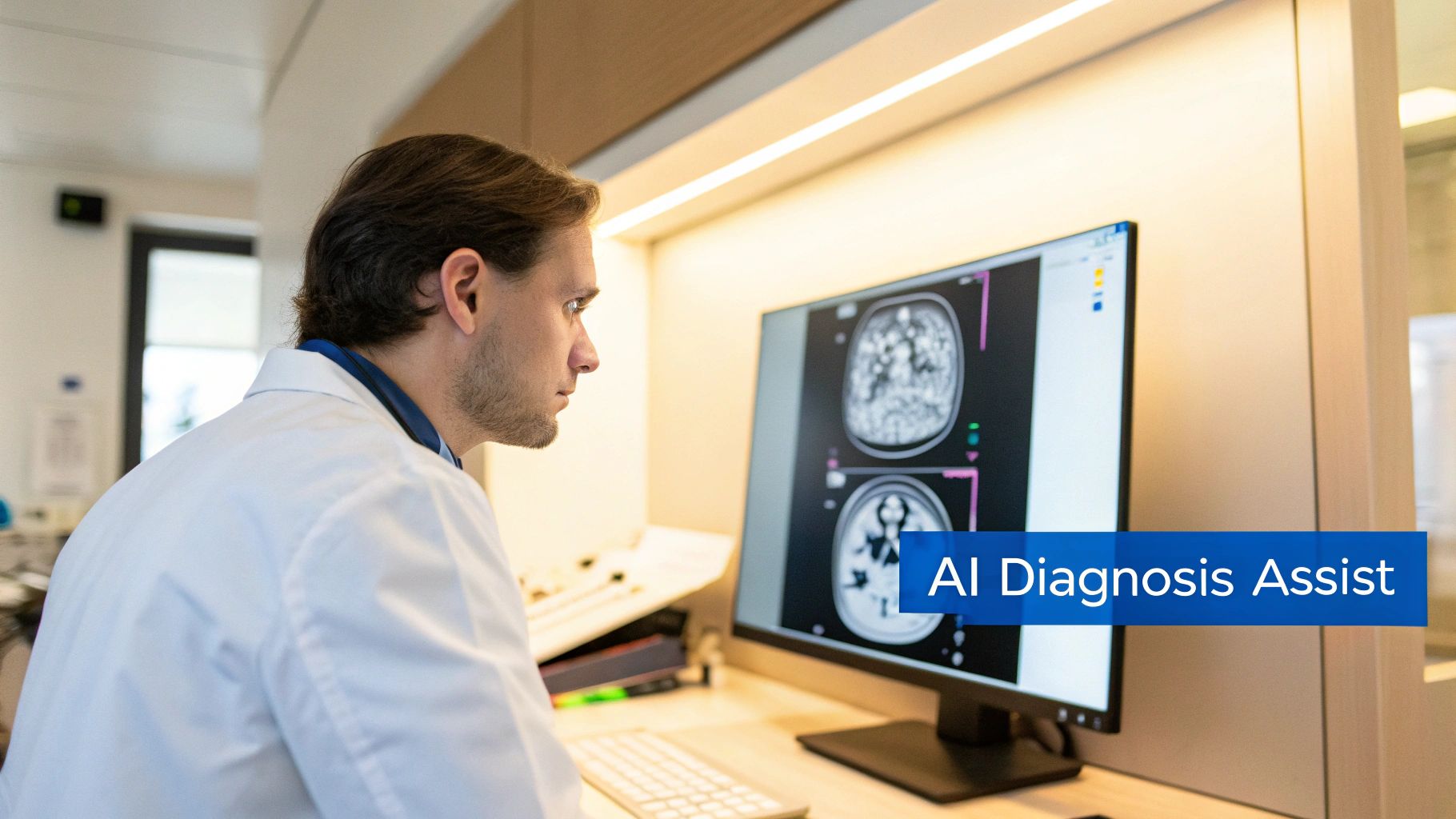
AI is revolutionizing medical diagnostics by empowering clinicians with unprecedented analytical capabilities. This AI use case leverages deep learning models to scrutinize complex medical images, such as X-rays, CT scans, and MRIs, to identify subtle indicators of disease. These systems can detect pathologies like cancerous tumors, diabetic retinopathy, and neurological disorders with a speed and accuracy that often matches or surpasses human experts, helping to accelerate diagnosis and reduce the risk of critical errors.
This technology acts as a powerful co-pilot for radiologists and pathologists, augmenting their expertise rather than replacing it. It streamlines workflows, prioritizes urgent cases, and provides a quantitative, data-driven second opinion that enhances diagnostic confidence and patient outcomes. The healthcare industry is experiencing a profound transformation with numerous AI applications in healthcare that are reshaping patient care.
Strategic Breakdown
- Google DeepMind has developed AI models capable of analyzing retinal scans to detect signs of diabetic retinopathy and age-related macular degeneration as effectively as leading specialists, enabling early intervention to prevent blindness.
- Stanford's CheXNet is an algorithm trained on over 100,000 chest X-rays that can diagnose pneumonia more accurately than radiologists, demonstrating AI's potential to improve diagnostic accuracy in high-volume settings.
Strategic Insight: The primary value is augmenting human expertise for faster, more accurate diagnoses. AI models excel at detecting complex patterns in large datasets, freeing up clinicians to focus on patient treatment plans and complex edge cases.
Actionable Takeaways
- Ensure Clinical Validation: Prioritize algorithms that have undergone rigorous clinical validation studies and, where applicable, received regulatory approval (e.g., from the FDA).
- Integrate with EMR/PACS: For seamless adoption, ensure the AI solution integrates directly into existing Electronic Medical Record (EMR) and Picture Archiving and Communication System (PACS) workflows.
- Maintain Human Oversight: Implement a "human-in-the-loop" model where AI provides diagnostic support, but the final interpretation and decision-making authority remains with a qualified clinician.
Implementing these systems requires a deep understanding of both the technology and the clinical environment. To learn how these tools are integrated into practice, discover more about how AI enhances clinical decision support systems from top healthcare speakers.
3. Fraud Detection in Financial Services
Fraud detection is a critical AI use case by industry, particularly in financial services, where AI systems have become the primary defense against sophisticated criminal activity. These systems leverage machine learning algorithms to analyze vast datasets of transaction data, user behavior, and network connections in real-time. By identifying anomalies and patterns that deviate from normal activity, AI can flag potentially fraudulent transactions with incredible speed and accuracy.
This proactive approach moves beyond static, rule-based systems, which are easily circumvented. Instead, machine learning models continuously learn from new fraud tactics, adapting their detection capabilities to counter emerging threats. This not only protects revenue and consumer trust but also significantly reduces the operational burden of manual review teams, allowing them to focus on high-stakes investigations.
Strategic Breakdown
- PayPal utilizes a complex AI engine that processes billions of transactions, analyzing historical data and hundreds of variables in real-time to assign a risk score to each payment, effectively distinguishing legitimate customers from fraudsters.
- Mastercard employs its Decision Intelligence system, an AI-powered solution that assesses transactions against behavioral data to approve genuine purchases and decline suspicious ones, enhancing security without sacrificing customer convenience.
Strategic Insight: The most powerful strategy is combining multiple machine learning models (an ensemble approach) with human-in-the-loop feedback. AI flags suspicious activity, a human analyst verifies it, and that verification data is fed back into the model, making it progressively smarter and more accurate.
Actionable Takeaways
- Implement Feedback Loops: Create a system for fraud analysts to provide feedback on AI-flagged transactions. This continuous learning process is vital for model accuracy.
- Combine Rule-Based and ML Approaches: Use traditional rules for clear-cut fraud scenarios while deploying machine learning to detect novel and complex patterns.
- Monitor Model Drift: Regularly evaluate your model's performance against new data to ensure it remains effective as fraud tactics evolve.
Implementing these advanced systems requires deep expertise in data science and security. To stay ahead of evolving threats, organizations can learn from leading cybersecurity experts who specialize in this field. Find out more about how machine learning is transforming fraud detection.
4. Personalized E-commerce Recommendations
Personalized recommendation engines are a cornerstone of modern e-commerce, moving beyond generic suggestions to offer highly tailored product selections. These systems use AI, particularly machine learning, to analyze vast datasets including a user's browsing history, past purchases, items viewed, and even mouse movements. By identifying patterns in this data, the AI predicts what a customer is most likely to want next, creating a unique and dynamic shopping experience for every visitor.
This level of personalization directly impacts key business metrics by increasing user engagement, boosting conversion rates, and raising the average order value. It transforms a transactional website into a curated discovery platform, fostering customer loyalty and driving significant revenue growth, making it one of the most impactful AI use cases by industry.
Strategic Breakdown
- Amazon pioneered this space, with its recommendation engine reportedly driving as much as 35% of its total revenue. Its AI uses collaborative filtering ("customers who bought this also bought...") and content-based filtering to create a web of interconnected product suggestions.
- Netflix applies the same principles to media content. Its complex AI analyzes viewing habits to personalize homepage carousels and suggest shows, a strategy critical to retaining its massive subscriber base by ensuring users always find something compelling to watch.
Strategic Insight: Effective personalization goes beyond just showing similar items. It involves understanding user intent and context to diversify recommendations, introducing customers to new products they wouldn't have discovered on their own but are highly likely to enjoy.
Actionable Takeaways
- Combine Data Sources: Integrate both implicit feedback (clicks, time on page) and explicit feedback (ratings, reviews) for more accurate models.
- Balance Personalization and Privacy: Be transparent with users about data collection and provide clear opt-out options to build trust.
- Test and Iterate: Regularly A/B test different recommendation algorithms and layouts to find what resonates best with your audience.
For businesses aiming to leverage personalization, understanding the balance between technology and user experience is crucial. Gain a deeper perspective on creating customer-centric AI strategies from top AI speakers specializing in retail and e-commerce.
5. Natural Language Processing for Customer Service
Natural Language Processing (NLP) is revolutionizing customer service by enabling AI-powered chatbots and conversational agents to handle inquiries, provide support, and resolve issues 24/7. These systems go beyond simple keyword matching, using advanced models to understand user intent, context, and sentiment. This allows them to deliver nuanced, human-like interactions at a scale unattainable by human teams alone.
This technology automates routine queries, freeing up human agents to focus on complex, high-value customer problems. By providing instant responses, NLP-driven systems dramatically reduce wait times and improve overall customer satisfaction, making it one of the most impactful AI use cases by industry for any consumer-facing business.

Strategic Breakdown
- Bank of America's Erica serves as a proactive financial assistant within its mobile app. It uses NLP to analyze customer spending habits, provide budget advice, and flag potential duplicate charges, moving beyond reactive support to predictive, personalized service.
- Sephora's Messenger Bot acts as a virtual beauty advisor. It leverages NLP to understand complex customer requests for product recommendations, book in-store makeovers, and provide reviews, seamlessly integrating sales and service in a conversational format.
Strategic Insight: The true power of NLP in customer service is its ability to capture and analyze unstructured data from every conversation. This creates a continuous feedback loop that informs product development, marketing strategy, and service improvements.
Actionable Takeaways
- Design Clear Conversation Flows: Map out common customer journeys and ensure the chatbot can handle them effectively before tackling more complex scenarios.
- Provide Easy Human Escalation: Always include a seamless pathway for customers to connect with a human agent when the AI cannot resolve their issue.
- Train on Real Conversations: Use anonymized logs of actual customer interactions to train your NLP model for higher accuracy and relevance.
For organizations aiming to deploy sophisticated conversational AI, learning from pioneers in the field is crucial. Discover more about the future of conversational AI and customer experience from top technology speakers.
6. Supply Chain Optimization and Logistics
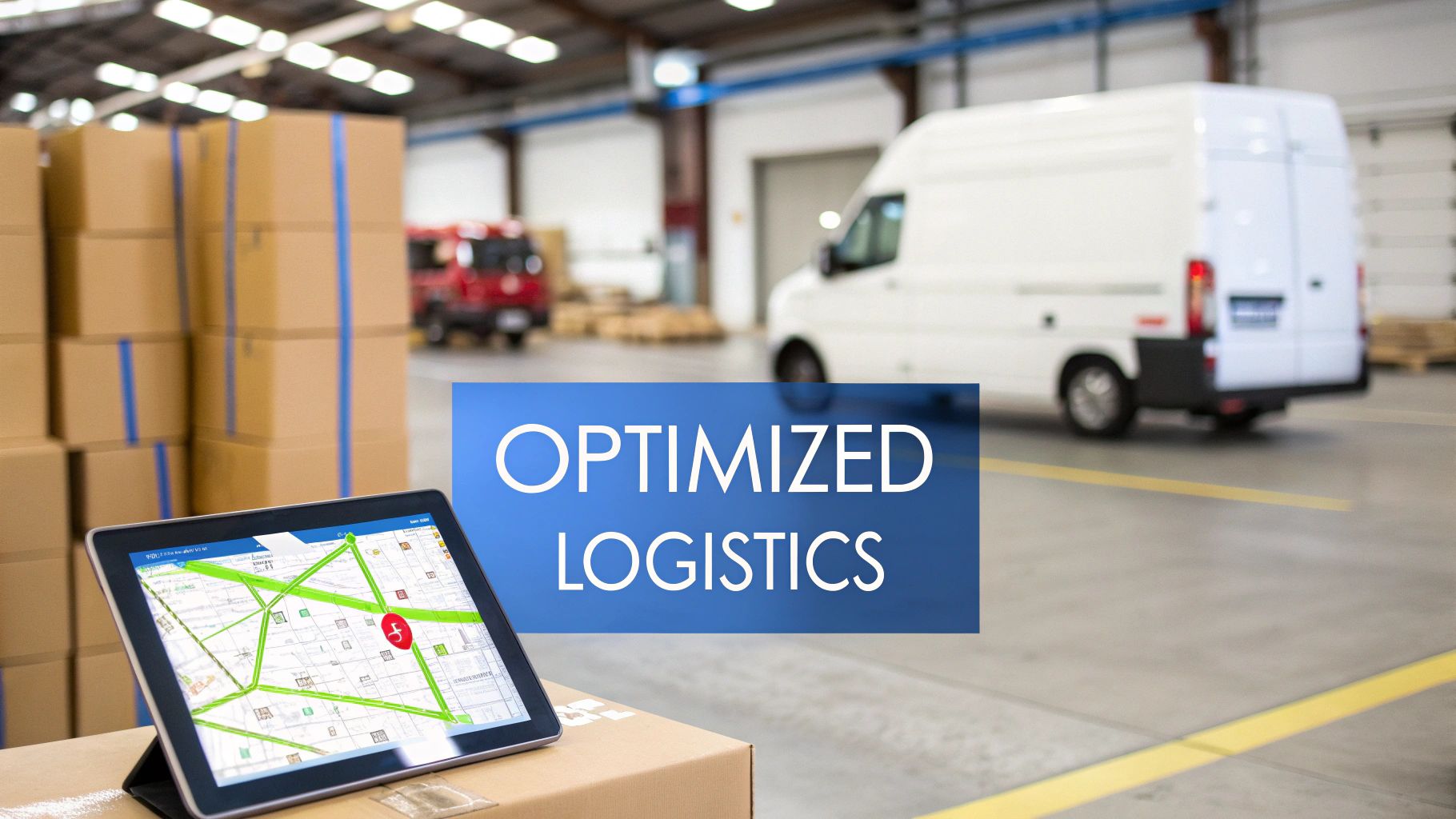
Artificial intelligence is fundamentally reshaping the global supply chain, moving it from a series of linear, often reactive steps to a dynamic, predictive, and interconnected ecosystem. AI algorithms process vast datasets, including historical sales, weather patterns, and real-time traffic, to forecast demand, automate warehouse operations, and optimize delivery routes. This transforms logistics from a cost-heavy necessity into a strategic advantage, enabling companies to respond to market fluctuations with unprecedented agility and precision.
By integrating machine learning, businesses can minimize stockouts, reduce carrying costs, and drastically improve delivery times. This proactive approach ensures goods are in the right place at the right time, enhancing customer satisfaction and operational resilience in a volatile market. These applications are a prime example of how AI use cases by industry are creating tangible economic value.
Strategic Breakdown
- UPS utilizes its On-Road Integrated Optimization and Navigation (ORION) system, a massive-scale AI platform. It analyzes over 200,000 individual routes daily, using advanced algorithms to find the most efficient path, saving millions of gallons of fuel and reducing emissions significantly.
- Walmart employs sophisticated AI for demand forecasting. Its models analyze over 500 variables, including local events and weather, to predict demand for thousands of products in real-time, ensuring optimal inventory levels across its vast network of stores.
Strategic Insight: The true power of AI in logistics is its ability to create a self-learning supply chain. Each delivery, demand spike, or disruption becomes a data point that refines future predictions, making the entire network progressively smarter and more efficient over time.
Actionable Takeaways
- Begin with Demand Forecasting: This is a high-impact starting point, as accurate predictions ripple positively through inventory management and logistics.
- Integrate Gradually: Instead of a complete overhaul, integrate AI tools with existing warehouse management (WMS) or enterprise resource planning (ERP) systems to ensure a smooth transition.
- Leverage Diverse Data Sources: Combine internal sales data with external factors like weather forecasts, social media trends, and economic indicators for more robust and accurate models.
To truly capitalize on these opportunities, organizations need guidance from those at the forefront of this revolution. Explore the work of top supply chain and logistics AI speakers to learn how to build a more intelligent and resilient supply network.
7. Risk Assessment and Underwriting in Insurance
AI is revolutionizing the insurance industry by transforming the core processes of risk assessment and underwriting. Instead of relying solely on traditional actuarial tables, insurers now use sophisticated machine learning models to analyze vast datasets. These algorithms evaluate applicant information, historical claims data, external data sources, and even behavioral patterns to generate highly accurate risk profiles, enabling more precise and dynamic policy pricing.
This data-driven approach allows for faster, more consistent underwriting decisions and a significant reduction in fraudulent claims. By automating the analysis of complex variables, AI frees human underwriters to focus on high-stakes, nuanced cases, shifting their role from data processor to strategic decision-maker.
Strategic Breakdown
- Lemonade Insurance leverages its AI chatbot, "AI Jim," to handle claims processing almost instantaneously. The AI cross-references claim details against policy information and risk algorithms, paying out simple claims in seconds and flagging complex or suspicious ones for human review.
- Progressive's Snapshot program uses telematics data collected from a driver's phone or a plug-in device. AI analyzes this usage-based data on driving habits like braking, acceleration, and time of day to create a personalized risk score, directly tying premiums to actual driver behavior.
Strategic Insight: The competitive advantage here is personalization at scale. AI allows insurers to move beyond broad demographic-based pricing to hyper-personalized premiums based on individual risk, creating fairer pricing and attracting lower-risk customers.
Actionable Takeaways
- Audit for Bias: Regularly audit AI models to identify and mitigate inherent biases in historical data, ensuring fair and equitable underwriting.
- Maintain Transparency: Be transparent with customers about how their data is used to determine premiums, especially with usage-based insurance models.
- Implement Human-in-the-Loop: Reserve human oversight for complex, high-value, or edge-case claims where nuance and judgment are critical.
For insurance firms navigating this technological shift, gaining expertise from those at the forefront is crucial. You can explore the future of AI in insurance from seasoned industry speakers who can demystify the regulatory and ethical implications of these AI applications.
8. Drug Discovery and Development
AI is revolutionizing the pharmaceutical industry by dramatically accelerating the traditionally slow and costly process of drug discovery. Instead of years of manual lab work, machine learning algorithms can analyze vast biological datasets to identify promising drug candidates, predict molecular interactions, and simulate clinical trial outcomes. This computational approach identifies viable compounds and research pathways with unprecedented speed and accuracy.
This shift significantly de-risks the early stages of development, cutting timelines from over a decade to just a few years. By quickly filtering out non-viable molecules, AI allows researchers to focus resources on the most promising candidates, ultimately bringing life-saving therapies to market faster and more affordably. This is one of the most impactful AI use cases by industry today.
Strategic Breakdown
- DeepMind's AlphaFold solved a 50-year-old grand challenge in biology by accurately predicting protein structures from their amino acid sequence. This breakthrough allows scientists to understand disease mechanisms and design targeted drugs with precision.
- Exscientia leverages its AI platform to design novel drug candidates from scratch. By automating the entire design-make-test-analyze cycle, it has successfully advanced multiple AI-designed drugs into clinical trials, including for oncology and immunology.
Strategic Insight: The true advantage lies in integrating predictive models across the entire R&D pipeline. AI doesn't just find candidates; it optimizes clinical trial design, predicts patient responses, and identifies new therapeutic uses for existing drugs.
Actionable Takeaways
- Invest in Computational Infrastructure: High-performance computing is essential for running complex deep learning models and managing massive biological datasets.
- Ensure Data Quality and Validation: The success of AI models hinges on high-quality, curated datasets. Implement rigorous data governance and validation protocols.
- Combine AI with Traditional Research: Use AI to augment, not replace, human expertise. The most effective strategies combine computational insights with the domain knowledge of experienced scientists.
To navigate the complex intersection of AI, biology, and regulation, organizations need guidance from those at the forefront. Discover how pioneers are reshaping medicine by exploring top-tier AI in healthcare speakers who can provide unparalleled insights into this transformative field.
9. Autonomous Vehicles and Fleet Management
Autonomous vehicles represent one of the most ambitious and transformative AI use cases by industry, moving beyond simple automation to enable full self-driving capabilities. AI is the core engine, processing vast amounts of data from cameras, LiDAR, and radar to perceive the environment, predict the behavior of other road users, and make critical real-time driving decisions. In fleet management, AI optimizes logistics by determining the most efficient routes, monitoring driver behavior for safety, and predicting vehicle maintenance needs.
This technology promises to revolutionize transportation by dramatically increasing safety, reducing traffic congestion, and creating new logistics efficiencies. It integrates computer vision, sensor fusion, and reinforcement learning to navigate complex, unpredictable real-world scenarios, fundamentally redefining mobility and supply chain operations.
Strategic Breakdown
- Waymo, Google's self-driving car project, has logged millions of autonomous miles in complex urban environments. Its AI, "Waymo Driver," uses deep learning to understand and navigate everything from four-way stops to unpredictable pedestrians, operating a fully autonomous ride-hailing service.
- Aurora focuses on the commercial trucking sector with its Aurora Driver platform. The AI is designed for long-haul highway driving, optimizing for fuel efficiency and safety, aiming to solve driver shortages and make supply chains more resilient.
Strategic Insight: The true disruption lies not just in a single self-driving car, but in the AI-powered network that manages an entire fleet. This allows for coordinated vehicle platooning, dynamic rerouting around congestion, and optimized asset utilization on a massive scale.
Actionable Takeaways
- Start in Controlled Environments: Begin deployment on fixed, predictable routes or within contained areas like shipping yards or campuses to validate the technology safely.
- Prioritize Simulation: Leverage extensive simulation to train and test AI models against millions of edge cases and potential scenarios before deploying on public roads.
- Implement Robust Cybersecurity: Protect vehicles from remote attacks by building secure, multi-layered cybersecurity defenses into the vehicle's architecture from the ground up.
For organizations navigating the complexities of autonomous systems, gaining insights from pioneers is crucial. To understand the future of mobility and logistics, discover more from our roster of transportation and autonomous vehicle experts.
10. Personalized Learning and Educational Technology
Personalized learning moves beyond the one-size-fits-all classroom model. This AI use case leverages algorithms to analyze individual student performance, engagement levels, and learning pace in real time. The system then dynamically adjusts the curriculum, suggesting supplemental materials for struggling students or offering advanced challenges for those ahead of the curve. This creates a tailored educational journey for every learner.
In the realm of education, AI is revolutionizing personalized learning and educational technology, shaping how students interact with content and how educators develop courses using various online course creation tools. It transforms education from a passive experience into an interactive, adaptive process that maximizes comprehension and retention at an individual level.
Strategic Breakdown
- Carnegie Learning uses its MATHia software, a one-on-one AI tutoring system that mirrors a human tutor. It observes student problem-solving steps, identifies misconceptions, and provides targeted, just-in-time feedback to guide them toward mastery.
- Duolingo applies AI to optimize language learning, personalizing lesson difficulty based on user error patterns. Its models predict when a user is likely to forget a word and prompt them with practice sessions to reinforce long-term memory.
Strategic Insight: The true innovation is not just customizing content, but generating a continuous feedback loop. AI analyzes student data to not only help the learner but also to provide educators with deep insights into class-wide knowledge gaps and effective teaching strategies.
Actionable Takeaways
- Balance Tech and Human Touch: Use AI to handle personalized practice and content delivery, freeing up educators to focus on mentoring and complex problem-solving skills.
- Prioritize Data Privacy: Implement stringent protocols to protect sensitive student data, ensuring compliance and building trust with students and parents.
- Train the Educators: Ensure teachers are well-trained on how to interpret AI-driven analytics and integrate these powerful tools effectively into their teaching methods.
To understand the future trajectory of AI in education, it's vital to learn from those at the forefront. Gain deeper insights into implementing these transformative systems by hearing from the leading voices on our roster. Learn more about the impact of AI in education from top speakers.
11. Energy Management and Smart Grids
AI is revolutionizing the energy sector by optimizing the entire grid, from production to consumption. It uses machine learning models to forecast energy demand, manage the integration of volatile renewable sources like wind and solar, and predict potential faults in the distribution network. This enables the creation of smart grids that dynamically balance electricity supply and demand in real time.
This intelligent management prevents blackouts, reduces energy waste, and lowers operational costs. By making the grid more resilient and efficient, AI plays a pivotal role in the transition to a sustainable energy future, marking a significant advancement among modern AI use cases by industry.
Strategic Breakdown
- Google's DeepMind applied its AI to cool its massive data centers, analyzing millions of data points to predict and adjust cooling system configurations. This resulted in a 40% reduction in the energy required for cooling, a substantial efficiency gain.
- Schneider Electric deploys its EcoStruxure platform, which uses AI and IoT to monitor and manage energy consumption in buildings and industrial facilities, leading to significant cost savings and improved sustainability profiles for its clients.
Strategic Insight: The true innovation lies in AI's ability to manage grid complexity. It's not just about forecasting demand; it's about orchestrating a decentralized network of renewable sources, storage systems like EV batteries, and consumption points for maximum stability and efficiency.
Actionable Takeaways
- Integrate Diverse Data Sources: Combine historical energy demand data with real-time weather forecasts and market pricing to build more accurate predictive models.
- Prioritize Cybersecurity: As grids become smarter and more connected, implement robust AI-driven cybersecurity measures to protect critical infrastructure from threats.
- Plan for Scalability: Design AI systems that can scale to manage growing numbers of distributed energy resources, from large-scale solar farms to residential battery storage.
Understanding how to navigate this complex technological landscape is crucial for energy companies. For deeper perspectives on building sustainable and intelligent energy systems, consider insights from leading AI energy and sustainability speakers.
12. HR Analytics and Talent Management
AI is reshaping Human Resources from a reactive administrative function into a proactive, data-driven strategic partner. This AI use case involves applying machine learning algorithms to vast sets of employee and candidate data to uncover insights that drive better talent decisions. These systems analyze patterns related to performance, engagement, and career progression to predict outcomes like employee turnover, identify future leaders, and streamline the entire hiring lifecycle.
By moving beyond gut-feel decisions, AI enables HR departments to optimize workforce planning, enhance employee retention, and build more effective teams. It automates tedious tasks, allowing HR professionals to focus on high-impact strategic initiatives that foster a stronger, more engaged workforce.
Strategic Breakdown
- LinkedIn uses AI to power its Talent Solutions platform, matching recruiters with ideal candidates by analyzing skills, experience, and engagement patterns. The platform's algorithms provide unparalleled insight into the talent pool, making hiring more efficient.
- IBM's Watson Talent leverages AI to analyze resumes, predict candidate success, and even gauge employee sentiment. Its tools help organizations understand skill gaps and identify high-potential employees for development, ensuring a robust talent pipeline.
Strategic Insight: The true advantage of AI in HR is its ability to quantify and predict human capital dynamics. It transforms abstract concepts like "employee engagement" and "flight risk" into measurable metrics that can be managed and improved with targeted interventions.
Actionable Takeaways
- Prioritize Data Privacy: Be transparent with employees about what data is being collected and how it is used, ensuring compliance with all privacy regulations.
- Audit for Bias: Regularly audit your AI models to identify and mitigate biases related to gender, race, or age to ensure fair and equitable hiring and promotion practices.
- Augment Human Judgment: Use AI-driven insights as a powerful tool to support, not replace, the nuanced decision-making of experienced HR professionals.
Understanding how to ethically and effectively deploy these systems is crucial. To learn from experts who are shaping the future of AI in the workplace, discover more from the top HR and future of work speakers on our roster.
AI Use Cases by Industry — 12-Point Comparison
| Solution | Implementation complexity | Resource requirements | Expected outcomes | Ideal use cases | Key advantages |
|---|---|---|---|---|---|
| Predictive Maintenance in Manufacturing | High — IoT integration & ML pipelines | Large historical sensor data, IoT devices, data science team | Significant downtime reduction (≈50%+), lower maintenance costs | Heavy machinery, continuous production, industrial plants | Prevents failures, increases uptime, cost savings |
| Clinical Diagnosis and Medical Imaging Analysis | Very high — deep learning + regulatory validation | Large annotated imaging datasets, high compute, clinical trials | Improved diagnostic accuracy, faster reads, earlier intervention | Radiology, diagnostics, specialist clinics | Higher accuracy, speed, reduces human error |
| Fraud Detection in Financial Services | High — real-time adaptive systems | Massive transaction streams, low-latency infra, ML ops | Millisecond detection, reduced losses, fewer false positives | Payments, banking, card networks, e‑commerce | Real-time protection, adaptive to new fraud tactics |
| Personalized E-commerce Recommendations | Medium — recommendation systems + A/B testing | User behavior and purchase data, moderate compute, experimentation | Increased conversion and AOV (≈20–35%), improved retention | Online retail, marketplaces, streaming platforms | Higher revenue per user, better personalization |
| NLP for Customer Service | Medium — intent/entity models and integrations | Conversation logs, NLP models, integration with CRMs | Handles majority routine inquiries, faster response, cost reduction | Customer support centers, chatbots, helpdesks | 24/7 support, consistent answers, lower support costs |
| Supply Chain Optimization and Logistics | High — multi-system integration & real-time models | Real-time inventory/telemetry data, advanced analytics, IoT | Reduced shipping costs (≈15–20%), better delivery accuracy | Retail logistics, distribution centers, fleet ops | Cost savings, demand prediction, routing efficiency |
| Risk Assessment and Underwriting in Insurance | Medium–High — data modeling + compliance | Applicant and claims data, compliance/legal resources, analytics | Faster underwriting, improved pricing accuracy, lower claims costs | Insurance underwriting, pricing, fraud detection | More accurate risk scoring, faster decisions |
| Drug Discovery and Development | Very high — advanced bioinformatics & validation | Massive biological datasets, HPC/GPU compute, lab collaboration | Shorter R&D timelines (≈30–40% faster), cost reduction | Pharmaceutical R&D, target discovery, virtual screening | Faster candidate ID, higher R&D efficiency |
| Autonomous Vehicles and Fleet Management | Very high — safety-critical perception & control | Sensor suites (lidar/cameras), real-time compute, extensive testing | Fewer accidents, improved fuel use, lower labor costs | Controlled environments, last-mile delivery, fleet optimization | Safety improvements, operational consistency |
| Personalized Learning and Educational Technology | Medium — adaptive algorithms + LMS integration | Student performance data, content libraries, teacher training | Improved learning outcomes (≈15–25%), reduced achievement gaps | K–12, online courses, tutoring platforms | Personalized pacing, scalable instruction |
| Energy Management and Smart Grids | High — grid-scale integration & real-time control | Grid and sensor data, cybersecurity, advanced forecasting | Reduced energy waste (≈10–20%), improved grid stability | Utilities, data centers, renewable integration | Efficiency gains, better renewables integration |
| HR Analytics and Talent Management | Medium — people-data modeling + compliance | Employee data, privacy/compliance tools, analytics team | Reduced turnover (≈15–20%), improved hiring efficiency | Large employers, recruitment, workforce planning | Early risk detection, improved talent decisions |
| Predictive Maintenance in Manufacturing | High — IoT integration & ML pipelines | Large historical sensor data, IoT devices, data science team | Significant downtime reduction (≈50%+), lower maintenance costs | Heavy machinery, continuous production, industrial plants | Prevents failures, increases uptime, cost savings |
|---|---|---|---|---|---|
| Clinical Diagnosis and Medical Imaging Analysis | Very high — deep learning + regulatory validation | Large annotated imaging datasets, high compute, clinical trials | Improved diagnostic accuracy, faster reads, earlier intervention | Radiology, diagnostics, specialist clinics | Higher accuracy, speed, reduces human error |
| Fraud Detection in Financial Services | High — real-time adaptive systems | Massive transaction streams, low-latency infra, ML ops | Millisecond detection, reduced losses, fewer false positives | Payments, banking, card networks, e‑commerce | Real-time protection, adaptive to new fraud tactics |
| Personalized E-commerce Recommendations | Medium — recommendation systems + A/B testing | User behavior and purchase data, moderate compute, experimentation | Increased conversion and AOV (≈20–35%), improved retention | Online retail, marketplaces, streaming platforms | Higher revenue per user, better personalization |
| NLP for Customer Service | Medium — intent/entity models and integrations | Conversation logs, NLP models, integration with CRMs | Handles majority routine inquiries, faster response, cost reduction | Customer support centers, chatbots, helpdesks | 24/7 support, consistent answers, lower support costs |
| Supply Chain Optimization and Logistics | High — multi-system integration & real-time models | Real-time inventory/telemetry data, advanced analytics, IoT | Reduced shipping costs (≈15–20%), better delivery accuracy | Retail logistics, distribution centers, fleet ops | Cost savings, demand prediction, routing efficiency |
| Risk Assessment and Underwriting in Insurance | Medium–High — data modeling + compliance | Applicant and claims data, compliance/legal resources, analytics | Faster underwriting, improved pricing accuracy, lower claims costs | Insurance underwriting, pricing, fraud detection | More accurate risk scoring, faster decisions |
| Drug Discovery and Development | Very high — advanced bioinformatics & validation | Massive biological datasets, HPC/GPU compute, lab collaboration | Shorter R&D timelines (≈30–40% faster), cost reduction | Pharmaceutical R&D, target discovery, virtual screening | Faster candidate ID, higher R&D efficiency |
| Autonomous Vehicles and Fleet Management | Very high — safety-critical perception & control | Sensor suites (lidar/cameras), real-time compute, extensive testing | Fewer accidents, improved fuel use, lower labor costs | Controlled environments, last-mile delivery, fleet optimization | Safety improvements, operational consistency |
| Personalized Learning and Educational Technology | Medium — adaptive algorithms + LMS integration | Student performance data, content libraries, teacher training | Improved learning outcomes (≈15–25%), reduced achievement gaps | K–12, online courses, tutoring platforms | Personalized pacing, scalable instruction |
| Energy Management and Smart Grids | High — grid-scale integration & real-time control | Grid and sensor data, cybersecurity, advanced forecasting | Reduced energy waste (≈10–20%), improved grid stability | Utilities, data centers, renewable integration | Efficiency gains, better renewables integration |
| HR Analytics and Talent Management | Medium — people-data modeling + compliance | Employee data, privacy/compliance tools, analytics team | Reduced turnover (≈15–20%), improved hiring efficiency | Large employers, recruitment, workforce planning | Early risk detection, improved talent decisions |
Your Next Move: Bringing AI Insights to Your Organization
As we've journeyed through the diverse landscape of AI applications, a clear and undeniable pattern emerges. From the factory floor, where predictive maintenance prevents costly downtime, to the hospital ward, where AI-powered diagnostics are accelerating patient care, artificial intelligence is no longer a futuristic concept. It is a present-day engine for efficiency, innovation, and strategic advantage. The ai use cases by industry are not just isolated success stories; they represent a fundamental shift in how businesses operate, compete, and create value.
The core lesson from these examples is that AI's power lies in its specificity. A generic AI strategy is a failed strategy. The true innovators are those who pinpoint a precise, high-impact problem, whether it's optimizing a complex supply chain or detecting subtle fraudulent transactions, and apply a tailored AI solution. They understand that success isn't just about adopting the technology; it's about deeply integrating it into the operational fabric of their specific industry.
Key Takeaways: From Theory to Action
Reflecting on the detailed breakdowns of AI in manufacturing, finance, healthcare, and beyond, several cross-industry themes provide a roadmap for your own implementation journey.
- Data is the Foundation: Every powerful AI use case, from personalized e-commerce to insurance underwriting, is built upon a foundation of high-quality, relevant data. The first step is not buying an algorithm; it's understanding, organizing, and preparing your data assets for intelligent analysis.
- Start with a Focused Problem: The most successful AI initiatives don't try to solve everything at once. They target a specific, measurable challenge, such as reducing customer service response times with NLP or improving talent retention with HR analytics. This focused approach ensures a clear ROI and builds momentum for broader adoption.
- Human-AI Collaboration is Key: The narrative of AI replacing humans is overly simplistic. The most advanced applications, like medical imaging analysis and drug discovery, position AI as a powerful assistant that augments human expertise, allowing professionals to make faster, more accurate decisions. The goal is enhancement, not replacement.
Your Actionable Next Steps
Understanding these ai use cases by industry is the crucial first step, but turning that knowledge into a tangible strategy requires a clear plan. How can you bridge the gap between reading about innovation and leading it?
- Conduct an Internal AI Opportunity Audit: Gather stakeholders from different departments and map out your organization's most pressing challenges and data-rich processes. Where are the bottlenecks? Where are decisions being made with incomplete information? Cross-reference this map with the use cases explored in this article to identify your top 1-3 potential pilot projects.
- Evaluate Your Data Readiness: Assess the quality, accessibility, and volume of the data associated with your identified pilot projects. Do you have the necessary data to train a predictive model for energy management or a recommendation engine for your customers? If not, your first strategic priority is to build the data infrastructure required for success.
- Seek Expert Guidance to Build a Vision: The biggest barrier to AI adoption is often a lack of internal expertise and a clear, compelling vision that leadership can champion. This is where external insights become invaluable. Bringing in a recognized AI expert can demystify complex concepts, align your team on a shared goal, and translate a vague interest in AI into a concrete, actionable roadmap.
The journey to AI maturity is a marathon, not a sprint. It demands strategic foresight, technical readiness, and a culture of continuous learning. By moving from passive observation to active planning, you position your organization not just to react to the future but to actively shape it. The transformative potential is immense, and the time to begin is now.
Ready to inspire your team and build a concrete AI strategy? At Speak About AI, we connect you with the world’s leading AI pioneers and industry transformers who can translate these complex ai use cases by industry into a clear vision for your organization. Find the perfect expert to kickstart your company's AI journey today at Speak About AI.